
By Lehlohonolo Lehana.
The huge amounts of money earned by CEOs are regarded as obscene by many ordinary working people, not just in South Africa but around the world.
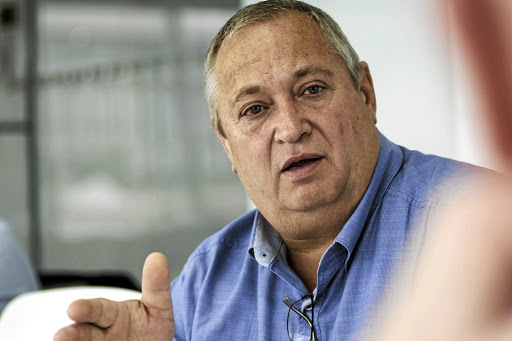
Neal Froneman, CEO of Sibanye-Stillwater was awarded R300 million in 2021, according to the company’s annual report.
The group’s recently released annual suite of reports shows the platinum mining executive took home a whopping R300.3 million in remuneration for the year ended in 2021 – an extraordinary amount even compared with his remuneration of R62.73 million in 2020.
While Froneman was awarded a basic salary of R12.42 million in 2021, plus an R7.8 million cash bonus, an added R264 million was paid over to the CEO from conditional share proceeds.
The group’s executive directors and prescribed officers too enjoyed a bumper payday with remuneration, including Froneman’s, totalling R804.9 million – 84% of which resulted from conditional share proceeds.
In a South African context this is complicated by the fact that we have a relatively low wage rate, and that we are one of the most unequal societies in the world.
Prof. Adrian Saville, Investment Specialist – Genera Capital told Bruce Whitefield’s Money Show on 702, “that If we compare the executive remuneration to average worker pay the numbers are multiples of tens of thousands of times… and then we have some of the highest income inequalities globally.”
“The question that we want to ask in the broad circumstance of business and the context of country is, does this make the company stronger and more sustainable?
“And, in the context of the country, does this type of pay structure strengthen social fabric… and make a stronger country with a stronger fiscus and a higher employee headcount or does it worsen it?
Prof Saville believes business in South Africa needs to do some introspection on the prevailing pay structure and decide whether it is “ethically moral and right”.
Sibanye branched out into platinum group metals [PGMs] through acquisitions of Anglo American’s and Lonmin’s platinum mines in Rustenburg as well as the Stillwater mine in Montana, a deal that expanded the company footprint beyond South Africa but which was highly criticised at the time for being too costly and putting the company at risk of breaching its debt covenants.
Sibanye-Stillwater spokesperson James Wellsted said the basic salary increase for Froneman and management was inflation-linked at 5% or less. The bulk of the enormous increases in remuneration comes from share incentive schemes where shares awarded to them vested in 2021, and they reaped the benefit of the soaring share price.
In the 2021 remuneration report, the company said its remuneration policy favours a pay mix that is slightly more geared to performance than the market practice by providing more exposure to incentives, with the total guaranteed package pitched slightly lower.
The company has grown from strength to strength under Froneman, who was appointed CEO in 2013 when the business was formed out of Gold Fields’ old South African gold mines
Meanwhile Froneman said it was critical that South Africa’s private sector increased efforts to support communities living near its mines as it did not expect service delivery from the country’s government to improve.
Commenting in the group’s annual report published this week, Froneman said: “Anticipating continued weakness in state capacity for delivery of public services, we foresee an increasing need for private sector-led initiatives to compensate for these shortcomings in order to sustain a stable society in our operating areas”.
He added that business competitiveness in South Africa would also continue to suffer as the government failed to adopt appropriate policy reforms.
“With the future direction of political ideology uncertain, we have limited expectations for a regulatory framework that is more favourable to business competitiveness and conducive to investment, “he said.
Froneman’s comments also come at a time when South Africa sank to fresh lows in terms of the attractiveness of the country to foreign mining investors.
According to the influential Fraser Institute’s Annual Survey of Mining Companies 2021, the country’s mining sector is now nestled among the 10 least attractive investment destinations. The Minerals Council South Africa said the results of the survey were distressing.