
By Lehlohonolo Lehana.
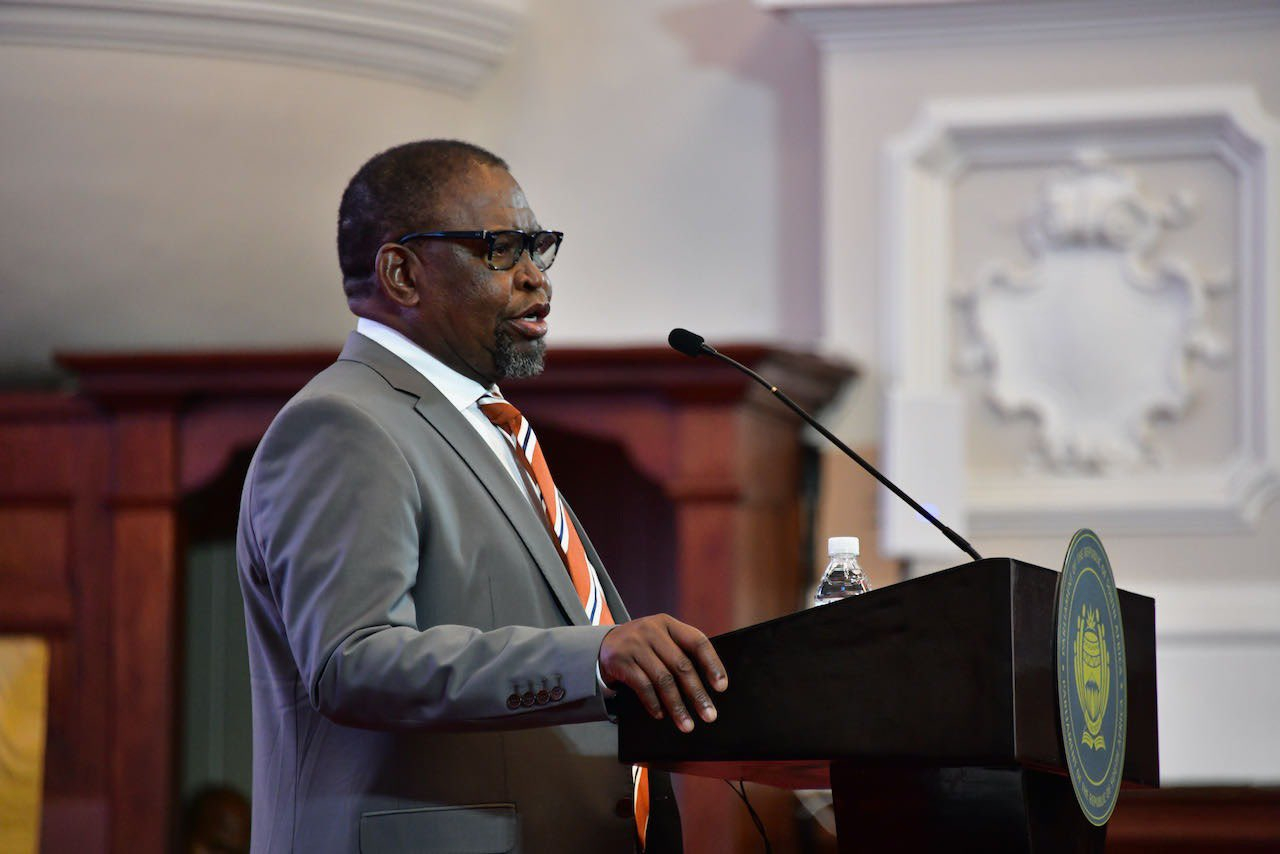
The Minister of Finance, Enoch Godongwana, delivered the 2022 Medium-Term Budget Policy Statement (MTBPS) in Parliament today, 26 October 2022.
The budget touched on many points and topics that were raised in the lead-up to the speech, including the South African government taking over a portion of struggling power utility Eskom’s debt, and giving a solution to the ongoing e-toll problem in Gauteng.
It also included a reframing of South Africa’s economic outlook from the February speech, which took place in a very different world.
The world has felt the impact of an ongoing war between Russia and Ukraine, with its subsequent fallout including much higher global fuel prices and imports like seeds and grain, pushing up consumer inflation.
The country has also been thrown to and fro at the whims of global markets, including a strengthening dollar amid rapid interest rate hikes by central banks across the world.
However, South Africa has also benefitted remarkably from a commodities boom, catching a massive windfall which is now being used to fund different budget items.
“Since the 2022 Budget Review, global and domestic risks to the economic outlook have materialised, including slower global growth, higher levels of inflation, accelerating interest rate increases and intensified power supply interruptions,” Treasury said.
“In a volatile global environment, the fiscal strategy reduces risks to the economy and the public finances over the medium term. The higher-than-anticipated revenues will be used to reduce the gross borrowing requirement, support spending priorities and reduce risks to the fiscal outlook.”
Compared to the 2022 Budget, the gross tax revenue estimate for 2022/23 is projected to be R83.5 billion higher.
Given this change of fortunes, the fiscal position has improved since the 2022 Budget, Treasury said.
The government will use this revenue to increase spending in health, education and local government free basic services, infrastructure, and security and safety. At the same time, it will narrow the budget deficit, and address fiscal and economic risks posed by Denel, Sanral and Transnet, it said. Municipalities will also receive support to cover cost increases in free basic services.
Here are the biggest takeaways from the mid-term budget:
Eskom’s debt
Godongwana said that the government will be taking on ” a significant portion” of Eskom’s R400 billion debt.
While the exact figure is not yet known, he said it will be between one- to two-thirds of the power utility’s current debt – so between R130 billion and R260 billion.
“For at least a decade, we have spent billions of rands supporting Eskom, with limited improvements in the reliability of the electricity supply or the financial health of the company. The debt takeover, once finalised, together with other reforms, will ensure that Eskom is financially sustainable,” he said.
The programme will allow Eskom to focus on plant performance and capital investment and ensure that it no longer relies on government bailouts.
Importantly, the programme will include strict conditions required of Eskom and other stakeholders before and during the debt transfer.
These conditions will address Eskom’s structural challenges by managing its costs, addressing municipal and household arrears due to the utility, and providing greater clarity and transparency in tariff pricing.
In addition, the conditions will be informed by a Treasury-led independent review of Eskom’s operations, in particular the performance of its generation fleet.
Further details of the programme will be finalised following consultations with all relevant stakeholders and lenders and will be announced in the 2023 Budget, he said.
e-tolls
The minister announced that the debate around e-tolling on a national level will come to an end, saying that the uncertainty surrounding the Gauteng Freeway Improvement Project (GFIP) continues to have a major negative implication for road construction in the country.
“We need to move on from the debates of previous years and find solutions to this challenge,” he said.
To resolve the funding impasse, the Gauteng provincial government has agreed to contribute 30% to settling Sanral’s debt and interest obligations, while the national government covers 70%.
Government proposes to make an initial allocation of R23.7 billion from the national fiscus, which will be disbursed on strict conditions to cover this.
However, the e-tolling system hasn’t been removed from the picture entirely, with the minister stressing that it is up to the Gauteng government to cover the costs of maintaining its roads – and any additional investment must be funded somehow.
The government funding is also contingent on Sanral, the Gauteng government and the Department of Transport finding a solution to the stalled phase 1 on the GFIP.
“Gauteng will also cover the costs of maintaining the 201 kilometres and associated interchanges of the roads, and any additional investment in road will be funded through either the existing electronic toll infrastructure or new toll plazas, or any other revenue source within their area of responsibility.”
Bailouts
Treasury has allocated the following funds to state companies:
- R23.7 billion for Sanral to pay off government-guaranteed debt, conditional on a solution to phase 1 of the Gauteng Freeway Improvement Project.
- R5.8 billion for Transnet – half of which is shifted funds to repair infrastructure damaged by the recent floods and half to increase locomotive capacity.
- R204.7 million for Denel to reduce contingent liabilities arising from its weak financial position and R3.4 billion – if set conditions are met – to complete its turnaround plan.
Grant extension
The minister announced that the special Covid-19 Social Relief of Distress (SRD) grant will be extended by another year, now until 31 March 2024.
He said that the medium-term changes to spending plans are driven mainly by this decision.
The SRD grant was introduced in May 2020 as a temporary measure to respond to the needs of the most vulnerable who were affected by lockdown measures. It has been extended several times since then.
“Discussions on the future of the grant are ongoing and involve very difficult trade-offs and financing decisions. Despite the provision made in this budget, I want to reiterate that any permanent extension or replacement will require permanent increases in revenue, reductions in spending elsewhere, or a combination of the two,” he said.
Wage bill
Godongwana said that the government is moving ahead with the proposed wage increases, confirming that it is unilaterally increasing government wages by 3%. This is against the demands of unions that were demanding a hike of 10%.
On 30 August 2022, the government made a final offer to workers, including the following:
- Continuation of a non-pensionable cash allowance for the current financial year. This translates into an average of R1 000 per employee per month until March 2023.
- A pensionable salary increase of 3% for public servants.
The minister said that the offer is best interest of the fiscus and public service workers., and that implementing it does not undermine the collective bargaining process.
“We believe that the facilitation process has helped all parties get to this point. Therefore, the spending estimates we are tabling today include this amount. This offer will be implemented through the payroll system and backdated to April 2022.”
Reactions to 2022 Medium-Term Budget Policy Statement:
Business Leadership SA (BLSA)
BLSA welcomes the 2022 Medium-Term Budget Policy Statement (MTBPS) tabled today by Finance Minister Enoch Godongwana that affirms the country’s adherence to a policy of fiscal consolidation that will lead to better growth in the future.
Bernard Sacks – Tax Partner at Mazars in South Africa:
“A good, optimistic budget with cautionary words thrown in with uncertainty in the markets. There were a few bold projections, and the question is whether or not these can be met?
“It seems that the honeymoon phase is over regarding additional taxes on commodity prices, however, the corporate sector, which includes finance, banking and real estate, seems to have performed better than anticipated.
“Tax collections are down in some respects, such as the fuel levy, due to the fuel levy relief fund, and is increased in other areas, specifically corporate tax and personal tax.
“No new taxes have been announced, which is normal for this time of year. There have been a number of fresh allocations to SOEs, some of which have been announced. What does seem to be good news is the fair amount of infrastructure spending planned, which, in turn, will assist with stimulating the economy.
“There’s a move afoot for government to take on a chunk of the Eskom debt; however no detail has been provided on how this will be implemented. Come the main Budget in February, Treasury will need to show how this will be funded.”
AgriSA:
While Minister Enoch Godongwana’s Medium Term Budget Policy Statement included some positive pronouncements, Agri SA is disappointed that the statement failed to provide for critical interventions to support South Africa’s hard-hit farmers.
Agri SA is concerned by the Minister’s failure to provide any relief targeted at the agricultural sector. The sector, which is a key contributor to the South African economy and our guarantor of food security, has been hit hardest by rising input costs and farmers find themselves in dire financial circumstances.
Yet Minister Godongwana did not announce any measures to help ensure the sustainability of the sector.
Agri SA will continue to engage government and National Treasury to ensure that we see a taxation and policy framework in the budget in February within which the agricultural sector can thrive, and that reflects the needs of this critical, job-creating sector.
Cosatu:
“Considering that the South African economy has been stagnant for over a decade and the country is experiencing periodical riots because of desperation and hopelessness; this budget was not bold enough.
“We were hoping for a bold MTBPS that would protect workers from inflation, rebuild the state, decisively tackle corruption, provide relief to the unemployed and put measures to stimulate the economy…
“Suffocating the economy through budget cuts and scapegoating public servants has not worked. The government needs to focus on addressing the fundamental causes of the fiscal crisis, namely a stagnant economy, rampant corruption, massive unemployment, load shedding and limping SOEs, and not outsource the bill for corruption and incompetence to workers.
“The government needs to resolve the current impasse with workers to avert any disruption of public services because this economy cannot afford a strike, and no one wants a strike.
“The Federation is cautioning the government against negotiating in Parliament when the conciliation process at the Public Service Co-ordinating Bargaining Council (PSCBC) is penciled for Monday, 31st October 2022. We reiterate our position that an amicable solution should be found to avert the strike that will impact service delivery and undermine the economy.
“A public service strike will cause a major and extended labour unrest and a crisis of service delivery. “
Business Unity SA (BUSA)
“Given the ongoing energy crisis, and the announcement of the president’s plan, we would have expected a clearer and more definitive approach in the MTBPS. We welcome the announcement that government will take over between one – third and two-thirds of the debt and we welcome the conditions announced. However, we must say that government should have moved faster to address the structural problems at Eskom and address its structure.
“Despite… positive areas in the MTBPS, the overall outlook is poor, with growth forecasts dropping to 1.9% for this year, from a projection of 2.1%. This is primarily due to load shedding and a drop in exports. Real GDP growth over the next 3 years expected to be a paltry 1.6% this underlines the urgency to deal with the energy situation and the imperative for investment and growth.
BUSA has been urging government to collaborate with us in bilateral structures to progress critical deliverables in critical priority interventions. We will continue to try and progress this.