
By Lehlohonolo Lehana.
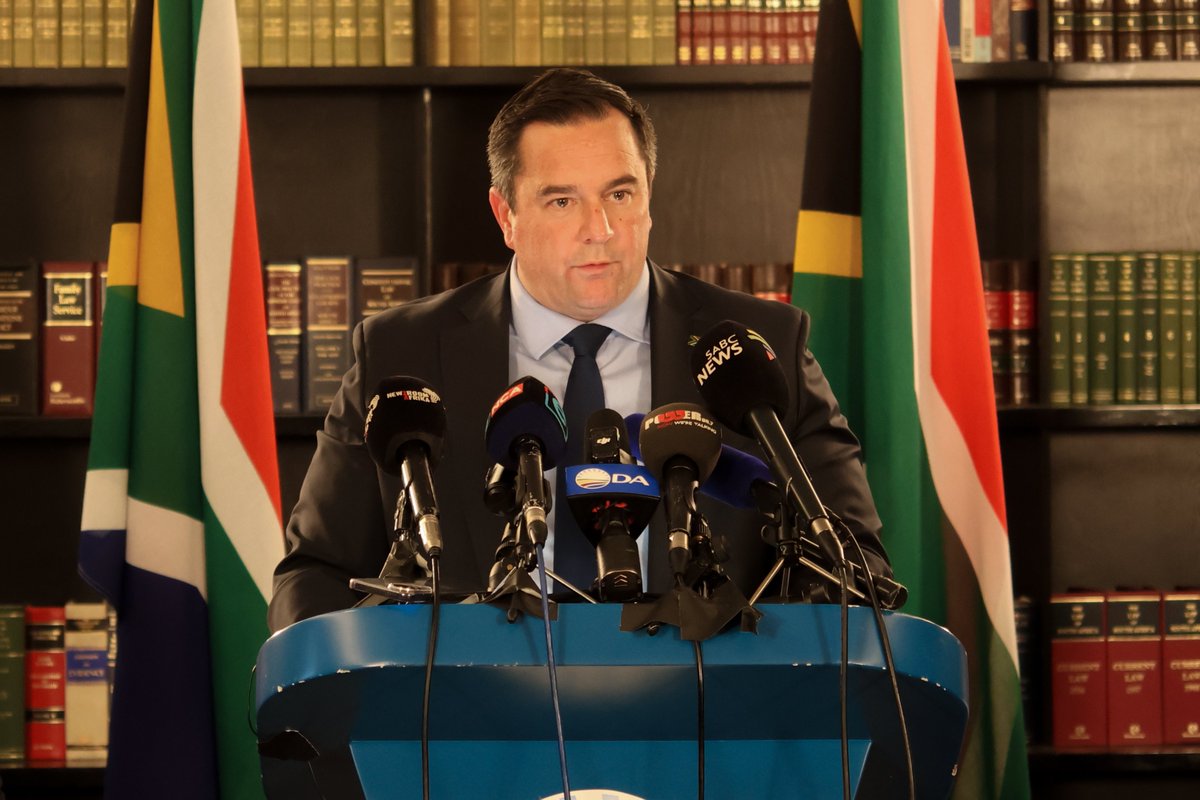
Department of Agriculture (DOA) minister John Steenhuisen announced the ten-year phased plan to tackle the Foot and Mouth Disease (FMD), starting with stabilisation, progressing to consolidation and eventually removal of vaccination.
The disease was present in South Africa for a few years. However, it exploded into a national disaster in early 2025.
Central to the plan is a decisive policy shift towards FMD-free with vaccination. This approach emerged from the FMD Indaba convened in July 2025, hosted jointly by the Department of Agriculture and the Agricultural Research Council (ARC).
More than 400 stakeholders from government, academia, research institutions, and industry attended the Indaba.
The indaba concluded that South Africa can no longer rely primarily on quarantine and movement controls. Instead, participants recommended a phased, multidisciplinary approach aligned with the Progressive Control Pathway for FMD developed by the Food and Agriculture Organization of the United Nations.
This includes securing reliable vaccine supply, accelerating livestock identification and traceability, tightening movement controls, expanding diagnostic capacity, and rolling out national awareness campaigns.
Medium- to long-term priorities include upgrading veterinary infrastructure, strengthening regional cooperation, and ensuring sustained funding for animal health services and research.
During the media briefing held on Monday, 14 January, Steenhuisen, said the plan starts with immediate mass vaccination in hotspot provinces, targeting the vaccination of 90% of South Africa’s commercial cattle, 80% of communal cattle and 100% of feedlots and dairy cattle within 12 months.
Vaccines from Argentina, Botswana and Türkiye will be used, which will be supplemented by State-owned veterinary vaccine producer Onderstepoort Biological Products’ local production of 20 000 doses a week from March.
The local facility is expected to increase its vaccine production toward a 960 000-dose capacity target.
Steenhuisen expects the country to receive five-million vaccine doses through imports by March.
The department has submitted applications to the South African Health Products Regulatory Authority to authorise the importation and registration of the Biogenesis vaccine.
Steenhuisen confirmed that more than two-million cattle have been vaccinated since the current FMD outbreak started in 2022. It is estimated that the livestock industry has suffered R5.6-billion in export losses as a result of FMD since the start of 2025.
Foot-and-mouth disease is classified as a state-controlled disease, which means only the government may procure and distribute vaccines.
Therefore, farmers are prohibited from sourcing or administering vaccines themselves, even if they can afford them.
This means that even when animals are dying in front of their eyes, they must wait for the government to stop the crisis.
DoA biosecurity coordination chief director Dr Emily Mogajane said, the FMD plan targets the epicentre of FMD outbreaks in Phase 1, including KwaZulu-Natal, Gauteng and North West, with Phase 2 aimed at establishing buffer zones around areas such as the Northern, Western and Eastern Cape provinces to prevent infection.
“The goal is to interrupt virus transmission and reduce disease incidences to low levels in two to three years.” She affirmed that laboratory diagnostic capacity is being reinforced by coordination of provincial veterinary laboratories to speed up reference testing, while the ARC and vaccine manufacturers are being supported to conduct vaccine-matching and target product profile assessments to ensure imported vaccines match circulating serotypes.
The DoA is working to build a robust database and surveillance system for FMD; however, Mogajane emphasised the importance of farmers, auctioneers, speculators and other partners adhering to movement controls and other disease spread measures.
The DoA proposes in its mass vaccination plan for FMD that 19.5-million cattle need to be vaccinated across 234 municipalities, of which 8.2-million are classified as a primary priority, 10-million are classified as a secondary priority and 1.2-million are classified as a tertiary priority.