
By Lehlohonolo Lehana.
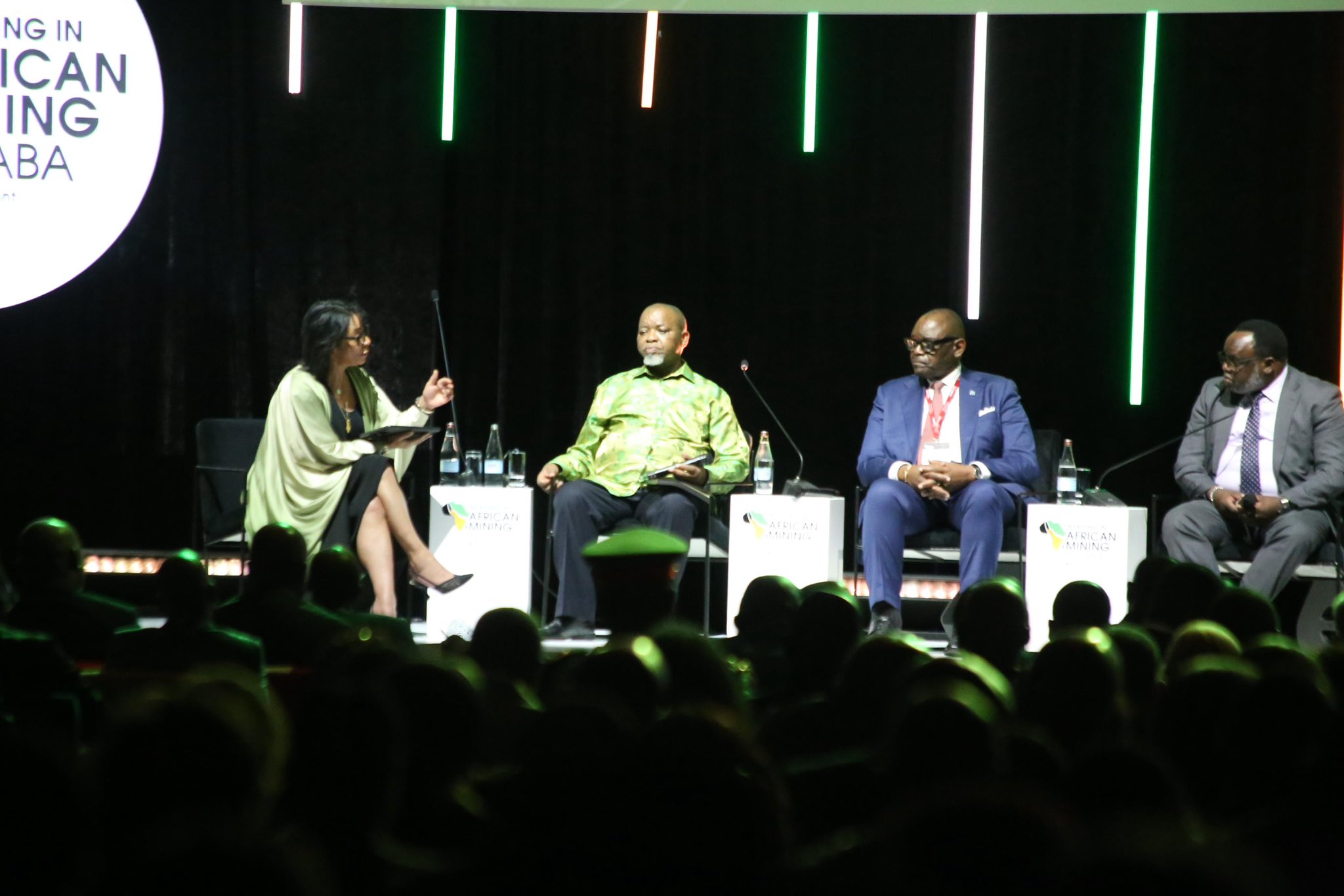
Mineral and petroleum resources minister Gwede Mantashe has opened the 2026 Mining Indaba in Cape Town, and made a clarion call for Africa to understand the negotiating power it possesses through its critical mineral wealth.
The Indaba is held under the theme “Building Critical Minerals Value Chains in South Africa”, the forum aims to showcase South Africa’s critical minerals investment proposition and highlight bankable, investor-ready projects across the value chain.
The Mining Indaba is described as the world’s largest, premier conference dedicated to African mining, focusing on investment, innovation, and sustainable development.
Mantashe used his Mining Indaba address to place South Africa’s mineral sector within a broader African and global geopolitical context, warning that African countries needed to take responsibility for protecting their natural resources in the face of intensifying international competition.
“We may [be] daft and pretend as if there is no such [thing, but] we are witnessing heightened geopolitical tensions in the world, driven largely by competition of some developed economies seeking greater control over natural resources of developing nations. It’s not our fault we have deposits here, but the great nations want to have control over those deposits, though they’re with us, so we have a responsibility to protect them,” he said.
He described Africa’s situation as a paradox: the continent was endowed with vast mineral wealth but remained the poorest in the world. He argued that this was because African countries had historically ceded control of their assets to external actors.
“We’re in the poorest continent, though we have the richest deposits of minerals in the world. That is a contradiction. This is not a function of resources. It is a function of leadership. We have given away our leadership, and we have given away our role. We have given it to everybody else except ourselves. As a result, we are at the mercy of everybody else for our own resources. That must change, “he said.
Mantashe stressed that African nations must coordinate policies and collaborate rather than competing against each other for foreign investment. He suggested that harmonised approaches would strengthen bargaining power with external investors and prevent companies from leveraging competition between countries to secure more favourable terms.
“This continent owes it to itself to unite, work together [and] talk to the outside world as one. It’s a long way to go, but let’s try it. Let’s give it a go. It is what we need most as a continent.
“Our partnership must move beyond extraction to industrialisation. We should add value close to the point of production. Those who want our critical minerals must not find it easy to move from one country to the next and actually play us against each other. We must have a uniform framework that guides all of us on the continent, then we are going to be able to compete everywhere, “he said.
He also called for a reassessment of how critical minerals were defined and managed in Africa, emphasising that the continent’s priorities may differ from those of other regions, citing coal as an example.
“In Africa, [the definition of critical minerals] should have a different meaning . . . Here, we need the role of the critical minerals of the economy. We need to talk of export earnings. We need to talk about it in terms of its contribution to development in the continent.”
“That’s why, in our critical minerals, we are also having coal as one of them. On other continents, it’s a dirty product. For us, it’s quite an important product because it employs many people and it earns foreign earnings, and it does many things in Africa. So we must not be following the fashion of others. We must assess the impact on our own continent,” he said.
Mantashe noted the importance of working with the private sector as a partner in realising Africa’s mineral potential.
“In Africa, working with the private sector is like taboo, because it is our resources. We must own them and must run them. [But] I’m a great believer of working with the private sector, because together, we can do more. Our resources can give us better results. But if we compete with one another, we are not going to achieve what we want to achieve,” he said.
Meanwhile Minerals Council South Africa CEO Mzila Mthenjane raised concerns surrounding the Mineral Resources Development Amendment Bill.
Mthenjane said there is uncertainty surrounding the bill, which is not good for investor confidence.
“It did not encourage or sustain the investment and growth that the mining industry needs to realise its full potential to create employment, stimulate the economy and fulfil its social mandate,” he said.
The bill marks the most significant regulatory update to South Africa’s mining sector in almost 25 years, introducing major amendments to the 2002 Mineral & Petroleum Resources Development Act, the country’s cornerstone mining legislation.
“We anticipate the revised bill, which we expect to be published in the coming weeks, will reflect our inputs to ensure mining attracts investment in exploration, mine development and existing operations.”