
By Lehlohonolo Lehana.
There has been a 16% decline in rhino poaching year on year, which Department of Forestry, Fisheries and Environment is attributing to the success of anti-poaching and anti-trafficking efforts.
The ministry said in a statement that 352 rhinos were killed for their horns in 2025, down from 420 in 2024 and 499 in 2023.
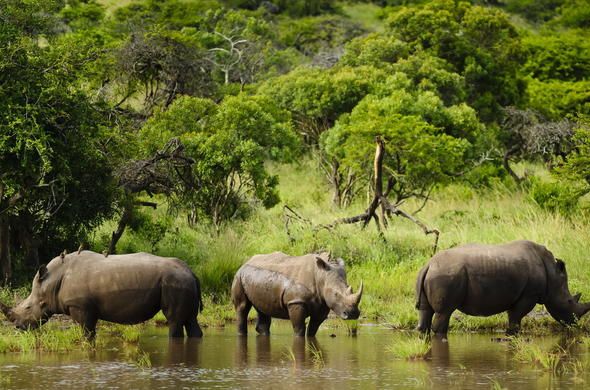
South Africa is home to nearly half of the critically-endangered black rhino population in Africa and to the world’s largest population of near-threatened white rhinos.
Rhino horns – made primarily of keratin, a protein also found in human hair and fingernails – are prized in some East Asian countries for traditional medicine and jewellery.
Despite the overall drop in poaching last year, there was a sharp rise in the number of rhinos killed in the Kruger National Park, the country’s flagship game reserve.
Minister of Forestry, Fisheries and the Environment, Willie Aucamp conveyed his gratitude towards the anti-poaching efforts of the private sector, especially that of private rhino owners. Sustaining this downward trend in rhino poaching requires coordinated and aligned action by government, private sector and non-governmental organisations, underpinned by clear objectives.
The IWZ Programme and the SAMLIT Illegal Wildlife Trade Task Force – working with the Financial Intelligence Centre and the banking sector- are central to this approach.
“South Africa continues to strengthen its international collaboration to curbing rhino poaching and wildlife trafficking. These efforts led to the country receiving the Asia Environmental Enforcement Recognition of Excellence Award late last year, which celebrates excellence in enforcement by government officials, institutions and teams combatting transboundary environmental crimes,” said Aucamp.
“Working together with the South African anti-poaching and anti-trafficking organisations, we remain committed to a balanced, intelligence-driven, and partnership-based approach to rhino protection, recognising that sustained success requires constant adaptation, integrity, and cooperation across all sectors,” added Aucamp.
** Members of the public can report any suspicious activities around wildlife to its environmental crime hotline which is 0800 205 005 or the SAPS number 10111.