
By Lehlohonolo Lehana.
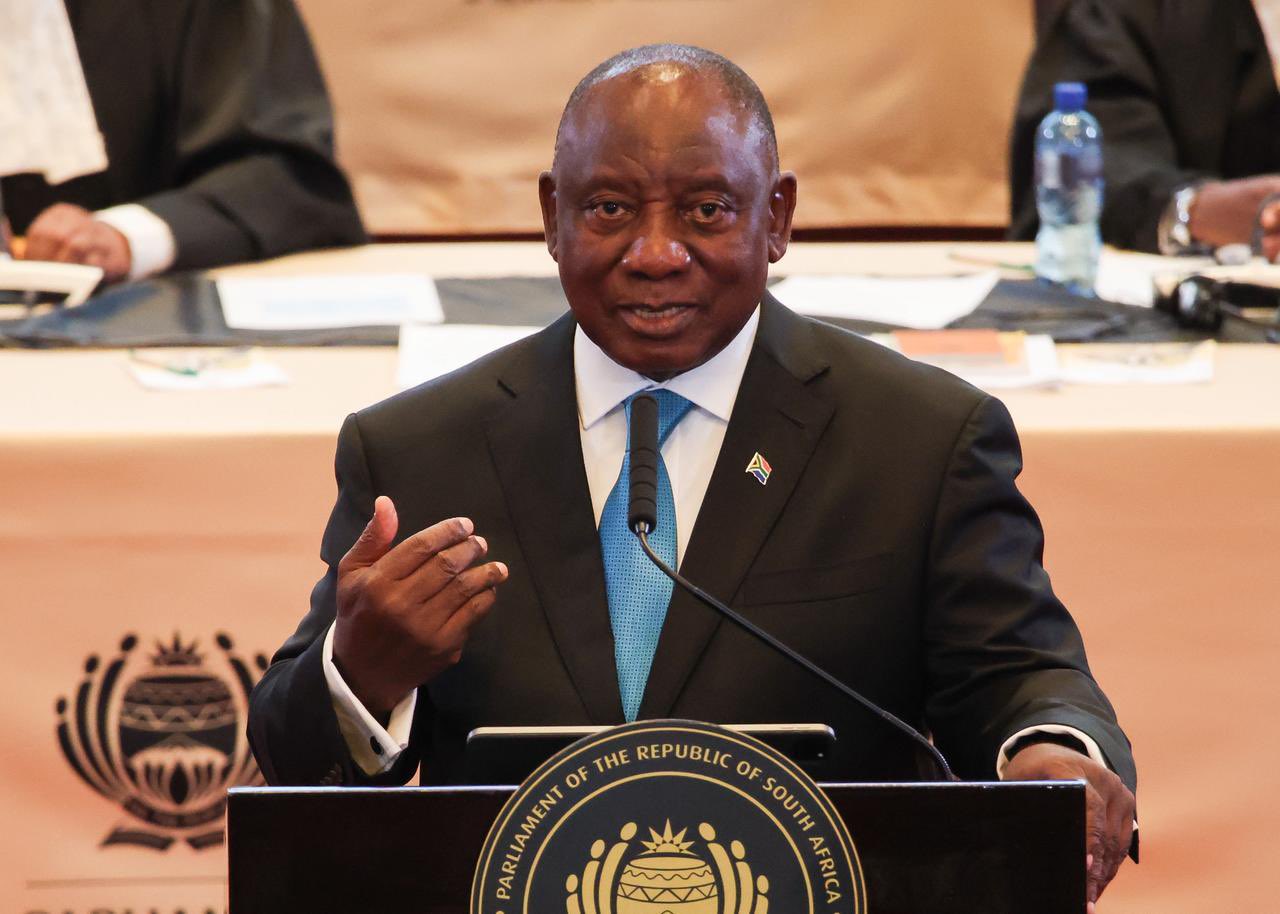
President Cyril Ramaphosa delivered the State of the Nation Address (SONA) in the seventh administration at the City Hall in Cape Town on Thursday.
The evening commenced with a grand display of national pride which included a ceremonial guard, the singing of the national anthem, a 21-gun salute, an aircraft exhibition, and a full military band.
The President was ushered into the National Assembly by Ria Reen, a Khoi-San woman from the Northern Cape, with a powerful poetic voice.
Framing his address against the country’s historic milestones of 1956, 1976 and the adoption of the Constitution in 1996, President Ramaphosa said South Africa’s resilience lies in its people, its institutions and its democratic ethos.
Ramaphosa pledged decisive action to confront rampant crime, worsening water outages, dysfunctional municipalities and the next phase of Eskom’s restructuring.
Reactions
Jurgen Eckmann, Wealth Manager at Consult by Momentum
President Ramaphosa’s address points to a macro environment that is more stable than it has been in several years – you could feel the positivity in the room, which was very encouraging after the more gloomy addresses from years’ past. Four consecutive quarters of GDP growth, easing inflation and declining interest rates provide welcome relief for households under pressure. For consumers, that creates some breathing room but it also requires sound financial decisions rather than complacency.
A stronger rand and improved performance on the JSE mean investors should reassess how much of their portfolios sit offshore versus locally. Many South Africans increased offshore exposure during periods of uncertainty. With local fundamentals stabilising, it may be time to revisit asset allocation and rebalance where appropriate.
Energy reform is another key shift. With loadshedding largely behind us and restructuring under way, sectors that were previously constrained by unreliable electricity may recover more sustainably. That has implications for local equities, business expansion and even residential and commercial property values.
At the same time, the water crisis introduces a new and very real financial consideration. Infrastructure quality and municipal governance will increasingly influence property risk and long-term investment decisions, which is something to pay attention to.
On the fiscal front, while primary budget surpluses and improved revenue collection are positive, broad tax relief is unlikely in the near term. Consumers should expect continued compliance scrutiny and plan cash flow carefully. The cost of living crisis is not disappearing yet.
The renewed focus on crime and enforcement also matters economically, hopefully positively affecting insurance premiums, business confidence and ultimately household stability.
Nkosinathi Mahlangu, Youth Employment & Entrepreneurship Specialist at the Momentum Group Foundation
This year’s SONA puts welcome emphasis on growth, infrastructure and skills reform. The scale of planned infrastructure investment, the expansion of youth employment programmes, and the proposed overhaul of the skills development system are all important steps in the right direction.
But growth figures alone do not guarantee that young people will find work. We need to be more deliberate about how opportunity is structured. Large infrastructure and rail projects need to create entry-level jobs in the very communities where they are implemented.
The shift toward a training model that combines classroom learning with practical workplace experience is a positive development. Strengthening TVET colleges as primary sites for artisan and occupational training is equally encouraging, particularly if these institutions are properly resourced and closely linked to industry demand. The real test will be whether this translates into structured work experience and clear pathways into sustainable employment once young people complete their studies.
The inclusion of agriculture as a priority growth sector is particularly significant. Agriculture holds real potential for youth employment, but we need clear processes that enable small-scale and emerging farmers to participate meaningfully and scale their operations. This is critical not only for job creation, but also for reducing our reliance on external trade arrangements such as AGOA.
The foot-and-mouth disease outbreak has hit commercial farmers hard, but its impact on small-scale and young farmers is often more devastating. Urgent and equitable access to vaccines will be essential to protect livelihoods and sustain youth participation in the sector.
The focus now must be on measurable outcomes that ensure young South Africans are not left behind.
David McDonald, CEO at SolarAfrica
While the President pointed out in tonight’s SONA that loadshedding may be behind us, the real test now is whether structural reform is implemented at the pace the country needs to deliver real long-term energy security.
The restructuring of Eskom and the establishment of a fully independent state-owned transmission entity – which will own and control transmission assets and operate the electricity market – is a critical step. If executed properly, the first round of independent transmission projects could unlock significant private investment in expanding the national grid. What matters now is delivery and clear timelines.
The President was right to say that electricity used to be cheap – but, due to past state capture, mismanagement and years of underinvestment, it is no longer. In fact, to add salt to the wound, NERSA has just confirmed that tariff adjustments will be higher than initially anticipated, with a 5.36% increase effectively rising to 8.76% following calculation corrections. For C&I users, cost certainty is critical. Businesses need predictability if they are to invest and grow.
The target of more than 40% renewable supply by 2030 is encouraging. If transmission reform and grid expansion keep pace with generation, South Africa can restore competitiveness and build a more resilient, affordable energy system.
Overall, there are encouraging green shoots emerging. But stronger macro indicators do not remove the need for proactive financial planning.