
By Kevin Rademeyer, Sports Journalist.
South Africa’s route through the 2026 T20 World Cup has taken a decisive turn, with the Proteas not only securing a place in the Super Eights but also benefiting from a dramatic twist in Group B that has seen Australia eliminated and Zimbabwe advance.
The exit of Australia reshapes the competitive landscape and, on paper at least, eases the degree of difficulty facing the side coached by Shukri Conrad.
Proteas build momentum at the right time
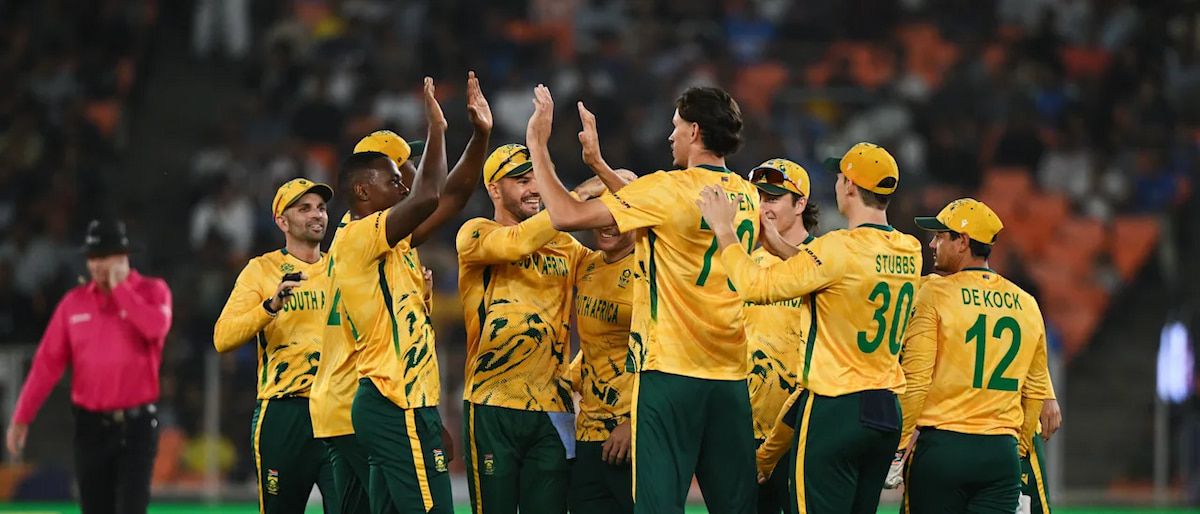
The Proteas sealed progression from Group D with a match to spare after recording three wins from three against Canada, Afghanistan and New Zealand. It has been a campaign marked by steady improvement.
An opening 57 run win over Canada hinted at batting firepower but also exposed early nerves. A chaotic double Super Over triumph against Afghanistan then tested the squad’s composure under extreme pressure. In previous tournaments such moments have proved fatal. This time, they held firm.
By the time South Africa dismantled New Zealand by seven wickets, captain Aiden Markram described a performance closer to their “fullest potential”. His unbeaten 86 anchored a display that was controlled, disciplined and clinical.
For a country scarred by World Cup near misses, the shift in temperament has been notable. There is confidence, but it is measured rather than euphoric.
Australia suffer historic group stage exit
While South Africa have surged forward, Australia have endured one of the bleakest chapters in their white ball history.
Their fate was sealed when Zimbabwe’s match against Ireland in Kandy was washed out, handing both sides a point. That result lifted Zimbabwe to five points, beyond Australia’s reach even with a final win over Oman.
Defeats to Zimbabwe and Sri Lanka had already left Australia reliant on other results. Persistent rain ended any lingering hope. It marks the first time since 2009 that Australia have failed to progress beyond the group stage of a T20 or ODI World Cup.
Injury disruptions and contentious selection decisions compounded their struggles. The absence of senior pace leaders and the omission of experienced campaigners drew sharp criticism at home. For a nation accustomed to tournament dominance, the early exit is a seismic moment.
Zimbabwe’s rise alters the equation
Zimbabwe’s progression, alongside Sri Lanka from Group B, introduces a different dynamic to the Super Eights. Led by Sikandar Raza, Zimbabwe have combined discipline with belief, defeating Australia and avoiding slip ups elsewhere to secure qualification.
From a South African perspective, the absence of Australia removes one of the traditional heavyweights from their projected Super Eight pool. Pre-tournament seedings had placed the Proteas in a group alongside hosts India, West Indies and Australia. With Australia now out, Zimbabwe step into that competitive space.
While no side at this level can be underestimated, few would dispute that facing Zimbabwe rather than Australia alters the perceived balance of power.
Semifinal stakes clear
The Super Eights will feature two pools of four teams. Each side will play the others in their group once, with the top two teams from each pool advancing to the semifinals.
That structure leaves little margin for error. A single defeat can complicate qualification ambitions, particularly in a tightly packed group featuring India and the West Indies, both already assured of progression.
For South Africa, the equation is straightforward. Maintain the upward trajectory shown against New Zealand and secure at least two victories in the Super Eights to control their own destiny.
Focus remains internal
The Proteas still have a final group fixture against the United Arab Emirates to negotiate. Rotation may come into play, yet the broader objective is continuity and sustained intensity.
Australia’s collapse and Zimbabwe’s rise have undeniably shifted the external narrative. On paper, the path has cleared somewhat. In reality, South Africa’s history in global tournaments demands caution.
The opportunity is there. A balanced squad, a captain in form and a draw that appears marginally less forbidding than expected. What follows will determine whether this campaign becomes a long awaited breakthrough or another chapter of what might have been.