
By Lehlohonolo Lehana.
Photo Credit: Simphiwe Nkwali.
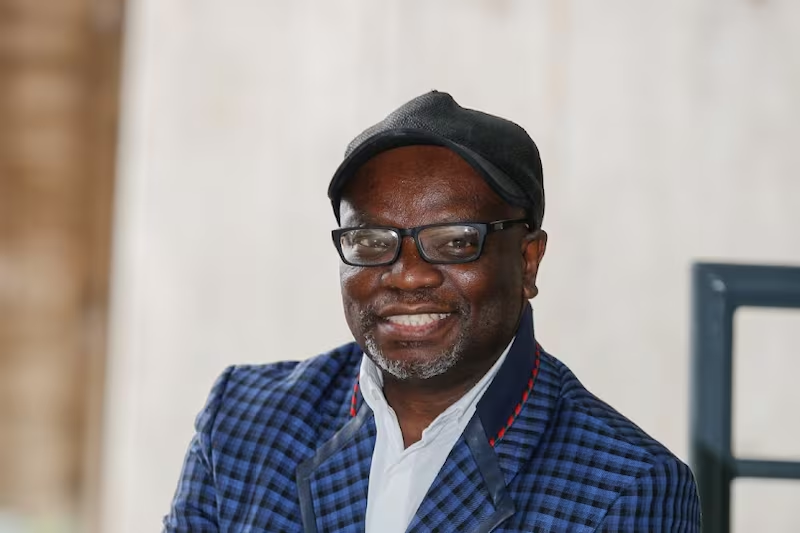
The creative director and principal architect of the Joyous Celebration production Dr Lindelani Mkhize has rejected claims of improper financial conduct at Joyous Celebration.
Mkhize says longstanding governance disputes are being misrepresented in the media.
According to a report, Mkhize faces allegations from his Joyous Celebration co-directors of multiple financial irregularities, including: failing to disclose and account for monies owed to the corporation, which led to Joyous Celebration Foundation NPC receiving a R1m tax demand from Sars in 2024; secretly securing sponsorships, including from MTN, African Bank and Bathu Sneakers, and hosting events that include: a Restoration show in 2022, a “Replenishment concert” and “Delicious festival” in 2023; and the gospel concert a Soulful Explosion 2025; directing payments received for these events to his personal account or companies he controls; using company assets to fund over R1m in personal travel and car rental expenses over three years; and taking a R300,000 loan from Joyous Celebration in 2017 for his own entity and failing to repay it.
He says he has never controlled payments, which were managed by the Joyous Office under Pastor Jabu Hlongwane. All matters are now subject to formal arbitration, and Mkhize is urging fairness and restraint in public commentary.
The disputes intensified after a meeting in December 2021, when Hlongwane and Mthunzi Namba expressed their intention to exit Joyous Celebration, and confirmed this in writing in March 2022.
Mkhize said he welcomed a structured separation process, subject to independent valuation and full financial disclosure.
Historically, major events, sponsorship receipts, and bookings were administered through an external managing agent,” Mkhize added.
Concerns over liabilities emerged after the exit of an external managing agent, when sponsorship receipts and bookings were administered internally.
Mkhize said no further substantive clarification has been provided regarding the liabilities or the continued payment of performance fees to members who have not actively participated in productions for several years.
He added that the central disagreement concerns governance principles, particularly the distinction between operational remuneration and ownership returns.
“Membership does not create an automatic entitlement to ongoing operational payments in the absence of participation or outside declared distributions,” he explained.