
By Lehlohonolo Lehana.
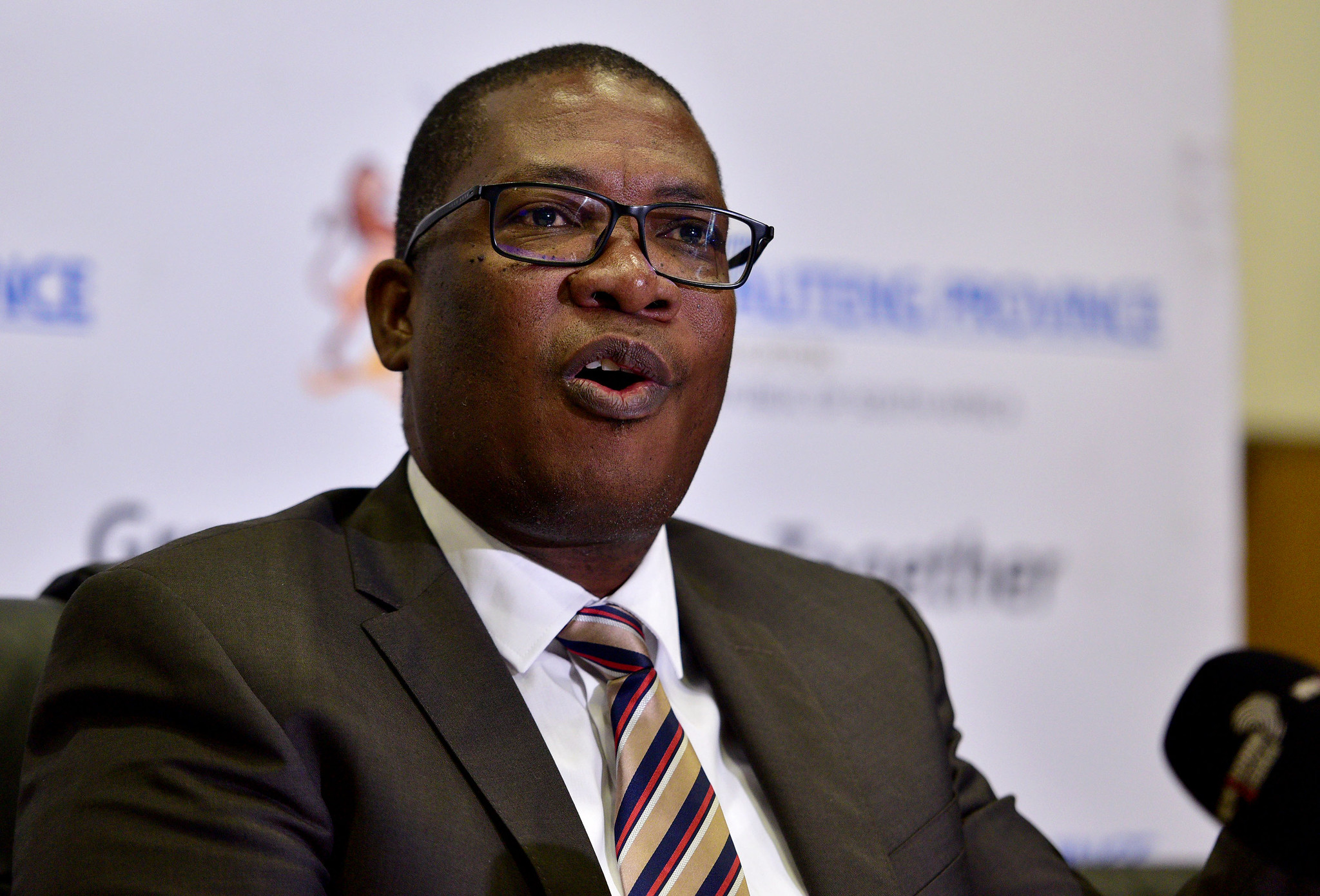
Gauteng premier Panyaza Lesufi has outlined plans to deal with crime, corruption and lawlessness; improve infrastructure; fix local government and accelerate service delivery; and bring the private sector to the centre of economic revitalisation.
Lesufi delivered his 2026 State of the Province Address (Sopa) at Nasrec Expo.
The province, South Africa’s economic hub, is under increasing pressure from failing infrastructure and rising crime levels, both of which are weighing on business activity and investor confidence.
Lesufi said government would prioritise investment in water systems and expand crime-fighting capacity to bolster economic growth.
To permanently resolve these issues, a R760-million infrastructure investment upgrade is underway in CoJ in a phased approach.
This includes the construction of a new ground reservoir and a tower in Brixton, which will become operational on Saturday, to improve the supply.
“In response to this crisis, we built an emergency boosting pumping station, which will go live next week, to ensure that these areas are covered with water. The permanent solution will be realised once the construction of the 5 km pipeline is concluded at the end of the year.”
To support this, Gauteng has secured R312 billion in investment commitments through its inaugural investment conference, with R73 billion already in implementation.
The projects are expected to create around 114 000 jobs.
The province is also preparing for a R52 billion asset transfer when the Gautrain infrastructure is handed back to the state in March.
Lesufi revealed that 30 companies have expressed interest in financing a future high-speed rail link between Gauteng and Limpopo, alongside a new concessionaire model for the Gautrain.
In total, he believes these initiatives could generate up to 250,000 jobs, particularly for young people.
Lesufi further pointed to Heineken Global, which started construction of a R1.9-billion investment in Midvaal, while Microsoft invested R5.4-billion into a data centre expansion in the Midrand-Centurion corridor, positioning Gauteng as Africa’s digital gateway.
The Tshwane Automotive Special Economic Zone (SEZ) has secured R1.61-billion in confirmed new investments and remains on track to achieve the 4 000 construction jobs committed for Phase 2.
The Vaal SEZ, which has recently been gazetted for comment by Trade, Industry and Competition Minister Parks Tau, is expected to contribute over R10-billion to the Gauteng economy.
Further, Lanseria Smart City has secured R4-billion for Cradle Film Studios, which is set to become the largest film production facility on the continent. The project is expected to create 15 000 jobs, including 10 000 in film production.
In addition, the Tambo Springs SEZ is projected to deliver significant and long-term economic benefits to Gauteng, underpinned by an estimated R23.6-billion capital investment. During the construction phase, the project is expected to contribute to and support about 50 000 jobs and enable over 1 000 new micro, small and medium-
Solly Msimanga, leader of the Democratic Alliance (DA) in Gauteng, argued that unemployment remains stubbornly high at 33% and that residents have heard similar commitments before.
“People cannot live on promises and apologies,” he said, suggesting the Premier should prioritise fixing struggling industrial zones rather than launching new ones.
ActionSA Gauteng chairperson Funzi Ngobeni said the province required measurable plans and timelines to address ageing infrastructure and water losses, adding that residents needed “reliable water in their taps, not more promises”.
“If businesses are still struggling with unreliable water, if residents still do not have consistent supply, then it is fair to ask whether the fundamentals are really in place,” Ngobeni said.
The Good party’s Matthew Cook called for transparency on the progress made with previous commitments and detailed reports to residents about on delivery targets.
“Before making such declarations (about improvement) the premier should check the taps because in many communities across Gauteng, they are still dry,” Cook said.