
By Lehlohonolo Lehana.
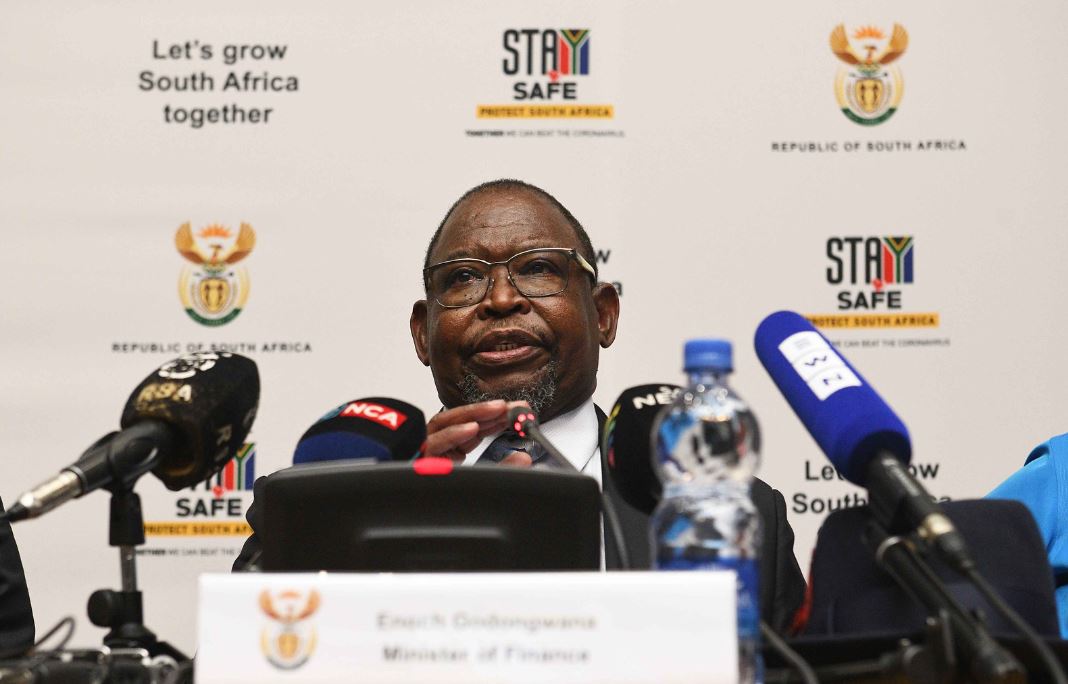
Finance Minister Enoch Godongwana delivered the 2026 Budget Speech at the Nieuwmeester Dome in Cape Town on Wednesday, which demonstrated improvements over three years in projected fiscal metrics.
Personal income tax brackets as well as medical tax credits will be adjusted by 3.4% in line with the expected inflation rate for 2026, and rebates and tax thresholds have also been raised.
It is the first time in two years that individual taxpayers have been provided with relief from bracket creep — the effect of inflation on their salaries, which pushes them into a higher tax bracket. The move will further boost confidence in the economy, already recently strengthened by South Africa’s sovereign credit rating upgrade, lower inflation and heightened investor interest.
The threatened R20bn in tax increases has been averted due to a total revenue overrun of R28.3bn for 2025/26 compared with the 2025 budget. A large chunk of this – R22.1bn – has been allocated to non-interest expenditure, particularly on infrastructure for Transnet, the Durban container terminal, the Passenger Rail Agency of South Africa (Prasa) and Sentech.
Godongwana announced that infrastructure spending by the public sector would total R1.07-trillion over the period and that accelerated efforts would be made, through government’s reform agenda, to attract private investment into infrastructure. This in a bid to lay the foundations for higher growth than was currently being achieved.
While the Treasury made a modest upward revision to the growth outlook relative to the one outlined in the Medium-Term Budget Policy Statement (MTBPS) of November, the forecast remained muted.
Government revised its estimate for 2025 to 1.4% from 1.2%, and is projecting growth of 1.6% in 2026, up from the 1.5% outlined in November. It is still expecting growth of 1.8% in 2027 and 2% in 2028.
The Minister said that, for the first time this decade, a fiscal framework was being tabled in which debt-service costs would grow more slowly than overall expenditure. Debt-service costs would reduce from 21.3% of revenue in 2025/26 to 20.2% in 2028/29.
Main budget non-interest expenditure has been revised down by R19.4bn in 2026/27 and 2027/28 compared with the 2025 budget, mainly due to adjustments to baseline allocations in line with lower expected inflation.
The extension of the social relief of distress grant at an unchanged payment of R370 for another year will cost R36.4bn, with Godongwana saying details of its replacement will be revealed in the next MTBPS. Grants have increased slightly above the 3.4% expected inflation rate.
Through the government’s targeted and responsible savings programme, which aims to cut wasteful expenditure and ineffective programmes, savings of R12bn have been identified and reallocated. This mainly relates to terminating the public sector transport grant but includes getting rid of ghost workers and fraudulent social grant beneficiaries.
Godogwana allocated a further R2.7 billion to the defence budget over the medium term to improve operations, including maintaining the South African Air Force’s fighter capability.
The Border Management Authority has been allocated an additional R990 million over the medium term to build capacity by filling 738 posts.
Godongwana said the deployment of the South African National Defence Force (SANDF) “will be done within the law – something standard when the president deploys troops”.
“We are currently awaiting the SANDF and the South African Police Service to come up with a crime-prevention strategy, number of deployees and costs,” he added.
Over the medium term, R883.8 million will be shifted from the department of justice and constitutional development to the Office of the Chief Justice. This will allow the office to manage its own budget, enhancing its independence from the executive from 1 April, the finance minister said.An additional R687 million has been allocated to increase capacity in the judiciary.
Godongwana said once the costing for the establishment of specialised courts announced by the president had been finalised, allocations would be considered later in the year.
The education budget was broken down to R344.7 billion for basic education, R54.3 billion for the National Student Financial Aid Scheme, R50.3 billion for student transfers, R30.1 billion for skills development levy institutions, R22.7 billion for education administration and R15.0 billion for technical and vocational education and training.
The budget was silent on the National Health Insurance, whose implementation has been put on hold pending legal challenges. The health budget allocation includes R137.8 billion for district health services, R59.7 billion for central hospital services, R50.6 billion for provincial hospital services, R50.5 billion for other health services and R11.8 billion for facilities management and maintenance.
Godongwana raised taxes on alcohol and tobacco, increases that have long been standard fare in the budget. Duties on beer, wine, spirits and cigarettes will all rise by 3.4% with effect from April 1.
The budget provides for increases in the general fuel levy, the Road Accident Fund levy and carbon taxes. In total, taxes charged on a liter of 93 octane gasoline will rise by 21 cents to 6.58 rand. The effect on pump prices should be more than offset by lower international crude prices, although there’s no certainty those will hold.
The minister said spending would reach R2.67 trillion by 2026/27 including a proposed R5 billion contingency reserve to cater for disasters declared since the medium-term budget policy statement.
Budget Reactions
Jurgen Eckmann, Wealth Manager at Consult by Momentum
National Budget 2026 picks up where the President left off with SONA, with the Finance Minister delivering a largely consumer-friendly budget. However, projections for GDP growth and fiscal health are not exciting, which shows us that while reform momentum is improving, the material impact on growth is still gradual.
Consumers will be cheering about some relief provided in the form of a full inflation adjustment to personal income tax brackets (after two years of bracket creep), while the increase in the tax-free savings account limit and the higher retirement fund deduction cap meaningfully expand tax-efficient saving capacity. For those able to use these tools, this is one of the more favourable savings environments in recent years.
Debt stabilisation and a narrowing deficit are also genuine positives. Lower borrowing pressure and a sustained primary surplus support the case for improved market confidence and interest rate stability.
While the lower inflation environment provides consumers with some support, it softens nominal GDP growth, which slows the pace at which the debt-to-GDP ratio improves.
GDP growth of around 1.6% this year – only gradually rising toward 2% – tells a more restrained story.
The credit rating upgrade and withdrawal of proposed tax increases are encouraging, but they do not signal a booming economy.
For households, this is a Budget that rewards discipline. The policy direction is constructive, but wealth creation will depend far more on proactive financial planning than on macro optimism alone.