
By Lehlohonolo Lehana.
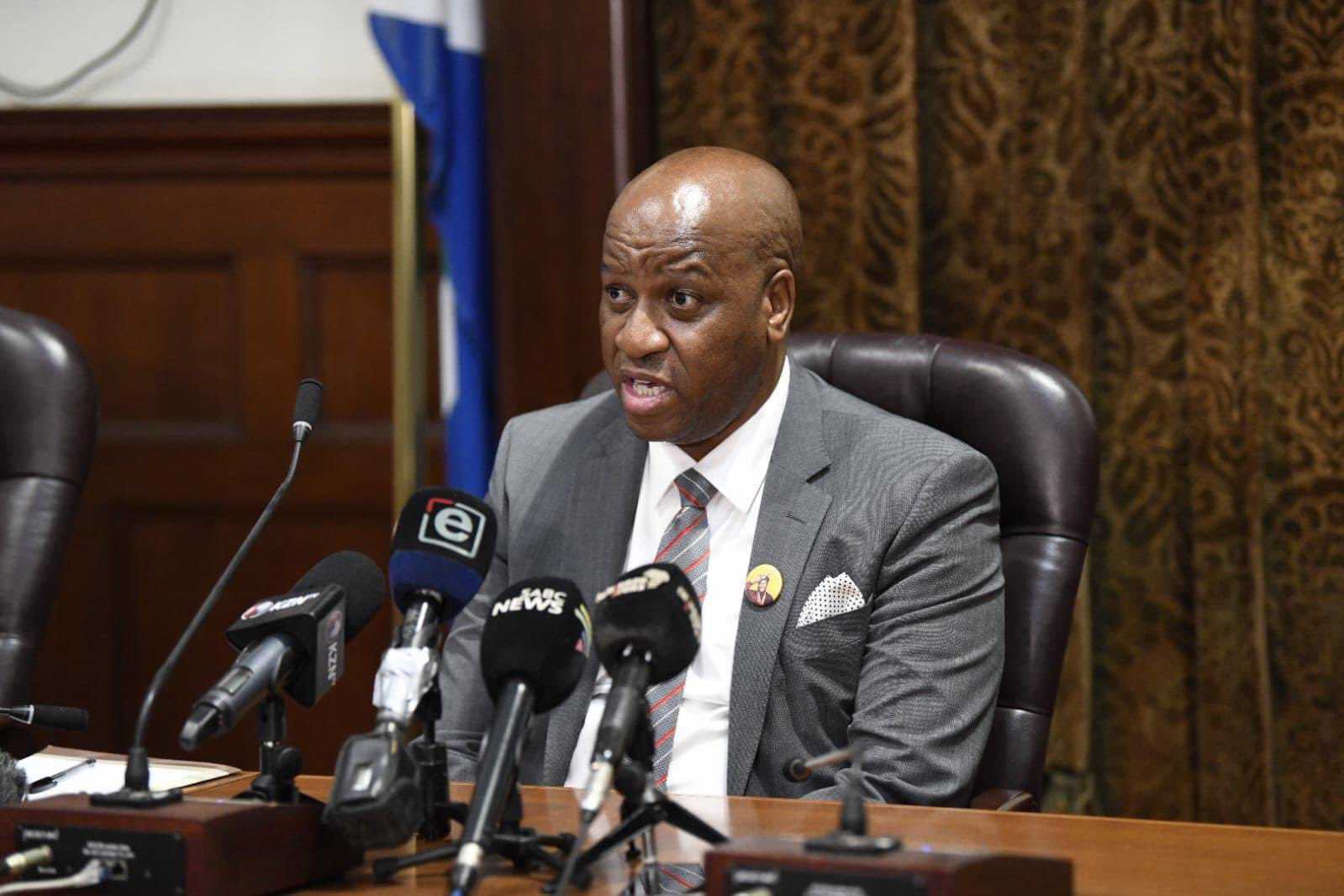
KwaZulu-Natal Premier Thami Ntuli, delivered 2026 State of the Province Address (SOPA), setting out the provincial government’s strategic priorities and outlining a clear programme of action for the year ahead.
The event was held at the provincial legislature in Pietermaritzburg, at the Woodburn Rugby Stadium on Friday.
Ntuli told the people of KZN that the multi-party administration is yielding good results.
“The economy of KwaZulu-Natal under the government of provincial unity is showing signs of steady recovery in 2025. Our provincial economy grew by 1.8 percent, a moderate but encouraging improvement from the subdued growth rates that characterise the post-COVID-19 period.”
The KZN is governed under Government of Provincial Unity (GPU), which was formed after the 29 May elections by the IFP, ANC, DA and NFP, excluding the MK party and the Economic Freedom Fighters (EFF).
The MK party won 37 seats in the provincial legislature. It is followed by the IFP (15), ANC (14), DA (11), EFF (2) and NFP (1). Although MK emerged as the largest party, its rejection of the election results and refusal to enter coalition talks opened the way for the four parties to form a government with a majority of one.
Ntuli added that the province received R100 billion in investment pledges from both domestic and international investors.
However, it requires more than 400 000 jobs to reduce unemployment from just over 30% where it is now to 20% as it is planned.
Ntuli said the province was supporting TVET reform, workplace learning and expanded employment programmes, and was forging a provincial skills compact with the private sector in logistics, energy, construction and the digital economy.
He cited Statistics South Africa’s report that KwaZulu-Natal had achieved 54,000 new job opportunities as evidence of progress.
Tourism, which is one of the province’s key economic pillars, saw strong performance, with the festive season alone contributing an estimated R13 billion to KwaZulu-Natal’s Gross Domestic Product (GDP) in 2025.
“Tourism has shown remarkable growth,” Ntuli said.
Ntuli stressed the importance of infrastructure-led growth as a key element of KwaZulu-Natal’s economic strategy.
“The province’s growth must be underpinned by strong infrastructure in sectors like agriculture, manufacturing, and tourism,” he stated.
“We are also focusing on improving cross-border trade through smart infrastructure solutions, including public Wi-Fi, and revitalizing the King Shaka International Public Link Solution to enhance connectivity across key economic hubs in the province.”
He emphasised that KwaZulu-Natal’s development strategy will prioritize interconnected growth between sectors and areas.
On crime, Ntuli said, despite the fact that some citizens were yet to join the provincial push against crime, there was evidence showing that the anti-crime strategies implemented by the provincial government were beginning to bear fruit.
The fact of the matter is that crime is decreasing in the province, though it is still high.
“The recent revelations that crime has decreased by 13% in KwaZulu-Natal is a testimony to the good leadership provided by the Provincial Commissioner Lieutenant General Nhlanhla Mkhwanazi,” he said.
The Premier also addressed the province’s response to Foot-and-Mouth Disease (FMD), which poses a significant risk to the livestock sector.
He reported that KwaZulu-Natal has received 200 000 vaccine doses from a national batch of one million, the largest share allocated to any province.
“The vaccination rollout is being intensified as part of efforts to contain the disease. We are expecting same or more quantities every week until our herd population is covered. We are working with farmers, both commercial and communal, to mitigate the risk of FMD,” Ntuli said.