
By Estea Rademeyer.
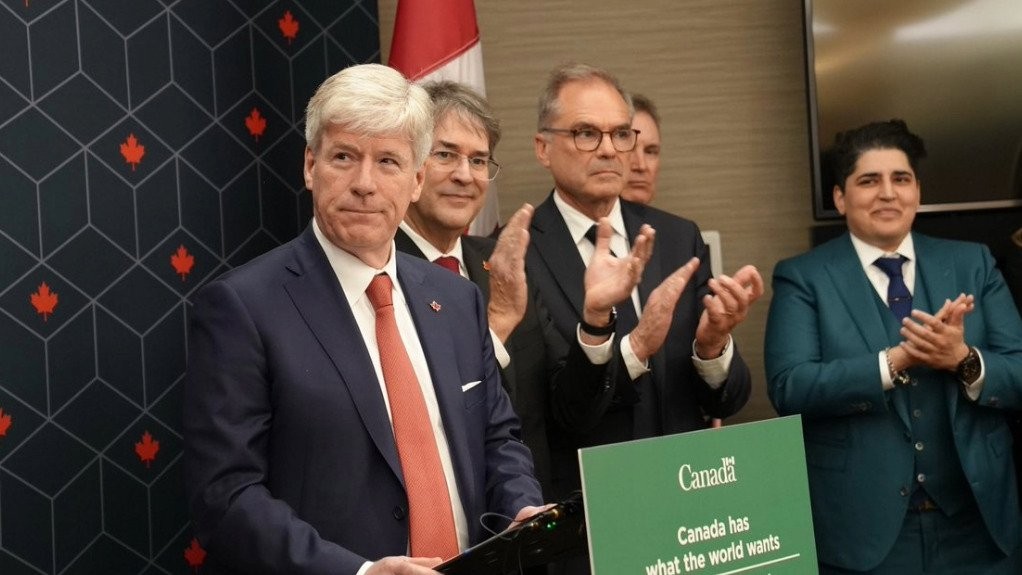
Canada is spearheading an international effort to secure the supply of minerals like lithium, copper, and manganese. Yesterday, a Canadian-led “Buyers’ Alliance” (formally the Critical Minerals Production Alliance) mobilised roughly C$18.5 billion to fund mining and processing projects across 12 allied nations.
The goal is to create a stable, predictable market for the minerals required for electric vehicles and defence systems, reducing global dependency on concentrated supply chains in Asia.
This initiative is part of Canada’s broader “First and Last Mile” strategy, which focuses on building the physical infrastructure necessary to get minerals from the earth to the market. The Canadian government has launched a $1.5 billion fund to build roads, railways, and power lines in remote mining regions. Additionally, they are investing $40 million to digitise geological data, a move inspired by similar systems in South Africa, to help mining companies find and develop new resources more quickly.
For South Africa, these global moves present both a major opportunity and a significant risk. While South Africa is not a core participant in the current Alliance deals (which prioritise G7 nations and select ‘trusted allies’ like Australia and Norway, with no direct projects or funding announced for South African initiatives), the Buyers’ Alliance creates potential indirect opportunities for South African mining through bilateral Canadian ties, existing Canadian investments, or future partnerships if aligned on responsible standards. It also supports the country’s goal of ‘beneficiation,’ which involves processing raw ore into refined metals locally. In theory, this should create industrial jobs and increase the value of South Africa’s exports.
However, the current state of South Africa’s industrial infrastructure presents a major hurdle. While Canada is building new infrastructure, South Africa’s existing smelting capacity has declined sharply. Out of 66 major smelters in the country, only 11 are currently operational. High electricity costs and inconsistent power supply have made it difficult for these facilities to remain profitable, leading many companies to shut down their processing plants and export raw materials instead.
In response to these closures, the South African government is currently focusing on emergency price interventions. The Ministry of Electricity and Energy has proposed a subsidised electricity rate of 62 cents per kilowatt-hour for large smelters operated by companies like Glencore and Samancor. This short-term measure aims to stabilise the industry and save approximately 1,500 jobs (with government targets to revive up to 45 smelters by the end of 2026 and 49 by 2027) while Eskom works on a more sustainable long-term pricing model for energy-heavy industries.
Amid these efforts to safeguard energy-intensive industries and maintain baseload power reliability, a notable policy stance gained prominence at the 2026 Mining Indaba, where Minister Mantashe announced that coal would be designated a highly critical mineral in South Africa. This pragmatic stance prioritises coal’s role in powering ~80% of the national energy grid.
However, it could create tensions with funding from initiatives such as Canada’s Buyers’ Alliance, which emphasise high ESG standards, responsible practices, and the clean energy transition. On the other hand, evolving global approaches (e.g., the US prioritising security and allied production over strict ESG hurdles) suggest potential flexibility for pragmatic partnerships.
Beyond minerals, the shift in global trade is impacting energy markets. Due to rising tension in the Middle East, many countries are looking to Canada as a reliable supplier. Canada is responding by expanding its export capacity for both conventional energy and clean technology, such as the CANDU nuclear reactors recently highlighted in a partnership deal with Türkiye. To manage the financial risks of these large-scale projects, Canada is launching a $2 billion Critical Minerals Sovereign Fund this spring, which will allow the state to take equity stakes and guarantee future purchases.
In this rapidly evolving global minerals landscape, where announcements like Canada’s signal accelerating diversification away from concentrated supply chains, and where geopolitical competition is driving new investments, standards, and demand for secure, responsible sources, countries with abundant resources face a defining moment.
For South Africa to benefit from the Canada-led alliance, the focus will likely need to shift from temporary price subsidies and fossil-fuel reliance to long-term structural fixes, such as grid reliability improvements, rail/logistics upgrades, and renewable energy integration for processing. While the Buyers’ Alliance offers potential funding and demand, the success of South Africa’s mining sector depends on providing the stable power and efficient rail transport required to turn raw minerals into high-value products that meet global green standards.