
By Lehlohonolo Lehana.
The Madlanga Commission of Inquiry has set aside Monday and Tuesday (9 and 10 March 2026) to hear the testimony of businessman Suliman Carrim, and it will resume the testimony of Major-General Richard Shibiri on Wednesday (11 March 2026).
On Friday, 6 March 2026, Carrim brought an interlocutory application to testify in-camera.
Carrim’s testimony was previously postponed after his legal team contended that they had not been given enough time to review and study the evidence.
During the proceedings today, Carrim’s lawyer Kameel Premhid asked the commission to allow his client to testify in camera.
Premhid told the commission that Carrim had been receiving death threats.
He told the commission that since his last appearance on 6 February, his client has faced surveillance, and that in-camera testimony would be necessary to protect him.
“My client’s position is that he has been subjected to those death threats regardless of the evidence he is going to give, “said Premhid.
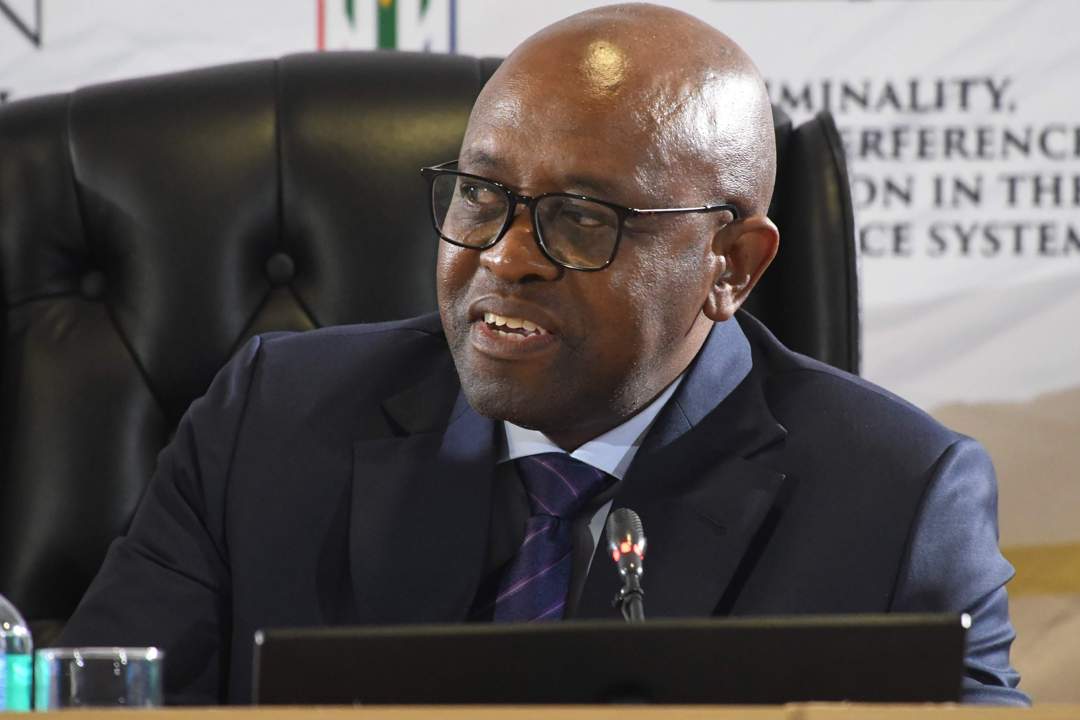
Retired judge Mbuyiseli Madlanga questioned the basis for the request, pointing out that other witnesses who had been granted permission to testify privately had presented compelling reasons.
“I don’t know what makes this one stand out,” he said.
Following an exchange between legal representatives and commissioners, Madlanga said detailed reasons for the decision would be delivered on Monday, 09 March 2026.
Meanwhile Premhid claimed receiving a call from Finance Minister Enoch Godongwana during the proceedings.
However Gogondwana’s office denied he called Premhid, as he is currently in London.
“An official from the legal unit of the National Treasury did call the counsel on Friday concerning an unrelated matter,” Treasury statement said.
The commission is investigating the criminality, political interference, and corruption in the criminal justice system.
President Cyril Ramaphosa established the commission as a response to allegations, made on 6 July 2025 by KwaZulu-Natal (KZN) police commissioner Lieutenant-General Nhlanhla Mkhwanazi, that South Africa’s criminal justice system was compromised because of the infiltration of criminal syndicates into police, judicial, parliamentary, political, intelligence, and law enforcement structures.