
By Lehlohonolo Lehana.
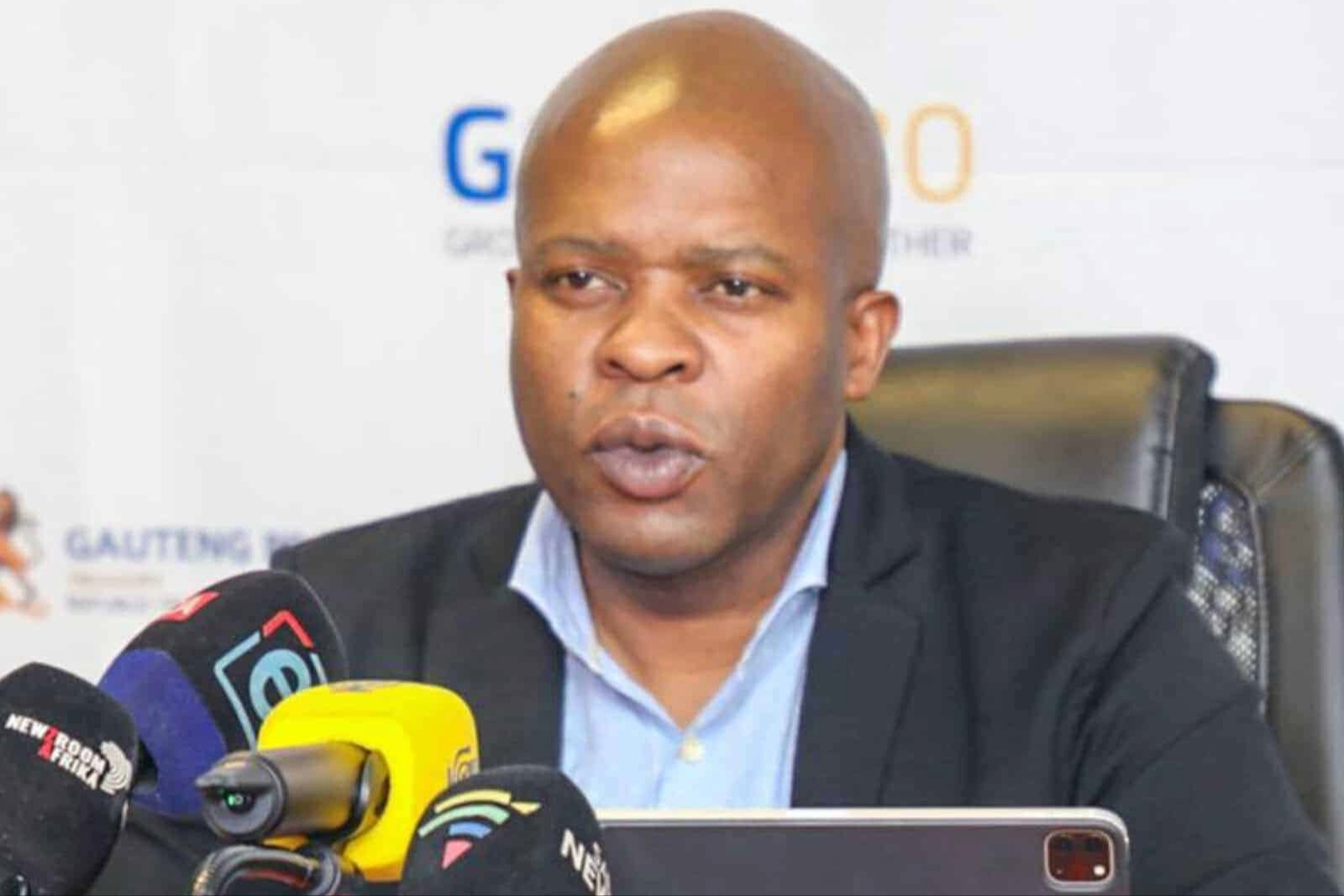
MEC for Finance in Gauteng Lebogang Maile presented the 2026 Gauteng Provincial Government Budget on Tuesday, revealing that total revenue collection is projected at R8.2 billion for the 2026–2027 financial year.
Maile tabled a R179bn provincial budget, representing a R3.6bn increase from last year’s allocation.
The province contributes 33% of South Africa’s Growth Domestic Product (GDP) with provincial growth expected to grow higher than South Africa’s real economic growth projected to reach 1.6% in 2026.
The Gauteng Provincial Government allocated R70.9-billion in the 2026/27 financial year, and R221.8-billion over the Medium Term Expenditure Framework (MTEF), to the Gauteng Department of Education to improve the Early Childhood Development Strategy; improve learner performance programmes, such as the Secondary School Improvement Programme; strengthen school safety initiatives; promote pro-poor interventions, including nutrition and scholar transport; and enhance Schools of Specialisation and inclusive education through special schools.
To strengthen the public health system, expand access and improve the quality of care, the Gauteng Department of Health received R70.3-billion in 2026/27, an amount that will increase to R218.6-billion over the MTEF.
The funding will support maternal and child health, the Ideal Clinic and Ideal Hospital programmes and improved emergency medical response times, as well as the integration of mental health services at community level, digital health systems and electronic records and stronger HIV and TB interventions.
Further unpacking the MTEF, Maile said R1.6-billion would go to the Gauteng Office of the Premier in 2026/27, with a total of R4.7-billion allocated over the MTEF.
This will be used to drive the implementation of the Medium-Term Development Plan (MTDP) 2024 to 2029, with focus on tackling crime, growing the economy and investing in education and skills development.
The allocation also makes provision for provincial forensic audits, integrity-building programmes, the Gauteng City Region Academy, the Gauteng AIDS Council and the filling of posts that are ready for appointment.
The Gauteng Provincial Legislature received R1.4-billion in 2026/27, which will increase to R3.3-billion over the MTEF, to strengthen democracy and reinforce accountability by supporting law-making, oversight and public participation.
He set aside R1.8-billion for the 2026/27 financial year for Department of Economic Development, rising to R4.9-billion over the MTEF, to drive inclusive growth and create jobs through economic development and investment promotion.
“This allocation supports the work of the Gauteng Growth and Development Agency and Gauteng Enterprise Propeller, with a strong focus on special economic zones (SEZ) development, township automotive hubs, revitalisation of industrial parks, the Vaal SEZ, bulk infrastructure for Phase Two of Tshwane Automotive SEZ and trade facilitation under the African Continental Free Trade Area,” he said.
A total of R680.5-million was allocated to the Gauteng Department of Cooperative Governance and Traditional Affairs in 2026/27 – rising to R1.9-billion over the MTEF – to strengthen integrated planning, municipal support and coordination from the centre of government.
About R5.5-billion was allocated to the Gauteng Department of Human Settlements in 2026/27, rising to R16.6-billion over the MTEF, to expand access to inclusive human settlement opportunities and improve living conditions.
The Gauteng Provincial Treasury will receive R788.4-million, Department of Infrastructure Development is allocated a total of R3.7-billion, while R10.2-billion and R27.8-billion over the MTEF to the Gauteng Department of Roads and Transport. Also Department of Community Safety received a total of R2.3-billion and Agriculture and Rural Development was allocated R742.6-million in 2026/27.
Meanwhile, the Department of Social Development received R5.6-billion in 2026/27, and R17.2-billion over the MTEF and Department of Sport, Arts, Culture and Recreation was allocated R1-billion in 2026/27 and R3.2-billion over the MTEF to support school sport and school arts programmes, community-led social cohesion initiatives and dialogues
Maile reported that 28% of the R312.5 billion in pledges garnered from the 2025 Gauteng Investment Conference (GIC) have been converted into active projects.
As of February, this year, 28% of the investment pledges secured in 2025 have already been converted into projects and are being implemented. [Some] 18 out of 60 projects are now in a roll-out stage. These projects are to the value of just over R80 billion which will unlock this into the real economy.
“These are not theoretical commitments. They are projects under construction, expansions underway, energy developments advancing, and jobs being created. This conversion rate is central to our credibility,” he said.
The next iteration of the GIC is expected to be held in April.
Maile highlighted only 5% of the province’s revenue is derived from its own sources, collected from motor vehicle licences, gambling taxes, patient fees and interest earned on treasury investments.
The province’s total revenue collection for 2026/2027 is projected to reach R8.2 billion.
To strengthen collections, the provincial government is in the process of amending and reviewing the Gauteng Gambling Bill to “allow…for us to be able to regulate online betting”.
“In the period between 2019 and 2025, the Gauteng Provincial Government lost out on significant revenue amounting to hundreds of millions due to a lack of a formal provincial licensing framework for online betting. This has been implemented with great success in other provinces.
“With this legislative amendment, the Gauteng Provincial Government aims to tighten regulations focusing on strengthening oversight, improving compliance monitoring, and implementing automated responsible gambling interventions. There various other legislation that we are looking at including Gauteng Liquor Act and Regulations,” he added.