
By Nqobile Dludla and Lehlohonolo Lehana.
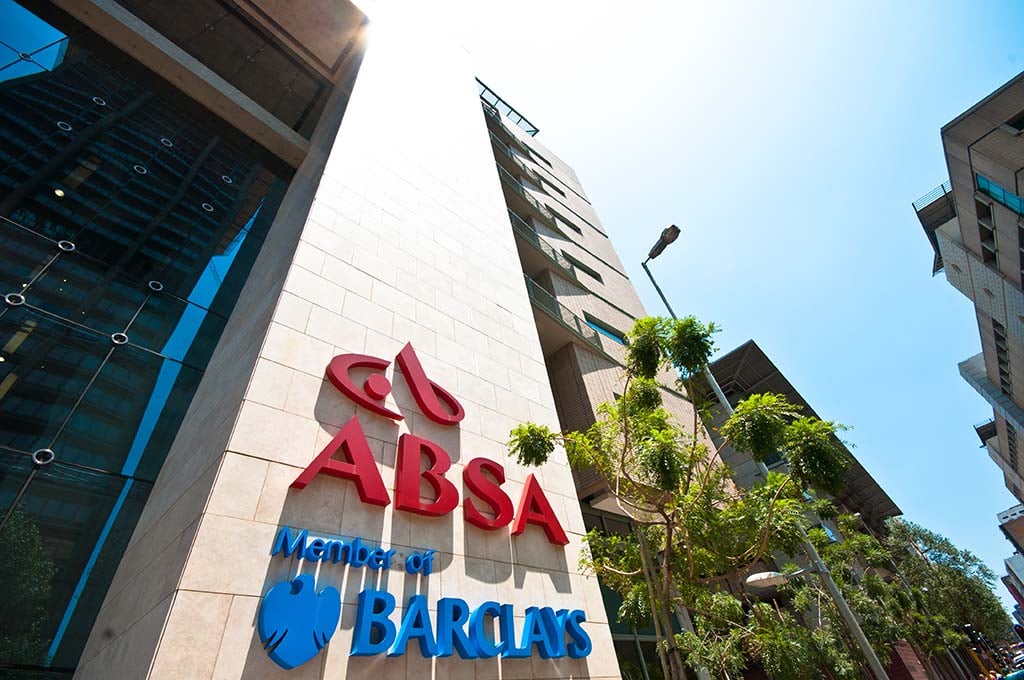
Absa Group is accelerating expansion across Africa as the region outside the bank’s home country becomes its top growth driver, even as South Africa remains its largest market, CEO Kenny Fihla said on Tuesday.
South African banks are stepping up acquisitions in East Africa, viewed as a trade corridor linking Africa with the Middle East, India, and Asia, as European banks retreat from the continent, creating a vacuum regional players are racing to fill.
In October, Standard Chartered agreed to sell its wealth and retail banking business in Uganda to Absa, South Africa’s third-biggest lender by assets.
Earlier, Absa posted a 12.25% rise in full-year headline earnings to 24.7 billion rand ($1.51 billion), as the corporate and investment banking, as well as rest-of-Africa units, reported growth.
Uganda, Tanzania, Zambia targets
Fihla told Reuters that Absa’s revenue and earnings in the rest of Africa remain heavily concentrated in Ghana and Kenya, but the group sees significant room for growth in Uganda, Tanzania and Zambia.
Scaling will involve strengthening the group’s balance sheet in order to expand through a mix of acquisitions and organic growth, improving group‑wide coordination and raising service quality to attract new clients, Fihla said.
“There is no doubt that the African region presents the biggest growth opportunities,” he said.
Zambia has become increasingly important to lenders due to its global importance in copper production and its growing portfolio of critical minerals essential for electrification and clean‑energy technologies.
Absa is also beefing up top brass to manage its Africa-wide business, with the head of personal and private banking expected to start in April. It is finalising the appointment of an executive to lead the pan-African business banking unit, Fihla said.
Fihla believes that Absa is better positioned than some rivals to capture East Africa’s growth as it already has an established presence in the region that boasts stronger economic growth than other regions and a favourable regulatory environment.
“If you do not have a presence, it becomes extremely difficult to take advantage of these opportunities. We already have that and therefore should be at a slight advantage…to capitalize on these opportunities,” he added.
Incentive Rewards
Meanwhile Fihla received a R20.7 million cash buyout award and a share-based buyout award valued at R77.7 million during 2025.
Fihla joined Absa from Standard Bank, where he was deputy CEO of the group and CEO of its South African operations. Previously, he headed up the bank’s corporate and investment bank unit, having been with Absa’s rival for nearly 20 years.
In total, Fihla was awarded remuneration for the six-and-a-half months of R49.6 million.
This comprised total fixed remuneration of R6.3 million, short-term incentives of R23.3 million, and a long-term incentive award with a value of R20 million.
The short-term incentives were roughly evenly split between a cash award (R12.15 million) and a deferred share award (R11.15 million). The former was paid in March, while the latter will be granted in April. In total, Fihla’s awarded remuneration from 17 June, including the buyout awards, was R148 million.