
By Kevin Rademeyer, Sports Journalist.
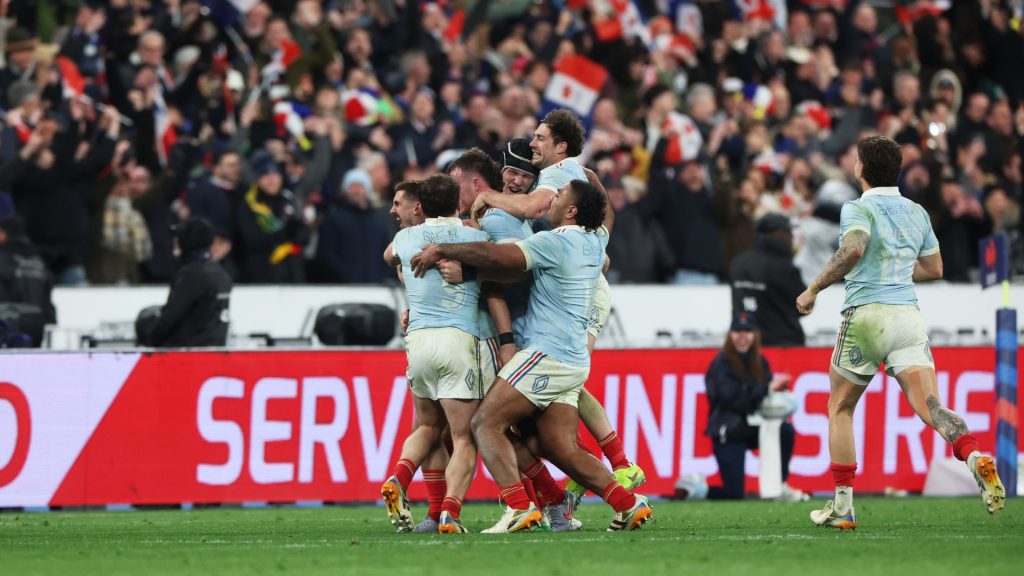
If a tournament ever deserved to be decided by the final kick, it was this one. The 2026 Six Nations ended in extraordinary fashion in Paris, where France retained their crown with a dramatic 48 to 46 victory over England.
Thomas Ramos’ long range penalty, struck with the clock already in the red, brought down the curtain on a championship that will be remembered as one of the most compelling in recent memory. It was a finale that felt almost inevitable in its chaos. This tournament had refused to follow logic from the opening weekend, so why should the final moments be any different.
The match itself may well be remembered as the game of the year. Ninety-four points, relentless momentum swings, moments of brilliance scattered across the field. England produced their most ambitious performance of the championship, running in seven tries and pushing France to the absolute limit. Yet it was the hosts who held their nerve when everything hung in the balance. Ramos’ final strike secured the title and sealed a contest that had been an assault on the senses from the opening whistle.
In many ways, the match reflected the entire championship. Attacking rugby flourished, risks were taken, and no team ever felt truly out of a contest. The Northern Hemisphere game is not merely healthy. It is thriving.
France’s triumph was built on flair, confidence and devastating speed. Louis Bielle Biarrey embodied that approach with four tries in the final alone, finishing a campaign that confirmed him as one of the most electrifying young talents in world rugby. Around him, France played with the passion and audacity that have come to define this generation. Even when England surged ahead late in the game, the composure never disappeared.
Ireland’s campaign told a different story of resilience. After losing their opening match, many believed their title challenge had evaporated before it had properly begun. Instead they fought back with typical determination, rebuilding momentum week by week and pushing the championship race to its final afternoon. By the time they defeated Scotland on Super Saturday, they had placed themselves briefly at the top of the table and forced France to win the final match to reclaim the trophy.
Scotland too produced one of the tournament’s quiet comeback stories. After early setbacks they rediscovered rhythm and confidence, securing important victories that kept them firmly in the championship conversation deep into the competition.
Elsewhere, the growth of the championship was perhaps most visible in the performances of Italy and Wales. Italy have long carried the burden of being the tournament’s outsiders. This year they played with imagination and skill that suggested something far more promising. Their historic victory over England demonstrated not only progress but belief. Their attacking patterns were ambitious and their young players increasingly comfortable competing with the traditional powers of European rugby.
For Wales, the championship offered a long-awaited revival. After a difficult period and a painful run of results, the performance against Scotland and their breakthrough victory on the last day beating Italy 31- 17, reignited belief among supporters and players alike. It may have arrived later than hoped, yet the performance carried the unmistakable signs of a team rediscovering its identity.
Taken together, the stories formed a tournament of remarkable depth. No result ever felt predictable. Every weekend seemed to deliver another twist. And then came Paris.
England, despite enduring their worst Six Nations campaign statistically, produced a performance filled with courage and attacking intent. Ollie Chessum crossed twice, Marcus Smith added another on his 50th cap, and Tommy Freeman appeared to have delivered a stunning victory when he scored with three minutes remaining. For a moment, the championship seemed ready for yet another unlikely turn.
But tournaments of this nature rarely end quietly. France earned one final opportunity and Ramos stepped forward. The penalty sailed between the posts. The stadium erupted. And the most exhilarating Six Nations in recent memory reached its perfect ending.
A championship settled by the final kick of the final match. Few sporting competitions could have scripted a more fitting conclusion. For Northern Hemisphere rugby, the message from this tournament is unmistakable. The quality of play continues to rise, the talent pool is expanding, and the appetite for bold, attacking rugby has rarely been stronger.
Attention now shifts beyond Europe. France will travel to New Zealand in July where they face the New Zealand national rugby union team in Christchurch in their opening fixture of the Nations Championship’s Southern Series. The match, set for 4 July at One New Zealand Stadium, will offer an immediate measure of whether the momentum built during the Six Nations can translate against southern hemisphere power.
England face an equally daunting assignment. They will meet the reigning world champions, the Springboks, at Ellis Park Stadium. Defeat there would stretch their losing run to five matches and deepen the scrutiny already surrounding the side.
Those July tests may ultimately provide a clearer answer to a larger question. With the Rugby World Cup now less than two years away, they will offer an early indication of whether the resurgence of Northern Hemisphere rugby can truly challenge the traditional dominance of the south when the sport’s biggest prize is contested again.