
By Lehlohonolo Lehana.
President Cyril Ramaphosa says the upcoming South African Investment Conference (SAIC) is aimed at building greater confidence in our country as an investment destination.
The event that will take place at the Sandton Convention Centre on Tuesday, 31 March 2026, will see delegates from more than 50 countries gathering to discuss investment opportunities.
In his weekly letter to the public, ahead of the sixth South Africa Investment Conference (SAIC) in Sandton this week, he has set a target of mobilising R2 trillion in private-sector investment by 2028, following successful drives since 2018.
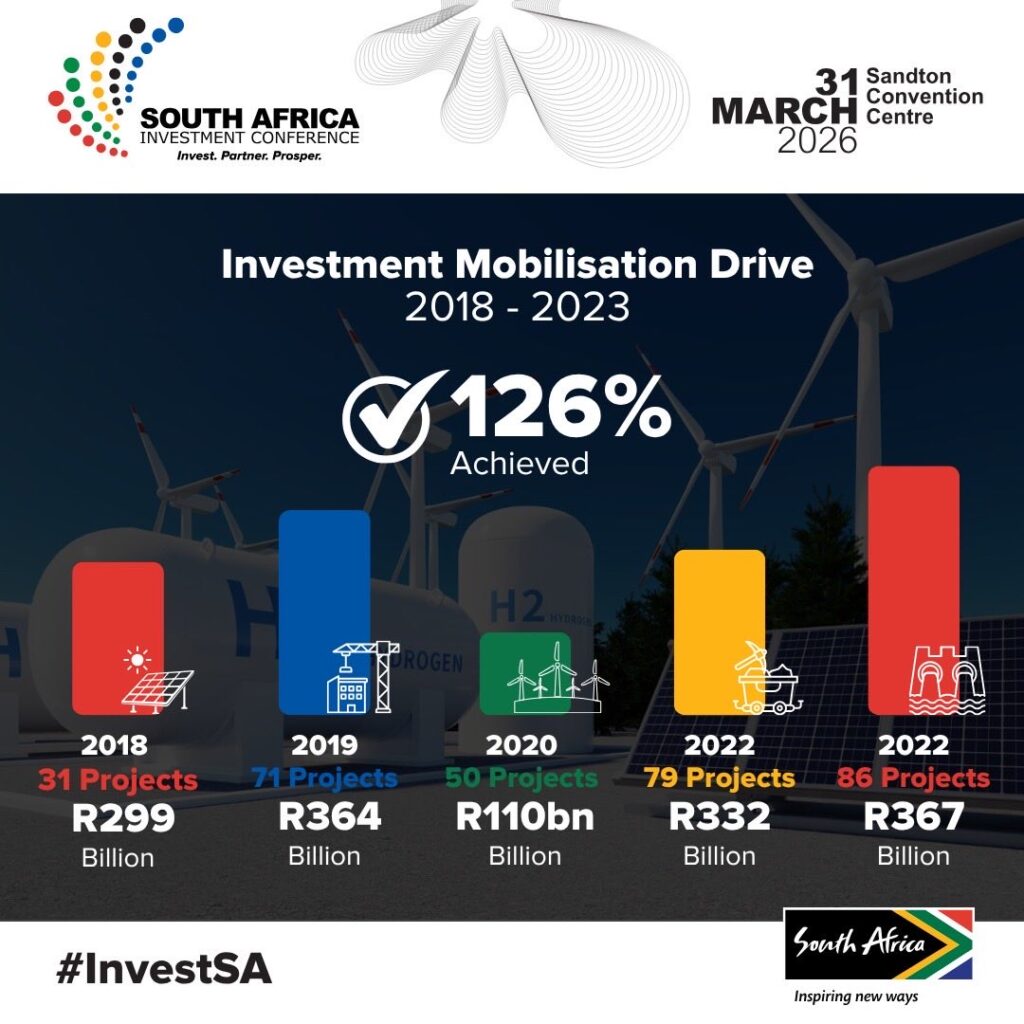
He noted that the country began its investment drive in 2018, aiming to attract R1.2 trillion in new projects.
In the years that followed, the government secured pledges in mining, healthcare, automotive, food and beverage, and other sectors.
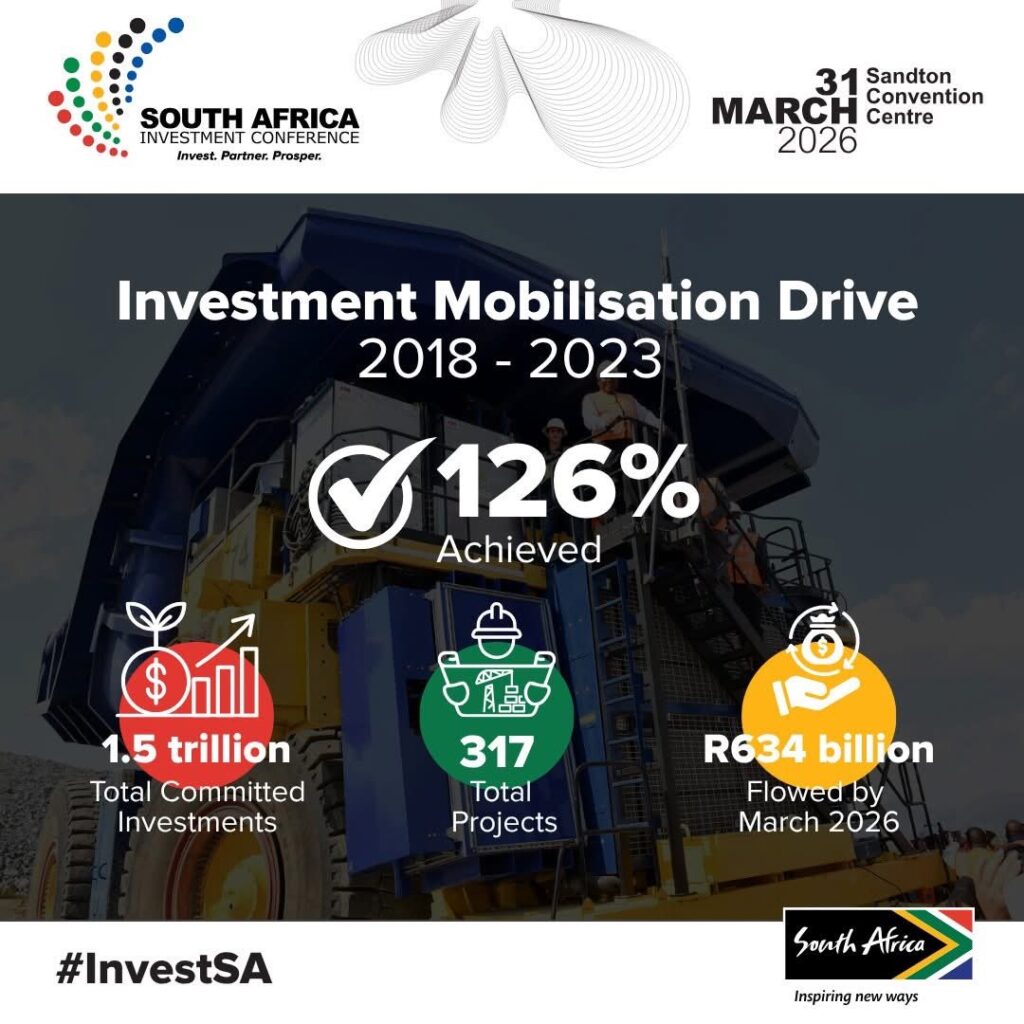
At the end of the first five-year investment mobilisation drive in 2024, investment exceeded the target by 26%, securing pledges valued at R1.57 trillion.
“Over 300 projects were initiated, and to date, 161 of these have been finalised or are under construction,” the president said.
“The pledges have not been merely vague commitments and promises, but have materialised as tangible, brick-and-mortar projects that are creating jobs for our people.”
The President affirms the country has a sound policy and regulatory environment that offers certainty to investors at a time when many emerging markets are vying for capital globally.
Additionally, South Africa is a gateway for businesses looking to set up or expand their operations in Africa.
Ramaphosa says South Africa has an improved macroeconomic outlook after four consecutive quarters of growth by the end of 2025 and national debt is stabilising.
Last year South Africa’s sovereign rating was upgraded for the first time in 17 years while the country was also removed from the Financial Action Task Force grey list.
The President attributes much of the progress in the economy to successful structural reforms, primarily through Operation Vulindlela, including improvements in electricity, freight logistics, water, telecommunications and the visa system.
While Ramaphosa talks up South Africa as an investment destination, international groups like the World Bank and the International Monetary Fund have repeatedly noted that the country needs action.
Reforms look good on paper, but they need effective and rapid execution to deliver the job creation and economic growth South Africa desperately needs to truly turn the country around.