
By Lehlohonolo Lehana.
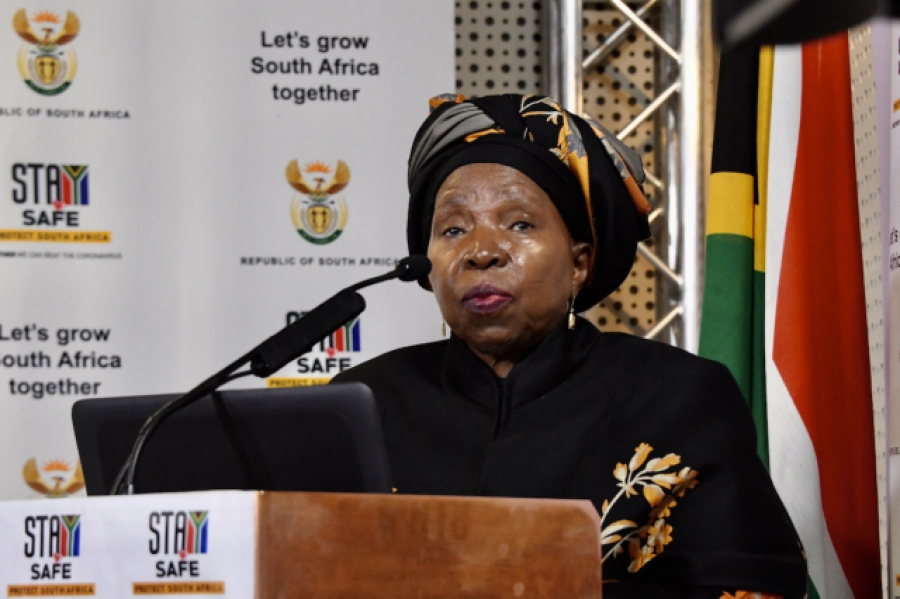
Photo Credit: GCIS.
Cooperative Governance and Traditional Affairs (Cogta) minister Nkosazana Dlamini-Zuma has been granted leave to appeal the Western Cape High Court’s ruling that the lockdown ban on tobacco sales was unconstitutional and invalid.
Leave to appeal was granted because two court rulings on the ban reached different conclusions – for and against the minister – meaning there are grounds for the matter to proceed to the Supreme Court of Appeal.
The first ruling – in fair trade group Fita’s battle against the ban – found in favour of the ban, ruling that it met “reasonability and necessity” tests for government to put it in place.
The Gauteng High Court found that it was in line with government’s aim to ease the burden on healthcare facilities during the pandemic, and to get people to quit smoking.
In the Western Cape High Court ruling against the ban, four months later, the courts found that the ban did not meet the “proportionality” test.
In this case, the damage done to the economy and the tobacco industry outweighed the good done by the ban, the court found.
Dlamini-Zuma has previously stated that while government has no plans to re-institute the ban on tobacco products, it remains an option, and government doesn’t want to have to approach the courts to implement it if it deems it necessary.
“Government would have to bring a new court application to ban tobacco sales if they decide it is necessary,” she said. “However, that application would have to have facts saying that the situation had changed.”
The minister wants the Supreme Court to side with the Fita judgement, in her favour.
As part of a separate settlement with Fita in August 2020, Dlamini-Zuma agreed to hold a public participation process, should she decide to reinstate a ban on tobacco sales.
British American Tobacco SA (BATSA) says it will continue to fight government in court over the ban.
“Based on the strength of the High Court’s findings, we are confident that the Supreme Court of Appeal will uphold the Western Cape’s judgment and rule in our favour,” said Johnny Moloto, general manager of BATSA.
Moloto said that instead of fighting the ruling, government should rather allocate its resources to combating the illicit trade in cigarettes, adding that illegal sales were ‘fortified’ by the ban and are ‘now running rampant across South Africa’.
Tobacco sales were prohibited between 25 March and 17 August 2020 as part of the government’s response to the Covid-19 pandemic.
At the time, Dlamini-Zuma argued that the ban eased the burden on hospitals and reduced the prospect of contagion from cigarette sharing.
In response, critics highlighted an explosion in black-market sales and a slump in tax revenue for the National Treasury.
Data from the latest National Income Dynamics Coronavirus Rapid Mobile Survey (NIDS-CRAM) estimates that 85% of smokers continued smoking during the South African government’s controversial lockdown ban on the sale of cigarettes.