
By Lehlohonolo Lehana.
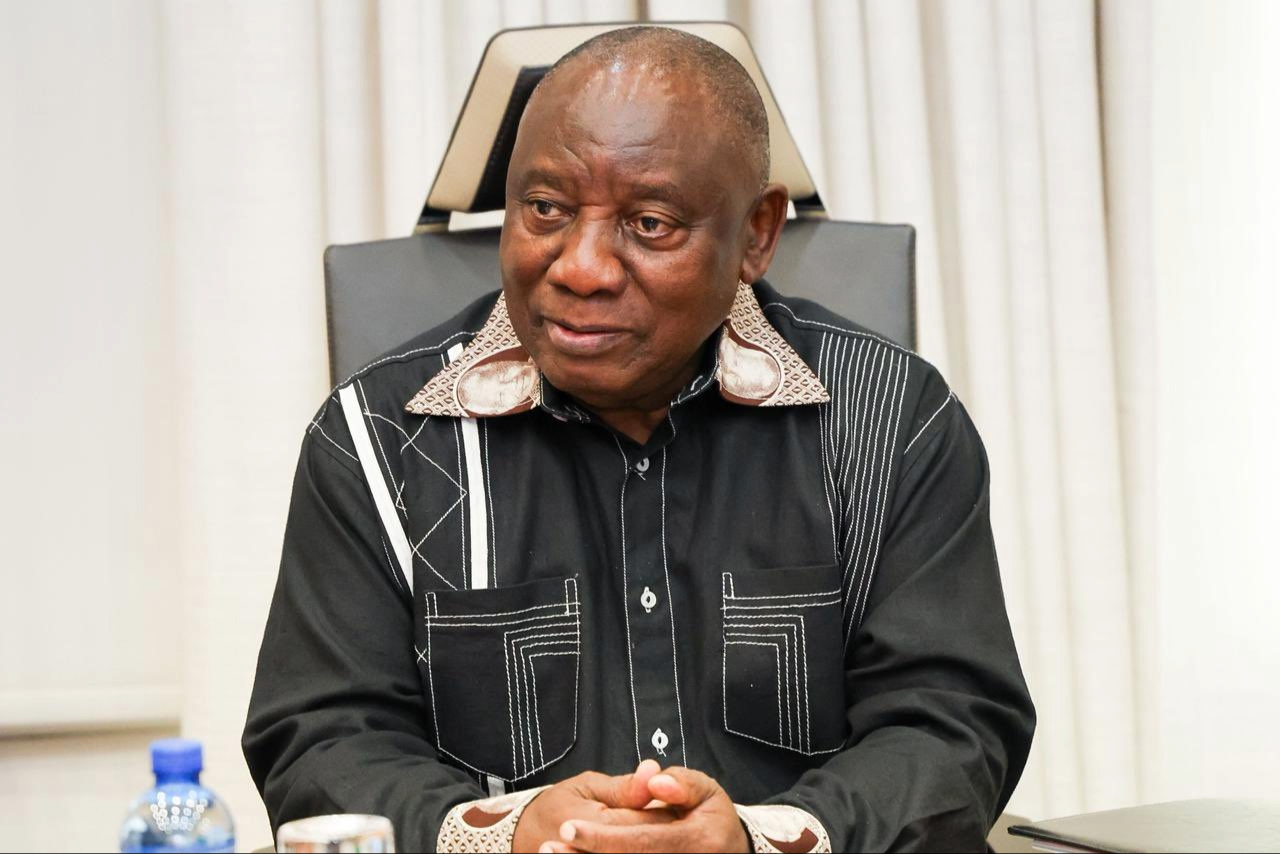
President Cyril Ramaphosa has praised state owned power utility Eskom’s workforce for stabilising South Africas’ power supply and energy security.
The President conducted a working visit at the Kusile power station, which is located in the Nkangala District Municipality of Mpumalanga.
Ramaphosa was joined by Electricity and Energy Minister Kgosientsho Ramokgopa, Eskom board chair Mteto Nyati and CEO Dan Marokane during the visit, where the station was formally presented as a fully functioning part of South Africa’s energy mix.
He credited the trio forming what he called the “Magnificent Three” tasked with steering Eskom out of crisis.
The President added that Kusile was once synonymous with delays, cost overruns, technical faults, and corruption linked to state capture.
“Kusile has been plagued by challenges throughout the project lifespan, including overruns, massive cost escalations, technical problems, and issues with contractor performance. The State Capture Commission uncovered widescale corruption and looting at Kusile that nearly brought Eskom to financial ruin.”
Despite these setbacks, Ramaphosa commended the power station’s full operational capacity and contributions to the country’s energy mix.
“Kusile has been plagued by challenges nearly throughout the project lifespan, including overruns, massive cost escalations, technical problems, and issues with contractor performance,” Stressed Ramaphosa.
Additionally, the president applauded the improved performance with South Africa approaching a full year without load shedding.
Ramaphosa emphasised that the country’s enhanced energy availability is “a welcome relief for millions of households and businesses across the country.”
He called on the leadership of the power utility and its workers to ensure that “power stations and all our strategic assets are managed with integrity and foresight, so that they may serve the country”, as reforms start to bear fruit and the economy begins to grow.
“Energy security is vital to the security and well-being of our nation. It underpins economic growth, job creation and social stability. It shapes prospects of families and communities across our country.
Kusile is one of the newest coal-fired power stations built by the State to improve Eskom’s electricity generation capacity. With a total of six units, the station adds 4,800 megawatts to the national grid.
While Kusile is known as one of the most expensive coal-fired power stations ever built, with R233 billion spent on its construction, its operations have not been without challenges.
The initial plan was to synchronise all six units of the power station between 2016 and 2023, but it was only in 2025 that all units were finally brought online.
South Africa is the world’s 13th-biggest emitter of greenhouse gases, with Eskom’s 15 coal-fired plants the leading contributors. Under an agreement announced at the COP26 climate talks in Glasgow in November last year, the US, UK, Germany, France and the European Union agreed to secure $8.5 billion to help South Africa transition away from the fossil fuel and reduce its emissions.
South Africa’s 2019 energy blueprint — which is currently under review — envisions coal accounting for 59% of electricity output by 2030, down from more than 80% currently. About 18 gigawatts of Eskom’s older coal capacity is scheduled to be shut down by 2035, with Kusile and Medupi the only other remaining plants that use the fuel expected to still be operational by 2050.
While the government has taken measures to bolster the production of green energy by private producers, including relaxing licensing provisions, the process has been dogged by delays and legal disputes. The South African National Energy Development Institute, a government research unit, estimates that more than three times the amount of renewable power generating capacity will need to be developed to replace retired coal plants.