
By Kevin Rademeyer, Sports Journalist.
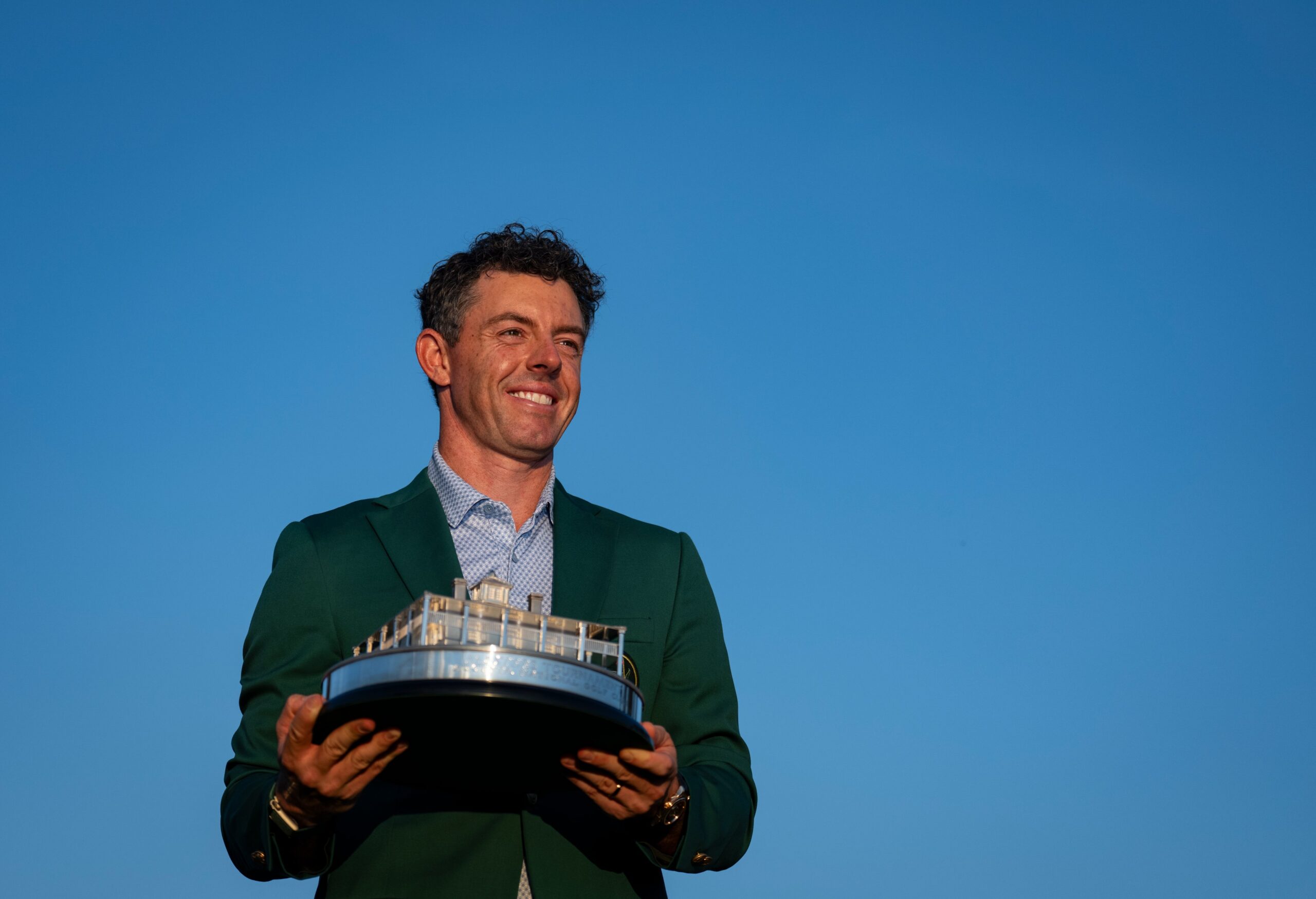
Photo Credit: The Masters.
Analysis- At the Masters, there is polite fiction the club likes to maintain. That greatness reveals itself cleanly. Champions believe they separate themselves from the field through precision, grace and flawless execution.
Then along comes Rory McIlroy, spraying tee shots into the Georgia pines, missing greens at a rate that would make a club pro wince, and still walking off with a second straight green jacket. If Augusta is supposed to expose flaws, McIlroy just exposed Augusta.
Start with the number everyone will pretend mattered: six. That was McIlroy’s lead after 36 holes. The largest in tournament history. The kind of advantage that used to signal a procession. Instead, it became evidence. Not of dominance, but of how fragile dominance is here.
By Saturday evening it was gone, erased by a 73 that felt less like a stumble and more like a relapse. Suddenly McIlroy was back in the pack, shoulder to shoulder with Cameron Young, with Justin Rose lurking and Scottie Scheffler circling like a tax audit. The tournament did not slip away. It reset on him.
The final round on Sunday was not a masterclass. It was a negotiation with chaos. It was a street fight. McIlroy three putted from ten feet on the fourth. Not a typo. Ten feet. Double bogey. The kind of mistake that used to send him spiralling into Sunday oblivion. Instead, he shrugged and kept moving. That is the whole story.
While Cameron Young tried to prove he belonged and Justin Rose tried to turn back time, McIlroy did something far more subversive. He understood his game would not be perfect. He let the round breathe. He accepted the volatility of a course playing faster and more opportunistic than Augusta traditionalists would care to admit. Birdies were there. So were bogies. He hit plenty of both.
However every Masters has a quiet hinge point, the moment that decides everything without announcing itself. This one came at Amen Corner, where Justin Rose made back-to-back bogeys just as the leaderboard was tightening into something combustible.
Rose had been the adult in the room. Forty-five years old, three-time runner up, playing with the calm of a man who has already made peace with disappointment. Then Augusta reminded him why that peace is temporary. McIlroy did not need to attack. He simply needed to not implode. That alone was enough to reclaim control.
You have heard it forever. The Masters begins on the back nine Sunday. What they do not tell you is that the back nine is not about brilliance. It is about resistance. From the 13th through 16th, where the course was yielding birdies, McIlroy did just enough. Not spectacular. Not clinical. Just enough. A two-shot cushion. Then the nervy up and down at 16, the kind of save that does not make highlight reels but wins tournaments.
Meanwhile Cameron Young ran out of runway. The moment never quite arrived for him. Close enough to feel it, never close enough to seize it. The drive Augusta deserved and then McIlroy gave Augusta what it secretly craves. Panic and theatre.
Standing on the 18th tee with a two-shot lead, history essentially signed and sealed, he uncorked a drive so far right it felt like a throwback to every scar this place has ever given him. For a few seconds, nobody knew where the ball was. Including him. Perfect. Because this is the version of McIlroy Augusta cannot solve. The one who makes the wrong swing and still finds a way forward. A gap through the trees. A recovery to safety. A green found. Two putts. Brilliant chips. Recoveries.
McIlroy won this Masters hitting 55 percent of fairways and 48 greens for the week. Those are not champion numbers. They are survival numbers. And yet he now has six majors, level with Phil Mickelson and Lee Trevino, and two straight green jackets, matching feats only achieved by Jack Nicklaus, Nick Faldo and Tiger Woods. This was not a fluke. It was a shift.
He skipped events and practiced at Augusta for three weeks prior to the tournament instead. This meant flying home every evening after practice, to his home in Florida. He quietly dismissed parts of the Tour schedule as beneath his priorities.
This kind of candour does not play out well in boardrooms but plays very well on leaderboards. He prepared for this place like it was the only one that mattered. He made Augusta his home ground, while others were playing tournaments around the world, or took a few days off for Safari. His focus was only on winning, and giving himself the best chance at the title.
Twice now, he has been proven right. McIlroy insisted afterwards that this is just part of the journey. That he still has more to achieve. That is the least reassuring quote imaginable if you are the rest of the field. Because the old McIlroy needed control to win. The new one thrives without it. He can lose a six-shot lead. He can three putt from ten feet. He can drive it into the trees on the final hole. And still take your tournament. At Augusta, that might be the most dangerous evolution of all.