
By Lehlohonolo Lehana.
President Cyril Ramaphosa has doubled down on his decision to appoint former chief representative of the National Party Roelf Meyer as the new ambassador to the United States (US).
South Africa hasn’t had an ambassador to the US since 14 March 2025, when the former ambassador, Ebrahim Rasool, was declared persona non grata by US Secretary of State Marco Rubio.
Rasool was expelled from the country over his criticism of the Donald Trump administration and its policies.
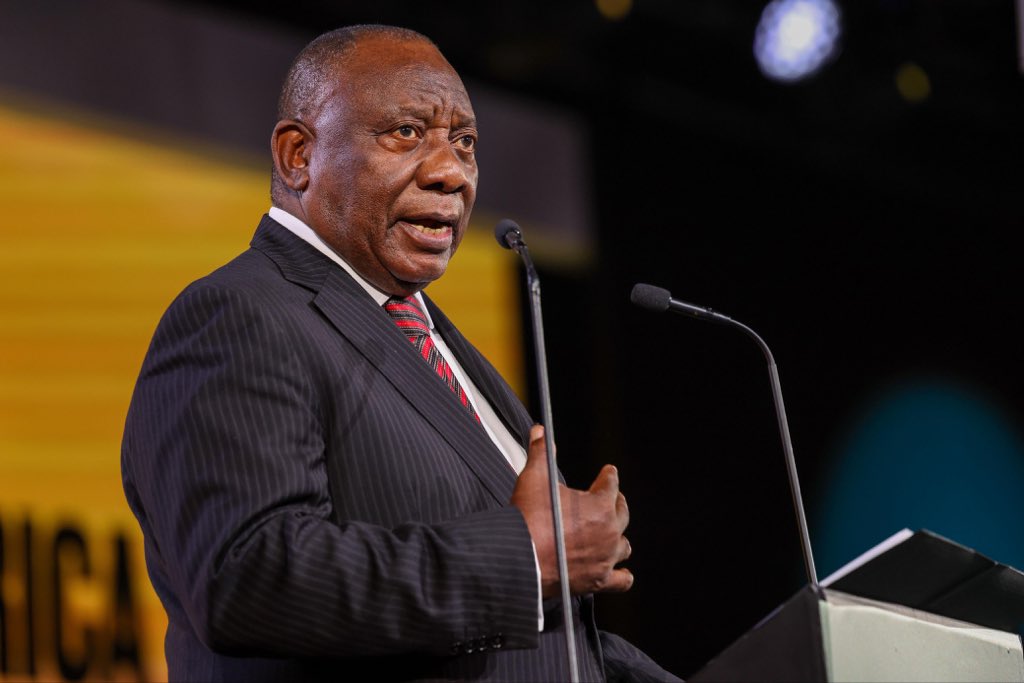
Speaking on the sidelines of the National Local Economic Development Summit, in Ekurhuleni on Wednesday, Ramaphosa described Meyer as a distinguished “loyal and patriotic South African”.
The summit is convened by the Department of Small Business Development, in partnership with the South African Local Government Association (SALGA) and the Department of Cooperative Governance and Traditional Affairs.
The theme for the event is “Re-engineering Local Economies: A Collaborative Blueprint for Small Enterprise Growth and Ease of Doing Business.”
The summit serves as a high-level national platform that brings together government, the private sector, academia, development finance institutions and other key stakeholders to advance coordinated and practical solutions for inclusive local economic growth.
Ramaphosa noted that Meyer, who was the chief government negotiator for the National Party during the negotiations to end apartheid, had recently been involved in mediation processes in several countries.
He argued that this had sharpened his diplomatic skills.
“I found him to be more than qualified to be able to work in United States, recalibrate our relationship with the United States, interface with a number of stakeholders in the United States,” Ramaphosa explained.
Meyer, 78, played a key role as one of the chief mediators, alongside Ramaphosa, during the talks to end apartheid in South Africa in the 1990s.
He was the chief representative of the National Party, which introduced apartheid, while Ramaphosa represented the African National Congress (ANC) led by Nelson Mandela.
During that period, the two enjoyed a fishing trip together and went on to form a lifelong friendship.
Meyer was part of a group of 32 prominent South Africans the president chose last year to guide the national dialogue, a process aimed at addressing the country’s various challenges.
He was constitutional affairs minister in the last apartheid government and later joined the government of national unity formed in 1994 when Mandela became president.
Analysts have broadly welcomed Meyer’s appointment, hailing it as a positive and “clever, tactical decision” by the president.
Meanwhile most parties in the Government of National Unity (GNU) and others seem pleased with the choice, and believe Meyer’s vast negotiation experience will help him fix the damaged relationship with the Trump administration.
The ANC’s secretary-general, Fikile Mbalula, seemed pleased with Meyer’s appointment, posting on X that it was a “good and tactically sound” move.
“Racist AfriForum are not happy that an Afrikaner will now dispel the lie that there is a white genocide in SA,” he said.
DA international relations spokesperson Ryan Smith said Meyer was a “good pick” for the role, given the “need for skilled diplomacy” to repair the strained relationship between SA and the US.
“As a veteran politician and negotiator whose experience has successfully straddled some of the most difficult periods in South African history, both pre and post apartheid, Roelf Meyer is a good pick for South African Ambassador to the USA.”
Good Secretary-General Brett Herron said Ramaphosa’s decision to send an Afrikaner with apartheid-era government credentials to Washington was “a rather clever act of appeasement” to the Trump administration’s bullying.
Corné Mulder, leader of the Freedom Front Plus (FF Plus), also in the GNU, said there was a “huge trust deficit” between Meyer and a “vast” group of Afrikaners – including Freedom Front Plus, AfriForum, Solidarity and some agricultural unions – who had established good relations with Washington.