
By Lehlohonolo Lehana.
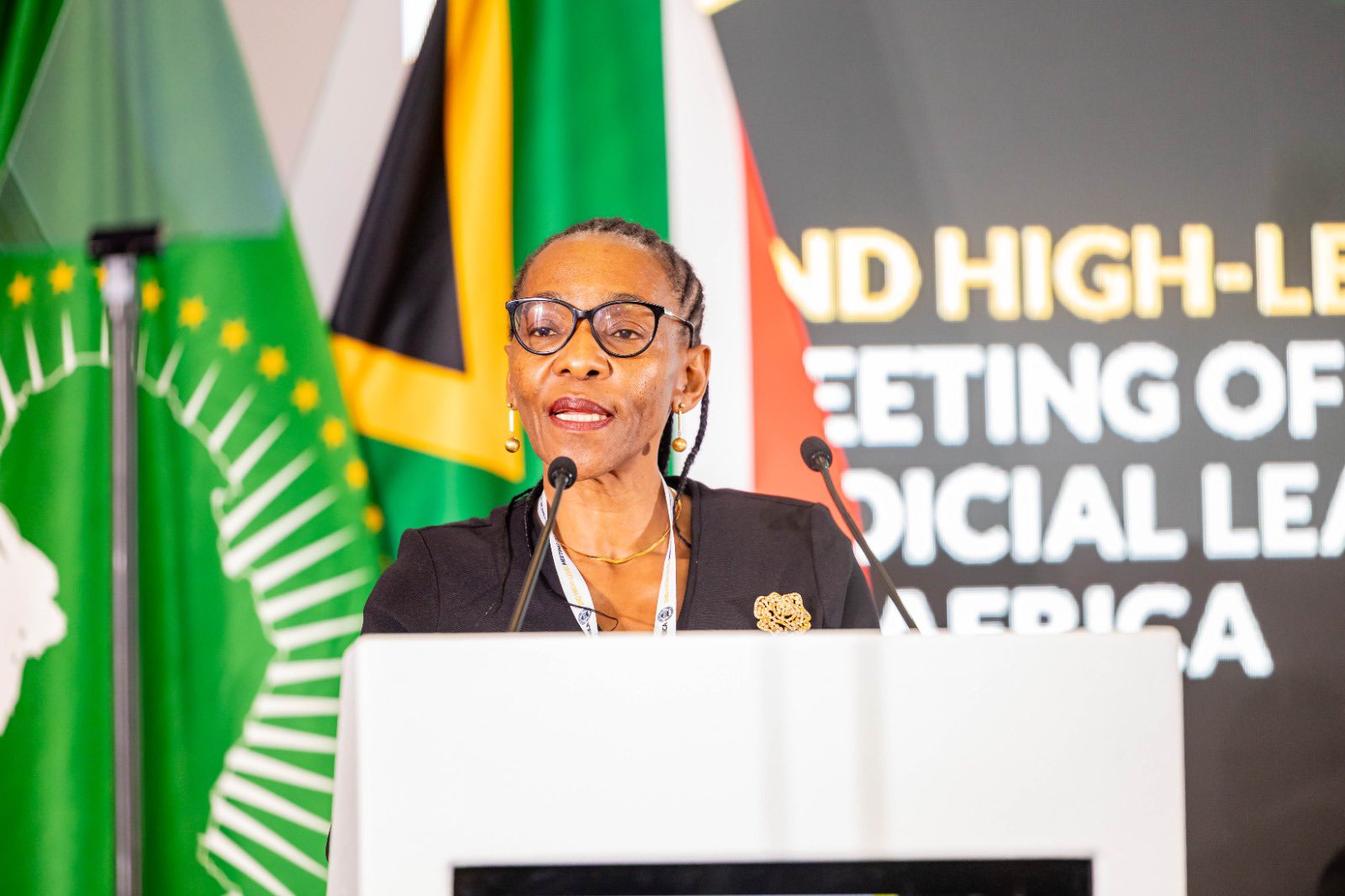
Justice and Constitutional Development Minister Mmamoloko Kubayi delivered a keynote address at the 2nd High-Level Meeting of Women Judicial Leaders of Africa hosted by Chief Justice Mandisa Maya and the Conference of Constitutional Jurisdictions of Africa (CCJA) in Sandton, Johannesburg, saying focus of this gathering on strengthening gender-focused jurisprudence, enhancing judicial leadership and ensuring a more inclusive and representative justice system is timely and necessary.
The CCJA, which includes 49 constitutional jurisdictions and several observer members, plays a key role in promoting constitutionalism, the rule of law and democratic governance within member states. South Africa has been part of the body since 2012.
Themed “The Maputo Protocol @ 20: Consolidating the Jurisprudence of Equality for the Next Generation,” the summit aims to strengthen collaboration and advance gender equality across the continent.
The gathering convenes women in judicial leadership across Africa, with the aim of fostering collaboration, facilitating the sharing expertise, and advancing constitutional justice and gender equality.
Kubayi has emphasised that South Africa will continue to pursue gender parity on the judicial bench.
“Our country has made huge strides in empowering and affirming women jurists in the judiciary. At the advent of our democracy in 1994, our Judiciary comprised of 165 Judges of which 160 were white males, three black men and two white women. South Africa had no black woman Judge in 1994.”
“Today, there are about 255 Judges in all the Superior Courts of which 131 are men and 124 women Judges.”
“Progress has indeed been made however, more still needs to be done to ensure gender parity which we are vigorously and unapologetically pursuing,” Kubayi said.
She added that out of South Africa’s 15 Superior Courts, at least six are led by women, including the Constitutional Court as led by Chief Justice Mandisa Maya.
Additionally, the Constitutional Court has a majority of women Judges as well as the Supreme Court of Appeal – the country’s second highest court in the land.
“The Magistracy has fared much better in terms of gender transformation in that of the 1626 magistrates, 898 are women. This means that 55% of total number of magistrates are women.”
“We are immensely proud that women in the Judiciary continue to lead in our quest to transform our jurisprudence on gender equality, reproductive rights and the protection of the vulnerable. Their presence in the Judiciary is in line with the vision of our constitutional order,” the minister said.
Kubayi reminded the delegates that their presence in Johannesburg is a fulfilment of a legacy sparked decades ago.
Reflecting on the August 1956 Women’s March, she noted that the gathering coincides with the 60th anniversary of that historic defiance.
On that iconic day, struggle heroes Lilian Ngoyi, Helen Joseph, Sophie De Bruyn and Rahima Moosa led 20 000 women to the seat of the Apartheid Government in Pretoria, demanding the scrapping of pass laws.
Invoking the spirit of those 1956 heroes, the Minister emphasised that today’s judicial leaders must carry that same defiance to push back against discriminatory challenges.
Maya said women must be given meaningful opportunities to shape the future of the justice system on the continent.
“When all the genders are equitably represented, the justice system gains broader perspectives, richer insight, and deeper empathy, thereby enhancing its capacity to deliver justice impartially and inclusively. Therefore, ensuring gender balance within the judiciary is a vital step towards realising the whole promise of justice in society.”
Speaker of the National Assembly, Thoko Didiza, and Minister in the Presidency for Women, Youth and Persons with Disabilities, Sindisiwe Chikunga, also addressed delegates and members of the Judiciary.
The meeting is guided by key regional and international frameworks that promote women’s rights, including the Convention on the Elimination of All Forms of Discrimination Against Women and the Maputo Protocol. These instruments form part of broader efforts to address inequality and ensure the protection of women’s rights across the continent.
South Africa’s role as host is seen as significant, given its constitutional commitment to human rights and equality. The country’s legal framework has often been cited as a model in advancing gender equality, although challenges persist in practice.
By bringing together women judicial leaders from across the continent, organisers hope the conference will strengthen networks, encourage mentorship and support the next generation of women in the legal profession.
The outcomes of the meeting are expected to contribute to ongoing efforts to transform judicial systems in Africa, ensuring they are more accessible, equitable and responsive to the needs of all citizens, particularly women.