
By Lehlohonolo Lehana.
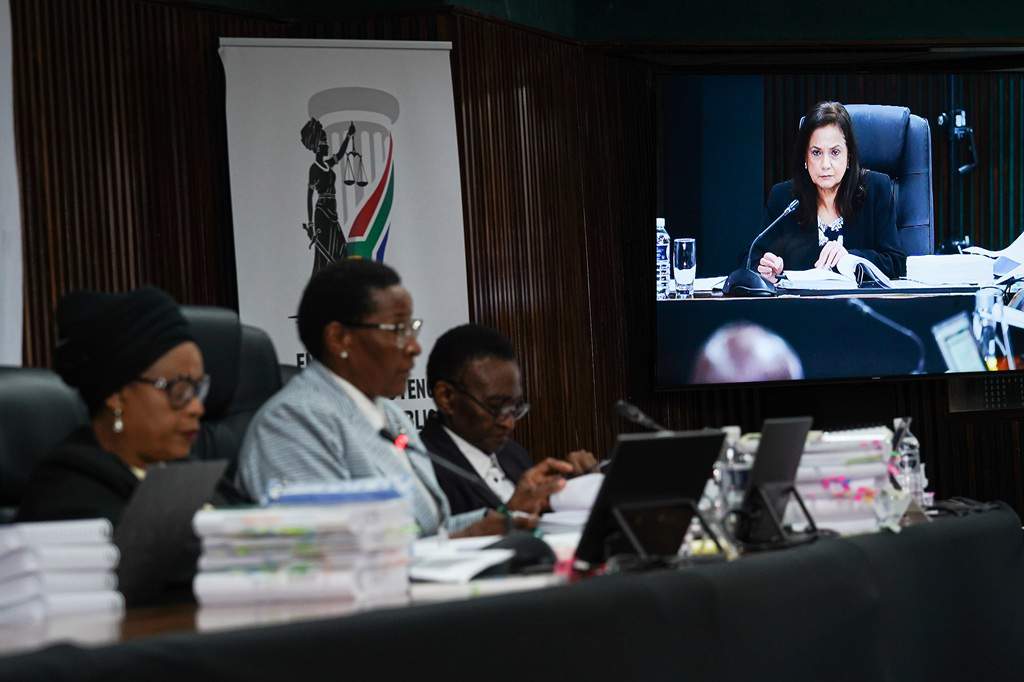
Analysis – The Nkabinde Commission of Inquiry has faced significant controversy, high-profile witness refusals, and accusations of being unfair, with speculation that the report will be predetermined.
President Cyril Ramaphosa has in terms of section 12(6)(a) of the National Prosecuting Authority Act of 1998 established an inquiry.
Ramaphosa has suspended Advocate Andrew Chauke as Director of Public Prosecutions with effect from 20 July 2025, on full pay pending the finalisation of the inquiry.
The inquiry was created to look into serious allegations regarding Chauke’s fitness and propriety to hold office as a Director of Public Prosecutions and as a member of the National Prosecuting Authority.
He was appointed Director of Public Prosecutions on 1 September 2011.
However, it looks like the case against Chauke is not properly advanced and procedure is preventing a proper and fair ventilation of facts.
Thus far evidence leaders seemed overwhelmed or incapable. There is no factual material demonstrating incompetence but they have always been found wanting.
All of these suggest the commission is all over the place and deviating from its mandate nor its terms of reference.
Chauke is accused of unlawfully instituting racketeering charges against the unit and its leader, the former KwaZulu-Natal head of the Directorate for Priority Crime Investigation (Hawks) Johan Booysen. He is also accused of acting outside his jurisdiction on a case in KwaZulu-Natal (KZN) while he being the lead prosecutor in Gauteng.
Chauke denied overstepping his role in the Cato Manor Unit matter in KwaZulu-Natal, maintaining that he was overseeing the case.
During the hearings, the inquiry has often focused on the racketeering charges that were authorised against former Hawks Johan Booysen and members of his Cato Manor Unit.
This creates an impression that the inquiry is trying to revive the case through the back door and it deviates from its terms of reference.
In 2019, Booysen filed a damages suit for wrongful arrest and malicious prosecution against the state after being charged with racketeering.
The NPA has reached an out-of-court settlement with him, thought to be in the millions.
Another thorny issue is the walked out by the former NDPP boss Shamila Batohi mid-testimony citing unfair treatment from Chauke’s counsel advocate Tembeka Ngcukaitobi, and resulting into further delays.
Recently the commission denied her application to consult her legal team while under cross-examination.
Batohi’s legal team, Harris Nupen Molebatsi Attorneys (HNM), sought a declaratory order stating that she does not require the panel’s consent to consult with them. Alternatively, she requested formal leave to consult, arguing that the enquiry’s nature—potentially impacting her constitutional rights and professional reputation—justified an exception to standard legal protocols.
At the heart of the dispute was the “professional rule” which generally prohibits legal practitioners from interviewing a witness once they have begun testifying until cross-examination is complete. This rule is designed to protect the integrity of the truth-seeking process and ensure evidence is not “tailored”.
Batohi, has since written to the Inquiry formally withdrawing her participation.
She had been subjected to “robust” and “hostile” cross-examination and labelled an “accuser” or “complainant”.
Additionally, serious allegations were put to her – including that she had suppressed evidence, had lied to the panel and defeated the ends of justice – without intervention from the panel or evidence leaders.
She argued these labels were “incorrect and inappropriate” as she was not acting as a private accuser but was discharging her legal duties as the NDPP at the time.
Her actions were taken in accordance with the NPA Act, which provided the framework for such referrals to the President, she said. She viewed the nature of proceedings as an “inquisitorial fact-finding investigative inquiry” rather than “an adversarial trial where she would be a complainant”.
Judge Bess Nkabinde, meanwhile, from the onset of the proceedings, time and again questioned how Batohi’s evidence tied to the terms of reference given by the president to this Inquiry.
Having considered the matter, the panel determined that the statement has no probative value and may prejudice parties referred to therein, including the panel.
The Inquiry has reached a critical stage with both legal parties having now formally closed their cases.
“The enquiry now proceeds to the submissions phase. All parties are directed to file comprehensive written submissions, not limited to heads of argument, by Thursday, 14 May 2026. No submissions will be accepted after this deadline, and the Secretary of the Enquiry has been directed not to distribute any late submissions,” enquiry spokesperson Tiyisela Mpuzana said.
After all parties have made submissions, the panel will determine if further oral submissions are required. The Commission is expected to submit its report on the 30th June 2026.