

By Kevin Rademeyer, Sports Journalist.
Photo Credit: Roelien and Anton Geyser.
The SuperSport Simbine Classic has announced itself as a statement of intent for South African sport. Staged at Pilditch Stadium in Pretoria on 28 April 2026, the inaugural edition combined elite international competition with a deeper purpose: to elevate African athletics, inspire emerging talent, and establish a sustainable platform on home soil.
At its core, the event reflects the vision of Olympic sprinter Akani Simbine, who has been deliberate in positioning the meet as something far greater than a personal showcase. “I would not put my face or name into something that I do not believe in,” he said during the launch phase, underscoring the conviction behind the project. That belief has translated into tangible progress, with the meeting earning World Athletics Continental Tour Silver status, a first for South Africa and a significant elevation from previous tiers of competition hosted in the country.
The competitive programme delivered on its promise. Cameroon’s Emmanuel Eseme produced one of the standout performances of the evening, claiming victory in the men’s 100 metres in 10.03 seconds. He edged out American Pjai Austin, while Canada’s Olympic champion Andre De Grasse recovered from a slow start to finish third.
Yet the headline race also carried a moment of concern for the home crowd, as Simbine himself pulled up with an apparent injury midway through the final. It was a bittersweet image: the architect of the event crossing the line last, but having already secured a broader triumph through the success of the meeting itself.
Beyond individual results, the Simbine Classic revealed its wider significance. With a prize purse exceeding R1.4 million, it provided local athletes with rare earning opportunities without the need to compete abroad. Its timing, just days before the World Athletics Relays in Gaborone, offered crucial high level preparation. Equally important was its accessibility, with national broadcast coverage ensuring that audiences across the country could engage with elite athletics in a way that has often been out of reach.
For Simbine, addressing that gap has always been central to the mission. “There was a gap of a competition, and I felt it was important to fill that gap,” he explained. “If we have it in Africa, it can inspire the next generation because I know what it is like to grow up as a sprinter here.”
That emphasis on inspiration was evident not only in presence of global stars, but in the opportunities created for young athletes to compete and observe at close quarters. As Simbine noted, lining up alongside established champions transforms ambition into something tangible: “Now you are running against someone you were watching as a kid, and it shows the reality that I can actually do this.”
The women’s 4×100 metres relay offered a clear example of that impact. South Africa’s quartet, featuring Kayla La Grange, Joviale Mbisha, Rume Burger and Gabriella Marais, secured victory in 43.83 seconds despite minimal preparation time. For La Grange, the result carried significance beyond the medal.
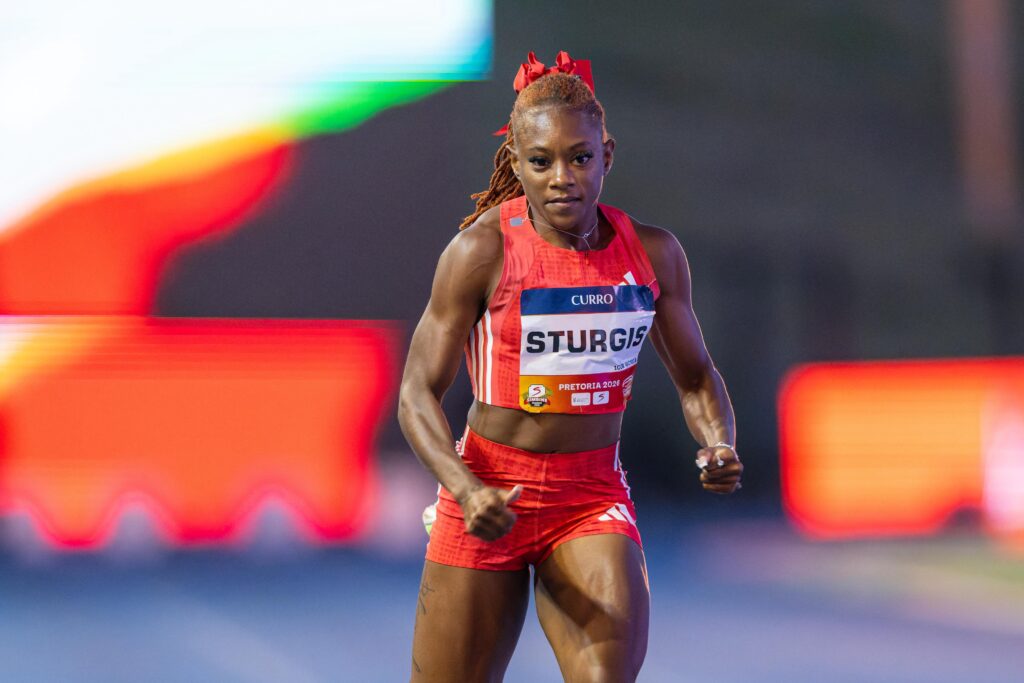
It provided belief at a critical moment in the season, particularly with the World Relays imminent. The performance suggested renewed depth in women’s sprinting, an area that has often lacked consistent representation on the global stage.
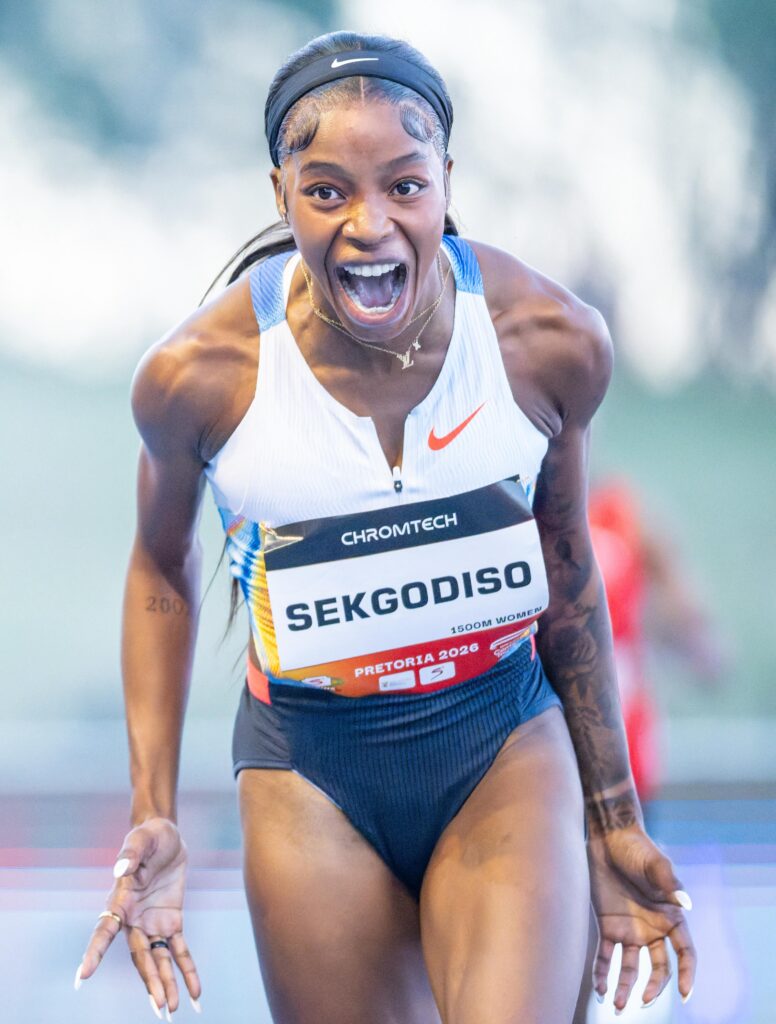
The atmosphere inside the stadium reinforced the sense of occasion. A full crowd, schoolchildren with placards, and a ceremonial welcome for Simbine highlighted the connection between the event and its community. At the same time, innovation played a role in shaping the experience, with technology driven features such as real time predictive tracking aimed at engaging a younger audience.
Yet the true measure of the Simbine Classic lies in its long-term ambition. Simbine has been explicit about the broader objective: to demonstrate that South Africa can host events of increasing scale and prestige, ultimately positioning itself as a contender for the Diamond League circuit. “Our vision is to not only promote and showcase our country, but to do the same for African athletics,” he said. “We hope it will continue to grow in the years to come.”
That growth is already evident. What began as a smaller concept has evolved into a globally recognised meeting, attracting world class athletes while nurturing local talent. Importantly, it has shifted perceptions, proving that Africa is not only a source of athletic excellence, but also a capable host of elite competition.
In its first edition, the Simbine Classic delivered compelling performances, emotional moments and organisational success. More importantly, it established a foundation. If sustained and expanded, it could reshape the athletics landscape in South Africa and beyond, ensuring that future generations no longer have to look abroad for opportunity, but can find it on their own track.