
By Lehlohonolo Lehana.
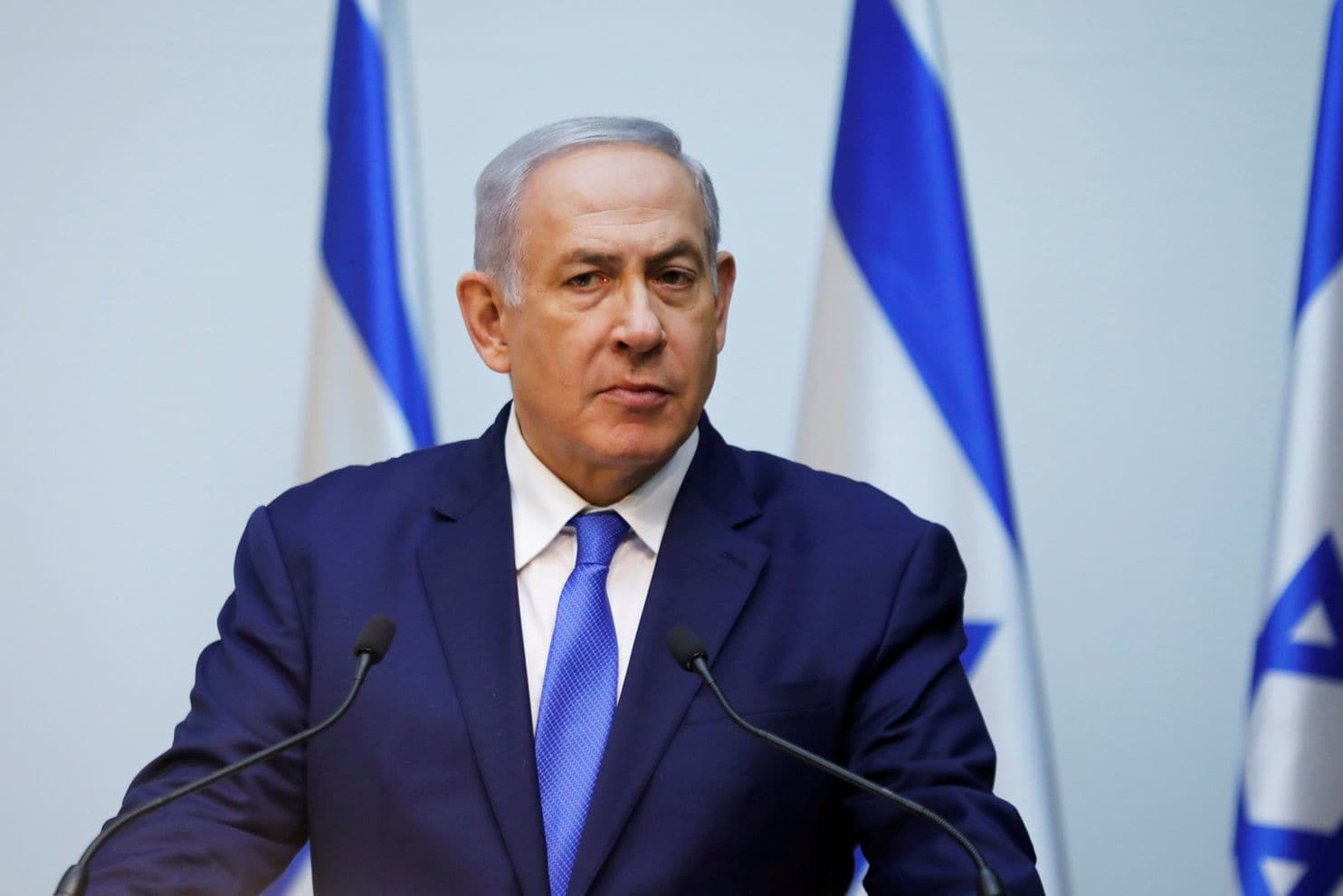
Israel’s parliament is debating the formation of a new government that would end 12 years of rule by Prime Minister Benjamin Netanyahu.
Netanyahu, 71, the most dominant Israeli politician of his generation, failed to form a government after Israel’s March 23 election, its fourth in two years.
The new cabinet, which will be sworn in after a Knesset confidence vote it is expected to win, was cobbled together by centrist opposition leader Yair Lapid and ultra-nationalist Naftali Bennett.
Bennett, a hawkish hi-tech millionaire, will serve as prime minister for two years before Lapid, a former popular TV host, takes over.
They will head a government that comprises parties from across the political spectrum, including for the first time one that represents the 21-percent minority comprising Palestinian citizens of Israel. They plan largely to avoid sweeping moves on hot-button international issues such as policy towards the Palestinians while they focus on domestic reforms.
With little to no prospect of progress towards resolving the decades-long conflict with Israel, many Palestinians will be unmoved by the change of administration, saying Bennett will likely pursue the same right-wing agenda as Netanyahu.
Sunday’s crucial Knesset session began at 4pm local time (13:00 GMT).
In a speech interrupted by raucous boos, Bennett promised the new government would “represent all of Israel”.
He said the country, after the series of inconclusive elections, had been thrown “into a maelstrom of hatred and in-fighting”.
“The time has come for different leaders, from all parts of the population, to stop, to stop this madness, “he said to angry shouts of “liar” and “criminal” from right-wing opponents.
Netanyahu, true to his reputation as Israel’s “Mr Security”, charged that “Iran is celebrating” the prospect of what he labelled a “dangerous” and weak left-wing government.
The new coalition is doing everything to avoid last-minute surprises here in the corridors of the Knesset. Naftali Bennett and Yair Lapid are trying to keep the tone calm, despite the political convulsions their pact has unleashed.
Netanyahu has served a record-breaking five terms, first from 1996 to 1999, then continuously from 2009 to 2021.
He called an election in April 2019 but failed to win enough support to form a new coalition government. Two more elections followed, each of which ended inconclusively.
The third election resulted in a government of national unity where Mr Netanyahu agreed to share power with the then-opposition leader Benny Gantz. But the arrangement collapsed in December, triggering a fourth election.