
By Kevin Rademeyer, Sports Journalist.
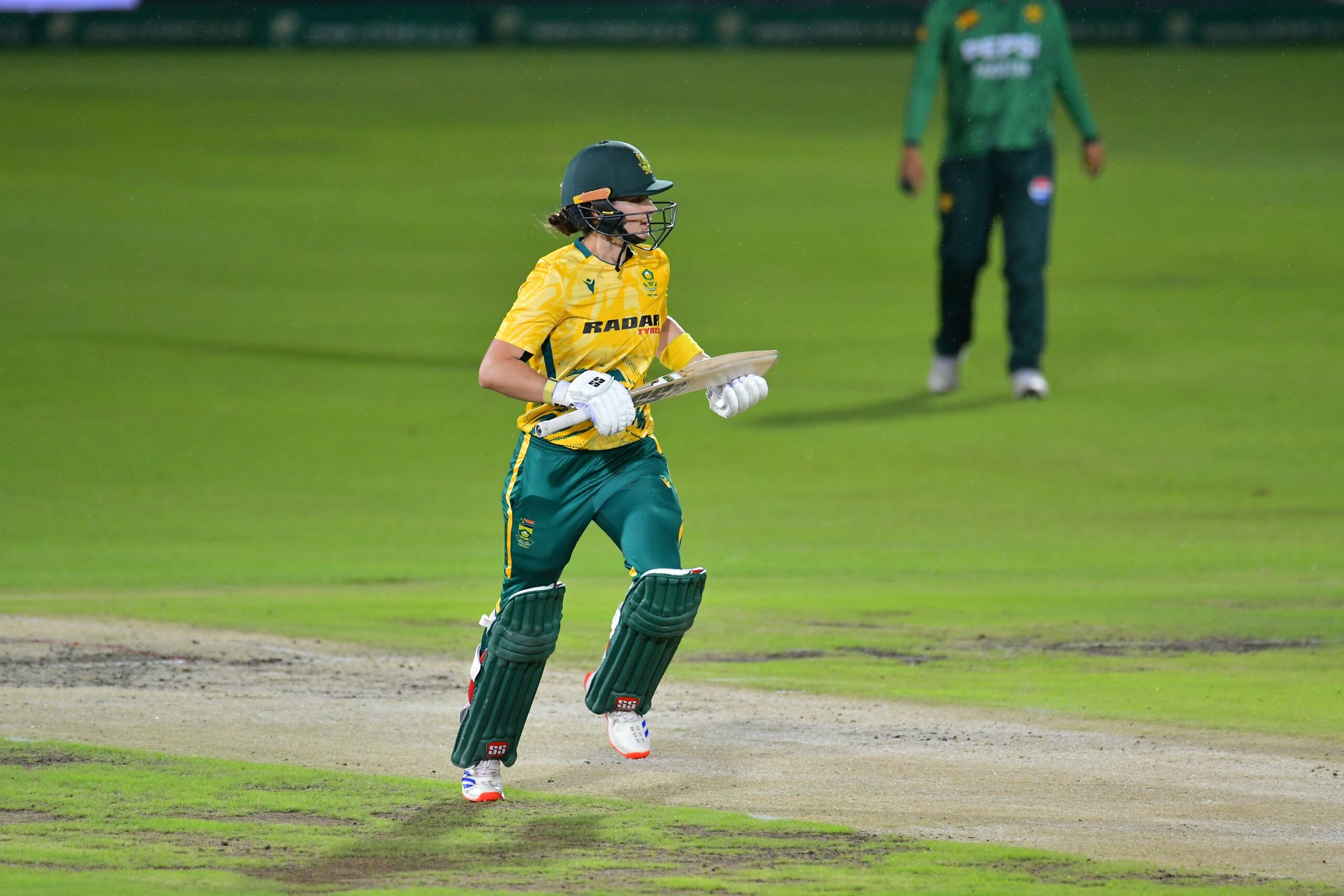
Photo Credit: CSA.
There comes a point in sport when potential stops mattering.
Finals appearances become meaningless. Brave defeats lose their romance. The applause fades and only one question remains unanswered: can this team actually win the big one?
That is the reality facing the Proteas Women as they head to England and Wales for the ICC Women’s T20 World Cup from 12 June to 5 July.
South Africa have become one of the most consistent teams in world cricket. Since 2023 they have reached three consecutive ICC finals, including back to back T20 World Cup deciders, yet the trophy cabinet remains painfully empty.
Now, with the announcement of a fascinating 15 player squad, Cricket South Africa have made their intentions crystal clear. This is not a rebuilding exercise. This is an all in push for a first global title.
And leading the charge is the most explosive selection of all. Ismail return could change everything. At 37, the fastest bowler South African women’s cricket has ever produced has reversed her international retirement in one final bid to drag the Proteas over the line. It is difficult to overstate what her return means.
Ismail retired after the heartbreaking 2023 T20 World Cup final defeat to Australia in Cape Town. Since then she has continued dismantling batting line ups around the globe in franchise cricket, proving she still possesses the pace, hostility and intimidation that few bowlers in the women’s game can replicate. Her numbers remain staggering: 123 wickets in 113 T20 internationals, making her South Africa’s leading wicket taker in the format.
Coach Mandla Mashimbyi made no attempt to hide how valuable she could be. “We’re excited for the big show ahead,” Mashimbyi said. “Having someone like Shabnim back adds a lot of value to the group. We had good conversations and you could see the hunger she still has to represent South Africa and help this team achieve something special.”
Mashimbyi called her inclusion a “no brainer”. “We felt we needed that X factor, and she definitely carries that,” he said. “She’s a strong character, she’s a fighter. This addition will make sure that we’ll fight all the way.”
In tournament cricket, experience often matters most when pressure tightens. Ismail has seen every scenario imaginable across a 16 year career. More importantly, she carries the emotional edge this Proteas side sometimes lacked in finals.
The return of Dané van Niekerk adds another fascinating layer. The former captain seemed destined never to wear Proteas colours again after injuries, fitness controversies and retirement pushed her out of the national setup. Instead, she now finds herself back in the middle of South Africa’s biggest World Cup push in years.
Alongside Marizanne Kapp and Suné Luus, Van Niekerk forms part of a golden generation that transformed women’s cricket in this country. Kapp also returns after recovering from illness, while wicketkeeper Karabo Meso is back from a wrist injury. Suddenly the Proteas look deeper, calmer and more battle hardened.
Convenor of selectors Clinton du Preez explained the thinking behind the squad balance. “Keeping the core of the group together was important to us because this is a squad that has built strong experience, combinations and understanding over time,” he said.
“At the same time, we also looked at areas where we felt additional experience and impactful options could strengthen the team, especially in the high pressure moments that often decide tournaments of this nature.” That sentence probably reveals everything about where South Africa believe previous World Cups slipped away. Not through lack of talent. Through moments.
At the centre of it all stands Laura Wolvaardt. This will be her second T20 World Cup as captain and perhaps her most important tournament yet. Technically, she remains one of the best batters in world cricket. Ranked third globally in T20 internationals, Wolvaardt has the ability to anchor innings while still scoring quickly enough to control matches. But leadership at World Cups is measured differently.
Now she must manage a squad filled with senior personalities, former captains and players desperate to erase years of near misses. The encouraging sign for South Africa is that Wolvaardt appears to be growing into the role. Her calmness has become one of the team’s strengths, particularly in pressure situations. If South Africa are to finally break through, Wolvaardt will almost certainly need to produce the tournament of her career.
While much of the focus falls on returning veterans, Kayla Reyneke’s inclusion may prove equally significant. The former SA Under 19 captain forced her way into the squad after a breakout season in which she averaged 53 with the bat while also contributing with the ball.
She represents the next generation of Proteas cricket, but crucially, she is not there simply to gain experience. Her emergence gives the squad flexibility and energy, something every successful World Cup team requires across a long tournament.
The Proteas have batting depth. They have world class quick bowlers. They have experienced all-rounders and match winners across departments. The question is not whether they have the players, the question is whether they have finally conquered the mental hurdle that has haunted them for years and whether lady luck will fall on them, during the crucial stages.
South Africa open their campaign against Australia in Manchester on 13 June, a fixture loaded with symbolism considering it was Australia who denied them in the 2023 final. India, Pakistan, Bangladesh and the Netherlands complete a difficult group.
There will be no gentle beginning. Yet perhaps this team no longer needs protecting from pressure. They have lived with it long enough. Mashimbyi insists that the focus remains grounded. “Every team goes to a World Cup wanting to win it, and we are no different,” he said. “But for us it’s about staying in love with the process, taking it one game at a time and continuing to improve as the tournament advances.” Publicly, that is the correct message. Privately, though, everyone understands what is at stake.
This specific generation of Proteas Women has changed the profile of the sport in South Africa. They have inspired young girls, filled stadiums and turned themselves into legitimate global contenders. But sport can be cruelly binary.
If they finally win the World Cup, they become legends. If they fall short again, history may simply remember them as the team that kept getting close.
Proteas’ ICC Women’s T20 World Cup 2026 Squad:
Laura Wolvaardt (captain, Fidelity Titans), Tazmin Brits (DP World Lions), Nadine de Klerk (World Sports Betting Western Province), Annerie Dercksen (Garden Route Badgers), Shabnim Ismail (DP World Lions), Sinalo Jafta (DP World Lions), Marizanne Kapp (World Sports Betting Western Province), Ayabonga Khaka (DP World Lions), Suné Luus (Fidelity Titans), Karabo Meso (DP World Lions), Nonkululeko Mlaba (Hollywoodbets Dolphins), Kayla Reyneke (World Sports Betting Western Province), Tumi Sekhukhune (DP World Lions), Chloé Tryon (DP World Lions) and Dané van Niekerk (World Sports Betting Western Province)
Proteas Fixtures – ICC Women’s T20 World Cup 2026
Saturday, 13 June at 15:30 – Old Trafford, Manchester
South Africa vs Australia
Wednesday, 17 June at 19:30 – Edgbaston, Birmingham
South Africa vs Pakistan
Sunday, 21 June at 15:30 – Old Trafford, Manchester
South Africa vs India
Thursday, 25 June at 19:30 – Bristol County Ground, Bristol
South Africa vs Netherlands
Sunday, 28 June at 11:30 – Lord’s, London
South Africa vs Bangladesh
*All times are SAST.