
By Kevin Rademeyer, Sports Journalist.
Photo Credit: World Rugby.
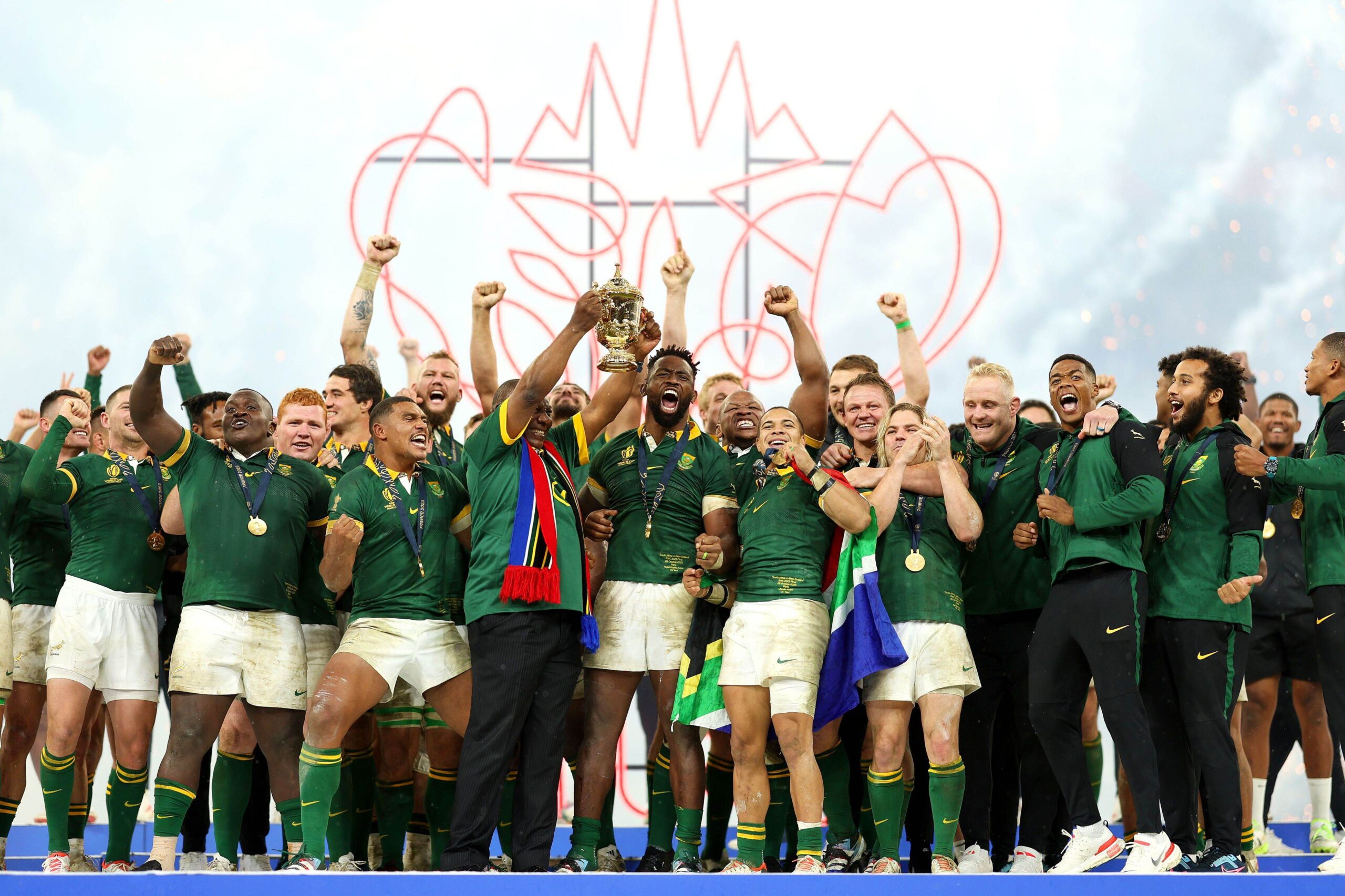
There is a temptation, when discussing the modern Springboks team, to focus exclusively on silverware. Back-to-back Rugby World Cups have understandably distorted the conversation around South African rugby into one centred almost entirely on trophies, rankings and legacy.
But as the 2026 international “Springbok Season” approaches, the most significant questions surrounding the world champions are no longer simply about whether they can win. They are about whether rugby’s most physically demanding team can continue sustaining this level without breaking the very system that made them dominant.
This season feels different. Structurally heavier. Strategically more complicated. Potentially more revealing than any campaign since Rassie Erasmus rebuilt South African rugby in 2018.
The number one team in the world, is preparing for a 14 Test schedule shaped by the arrival of the new Nations Championship, a brutal four match series against the New Zealand national rugby union team, and a widening succession plan aimed squarely at the 2027 Rugby World Cup in Australia. Underneath it all sits a growing concern inside South African rugby: player welfare. South Africa’s greatest rugby strength has become its greatest logistical weakness.
The modern Springbok player no longer operates within a traditional international season. Most of the squad now moves continuously between United Rugby Championship fixtures, Investec Champions Cup rugby, international windows and Rugby Championship demands with barely enough recovery time to reset physically, let alone mentally. When northern hemisphere players finish their autumn campaigns, they generally disappear into managed rest periods. The Springboks do not have that luxury.
Many South African internationals finished the 2025 Test season in November and returned almost immediately to club rugby in Europe. Since then, they have moved uninterrupted through domestic competitions and playoff races before reporting back for Springbok duty in June.
World Rugby chief executive Alan Gilpin recently acknowledged what has become increasingly obvious across the sport. “If you’re a South African player playing your domestic rugby in Europe and playing for the Springboks in their international competitions, that’s an 11 month season and it’s not sustainable at the level the game’s being played,” Gilpin admitted. The issue is no longer theoretical. It is visible weekly in injury reports.
Eben Etzebeth, Pieter-Steph du Toit, Frans Malherbe and RG Snyman have all spent extended periods sidelined. Others are carrying managed workloads into the new season. South Africa’s extraordinary depth has hidden the severity of the problem, but it has not solved it. And yet this is where Erasmus’ management has quietly become as important as his tactics.
The Springboks no longer select exclusively for the next Test. They select for a three-year physical cycle. Rotation, alignment camps and squad expansion are no longer luxuries. They are survival mechanisms. The most revealing aspect of the Springboks’ current alignment camps is not necessarily who attends. It is why they are there.
The camps have become central to Erasmus’ long term planning model. Younger players are introduced early, exposed to the tactical language of the Springboks and studied within the environment before becoming established internationals. As rugby commentator Matthew Pearce explained, “There’s not a lot of rugby that goes on. It is mainly an opportunity to align around various things, including playing strategy.”
The process is deliberate. South Africa has used more than 50 players across recent international seasons without losing cohesion or identity. That level of continuity is almost unprecedented in international rugby. Now the next phase has begun.
Players such as Riley Norton, Haashim Pead and Zekhethelo Siyaya are being pulled into the system alongside established names including Handré Pollard, Kurt-Lee Arendse and Grant Williams. The objective is obvious. Erasmus is not planning merely to defend a World Cup in 2027. He is trying to ensure the transition beyond it does not produce decline.
That succession planning has become even more urgent because of injuries and scheduling chaos surrounding South African franchises in the URC playoffs. Depending on how the Bulls, Stormers and Lions progress, Erasmus may be forced to go deeper into the player pool earlier than anticipated. Ironically, the very depth South Africa cultivated may now become essential to navigating the opening stretch of the international season.
For all the strategic planning and workload debates, the emotional core of the 2026 season remains unmistakable: South Africa versus New Zealand. The four match series against the All Blacks has already captured the imagination of the rugby world because it feels unusually old fashioned in the best possible sense. Not a standalone Test. Not a fleeting rivalry squeezed into the calendar.
A genuine series with narrative weight attached to every collision. Ellis Park. Cape Town Stadium. FNB Stadium. Then finally, a historic fourth Test in Baltimore in the United States. Commercially ambitious, physically savage and tactically fascinating, the series may ultimately shape perceptions of both teams heading toward 2027.
For South Africa, the challenge is particularly complex because the Springboks are no longer hunters. They are rugby’s benchmark side. Opponents no longer approach them cautiously. They prepare specifically for them.
This is where Erasmus’ evolution as a coach deserves attention beyond trophies. Next week, South African president Cyril Ramaphosa will award Erasmus the Order of Ikhamanga, the country’s highest honour for achievement in sport and national contribution. The recognition is not solely about winning Rugby World Cups. It reflects the extent to which Erasmus rebuilt the Springboks into a symbol of national coherence and sporting excellence. “Victory on the field of play has advanced social cohesion among South Africans,” said Presidency director general Phindile Baleni when announcing the award.
That statement may sound grandiose outside South Africa. Inside the country, it is largely accepted as fact. The challenge now is different. Can the Springboks continue evolving while remaining the most feared tactical side in world rugby?
Can they preserve their physical identity without exhausting their players? Can they integrate a new generation without losing the ruthless efficiency that defines them? Those are the real questions shaping the 2026 season. Winning, for this Springbok side, is no longer the surprise.