
Staff Reporter.
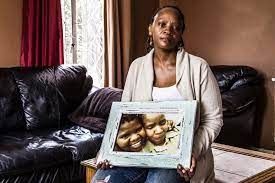
Christine Nxumalo and her late sister Virginia Macapelah and daughter Shanice. (Photo: Mark Lewis).
An inquest will be held from Monday, five years after the Life Esidimeni tragedy, to determine if anyone can be held criminally liable for the tragedy in which at least 144 mental health patients died.
Following the termination of a contract between the Gauteng health department and the Life Esidimeni group in 2015, the department moved the patients to non-governmental facilities.
But, due to neglect, dehydration and hunger, they died between March and December 2016. Some went missing when they were moved and have still not been found.
Judge Mmonoa Teffo will lead the inquest in the Gauteng High Court in Pretoria.
The inquest is different to the Life Esidimeni arbitration process that was led by retired Deputy Chief Justice Dikgang Moseneke, which sought to determine what happened to the patients and whether families should be compensated.
Moseneke, in 2018, awarded the families R1 million in constitutional damages and R200 000 for emotional suffering and funeral costs. All the families that were part of the arbitration received their money. The government is still locked in negotiations with families that didn’t take part in the hearings.
At the inquest, public interest law centre Section27 will represent 44 families.
Umunyana Rugege, Section27 executive director, said that while they didn’t have a full list of witnesses, they hoped the National Prosecuting Authority would subpoena some key government officials.
“This is a fact-finding mission. It is an important and serious process, and we have faith in it to get to the bottom of the cause of the deaths. Causation is a difficult issue in law. Part of seeking justice is about seeing real accountability.”
She said the enquiry might take about 40 days and that evidence was expected from more than 30 witnesses.
The evidence is really important. The process, like any court proceeding, takes however long it takes. We are in for another long haul.”
Harriet Perlman, who developed the online Memorial and Advocacy Project for the victims, said it was important for the inquest to be held so that officials could be held criminally liable for the pain they caused families.