
Staff Reporter.
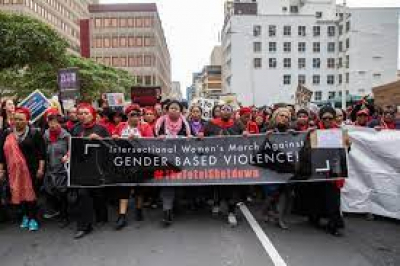
Gender Based Violence and Femicide is one of the biggest challenges currently facing the country, Cabinet said on Thursday.
This is according to Minister in the Presidency, Mondli Gungubele, who was briefing the media on the outcomes of the Cabinet meeting, held on Wednesday.
Cabinet expressed condolences to the families of Nosicelo Mtebeni, Palesa Maruping and Pheliswa “Dolly” Sawutana following their gruesome murders last month.
“These heinous crimes were committed during the commemoration of Women’s Month in August, which was the month to celebrate the strides we have made in bridging the gender inequalities in our society. These crimes have reminded all of us that GBVF remains the biggest challenge facing the country. It requires all of us to work harder to strengthen the protection of women.
“Cabinet has called on law-enforcement agencies to ensure justice is served for these women and their families,” Gungubele said at a media briefing.
Gungubele said that at least R21 billion has been allocated by government to implement the National Strategic Plan on Gender Based Violence and Femicide.
He added that the whole country also needs to intervene to fight the scourge.
“A number of interventions have been put in place to strengthen our criminal justice system. These include increasing dedicated regional courts to deal with sexual offences, strengthening our sexual offences laws and equipping our police officers with the requisite skills to deal effectively with such offences.
A number of government buildings have been converted to create more shelters for women in distress. Cabinet calls on all of us to join hands in creating a safe and secure environment for women in the country,” he said.
To obtain assistance and counselling on Gender Based Violence and Femicide (GBVF) matters, call the GBV Command Centre on 0800 428 428 (0800 GBV GBV).
Callers can also request a social worker from the Command Centre to contact them by dialling *120*7867# (free) from any cell phone.
Meanwhile the National Council of Provinces (NCOP) has passed gender-based violence (GBV) bills during its virtual sitting on Wednesday.
The three bills – namely the Criminal and Related Matters Amendment Bill, Domestic Violence Amendment Bill and the Criminal Law (Sexual Offences and Related Matters) Amendment Act Amendment Bill – will change the landscape in terms of how government departments, law enforcement and the courts deal with cases of violence against women and the vulnerable.
The bills were introduced in Parliament following a Presidential Summit against Gender-Based Violence and Femicide (GBVF) held in November 2018.
The summit resolved, amongst others, to fast track the review of existing laws and policies on gender-based violence, making them victim-centred, ensure all other relevant laws respond to GBV, revisit and fast track all outstanding laws and bills that relate to GBVF.
Criminal Law Amendment Bill
The Criminal Law (Sexual Offences and Related Matters) Amendment Act Amendment Bill proposes amendments to the Criminal Law (Sexual Offences and Related Matters) Amendment Act 32 of 2007, being one of several legislative measures identified to strengthen South Africa’s response to GBVF, in particular the legislation regulating the National Register for Sex Offenders (NRSO).
The bill aims to expand the scope of the NRSO to include the particulars of all sex offenders and not only sex offenders against children and people who are mentally disabled.
It also aims to expand the list of persons who are to be protected to include other vulnerable persons, namely, certain young women, persons with physical, mental, sensory or intellectual disabilities and persons over 60 years of age who receive community-based care and support services.
It also aims to increase the periods for which a sex offenders’ particulars must remain on the NRSO before they can be removed from the register.
The bill further proposes to expand the ambit of the crime of incest, and introduces a new offence of sexual intimidation.
Domestic Violence Amendment Bill
The purpose of the Domestic Violence Amendment Bill is to amend the Domestic Violence Act 116 of 1998 to, amongst others, further provide for how acts of domestic violence and matters related thereto must be dealt with by certain functionaries, persons and government departments.
It also aims to further regulate the obtaining of protection orders in response to acts of domestic violence.
Criminal and Related Matters Amendment Bill
The Criminal and Related Matters Amendment Bill aims to amend four acts, namely the Magistrates’ Courts Act 32 of 1944, the Criminal Procedure Act 51 0f 1977, the Criminal Law Amendment Act 85 of 1997 and the Superior Courts Act 7 of 2013.
The bill’s purpose is to amend the Magistrates’ Courts Act to provide for the appointment of intermediaries and the giving of evidence through intermediaries in proceedings other than criminal proceedings.
The bill also amends the Criminal Procedure Act to further regulate the granting and cancellation of bail and the right of a complainant in a domestic-related offence to participate in parole proceedings.
It also amends the Criminal Law Amendment Act to further regulate sentences in respect of offences that have been committed against vulnerable persons, and amend the Superior Courts Act to provide for the appointment of intermediaries and the giving of evidence through intermediaries in proceedings other than criminal proceedings.
“The House passed two of the bills – the Domestic Violence Amendment Bill and Criminal Law (Sexual Offences and Related Matters) Amendment Bill with amendments, and the two Bills will now be sent back to the National Assembly. The Criminal and Related Matters Amendment Bill will now be sent to the President for assent,” Parliamentary spokesperson, Moloto Mothapo, said.