
By Lehlohonolo Lehana.
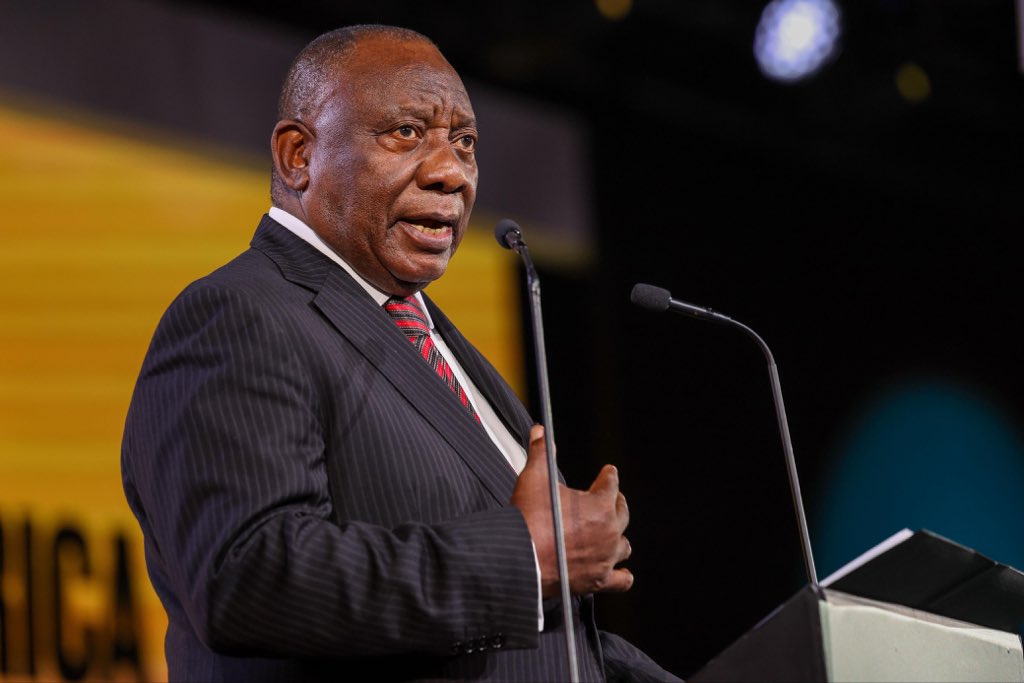
President Cyril Ramaphosa cancelled his scheduled keynote address at the Kruger National Park (KNP) centenary gala dinner on May 30, 2026, due to a technical problem with his aircraft.
The Department of Forestry, Fisheries and the Environment (DFFE) minister Willie Aucamp delivered the address on behalf of the president.
Aucamp has called on South Africans to embrace their shared responsibility as custodians of the Kruger National Park (KNP).
He said that Kruger Park’s first century was built on conservation, scientific research and tourism, while its second century will also include the fourth leg — community participation.
He also expressed hope that future generations would continue to experience the park’s natural wonders, from watching elephants cross the Sabie River to hearing lions roar across the bush at night.
He said South Africa welcomes support from partners around the world, particularly in areas such as wildlife conservation and technological research.
Established in 1926 under South Africa’s National Parks Act, Kruger is the country’s first national park and one of Africa’s largest protected areas.
Covering nearly 2 million hectares across the provinces of Limpopo and Mpumalanga, it is home to more than 300 tree species, and over 140 mammal species and 500 bird species, including the iconic “Big Five,” namely lion, leopard, elephant, rhino and buffalo.
The Minister committed that the Kruger National Park will not only endure but also claim its place as the world’s leading conservation destination.
The minister said, government has established the Kruger Recovery Fund through which we are raising funds to begin rebuilding of climate resilient infrastructure.
Minister reflected on the recent flooding that affected the park.
“What these floods taught us is the resilience of the Kruger family. Over 100 years, lots of successes, lots of failures, lots of hardships [and] lots of triumphs. But we’ve always come through and we will do that for 100s of years to come.”
The success of the next century will depend on how effectively these partnerships are built and sustained, added the minister.
The park’s history dates back to 26 March 1898, when President Paul Kruger of the South African Republic proclaimed the Government Wildlife Park between the Sabie and Crocodile rivers. Following the South African War, the British re-proclaimed the area as the Sabi Game Reserve in 1902.
James Stevenson-Hamilton, appointed as the first warden in 1902, played a crucial role in the park’s evolution. Known by the Tsonga nickname “Skukuza” – meaning “he who sweeps clean” – Stevenson-Hamilton advocated for the nationalization of the reserve and served until his retirement in 1946.
On 31 May 1926, the National Parks Act formally established Kruger National Park, merging the Sabi and Shingwedzi game reserves. The name was proposed by Judge J.A.J. de Villiers to gain Afrikaner support for the conservation project.
The park remains one of South Africa’s leading conservation and tourism assets and continues to contribute significantly to biodiversity conservation, research, economic development and job creation.