
By Lehlohonolo Lehana.
During the month of July 2021, unrest broke out and swept through the country, especially in Gauteng and KwaZulu-Natal.
The impact of the unrest and its associated activities have been devastating for the country’s economy, which has already been significantly affected by the Covid-19 pandemic and further attributed huge financial losses to businesses – small, medium and large – some of which will not be able to recover and re-trade resulting in wide scale job losses.
The unrest accordingly exacerbated, amongst other things, inequality between certain communities, unemployment levels, poverty, hunger, and food insecurity.
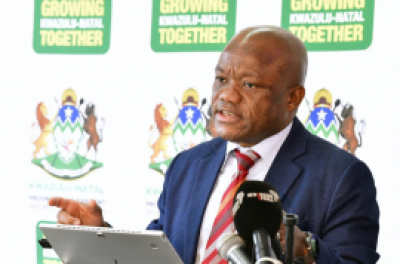
KwaZulu-Natal Premier Sihle Zikalala has called for more funding for the South African Police Service (SAPS) in the province order to strengthen and build its capacity.
Zikalala said that legislation at a national level was not allowing the province to do enough and that the lack of funding was one of the causes behind the police’s failure to manage the July unrest.
The premier was testifying before the South African Human Rights Commission (SAHRC) in Durban as part of its probe into the civil unrest which claimed more than 300 lives.
Replying to a question posed by the commission’s investigator, Advocate Buang Jones, Zikalala said the relationship between the police and communities in KZN was not where it should be.
“That is hindered by a number of issues that are on the side of the police. In KwaZulu-Natal we have police forums all over, which is our rule. Establishment of community safety forums. We also have the provincial board.
“We also have youth participation, so effective structures are in place, but that relationship which exists in terms of these structures is yet to translate to meaningful programmes where there is a partnership in terms of policy. Generally, I would say the province needs to improve on that.
“I must qualify; in most cases you would find that it is hindered resources and the systems, where people could not direct police on what to do,” Zikalala said.
The civil unrest, which started after the jailing of the former president Jacob Zuma, ravaged KZN and parts of Gauteng over the course of around eight days.
The commission also heard the testimony of Gauteng Premier David Makhura and last week, from former defence minister Nosiviwe Mapisa-Nqakula and National Police Commissioner Khehla Sithole, who characterised the July unrest as a planned gathering with an unpredicted modus operandi.
Livestream Video Below:
Video Courtesy of SAHRC.