
By Kevin Rademeyer, Sports Journalists live from London.
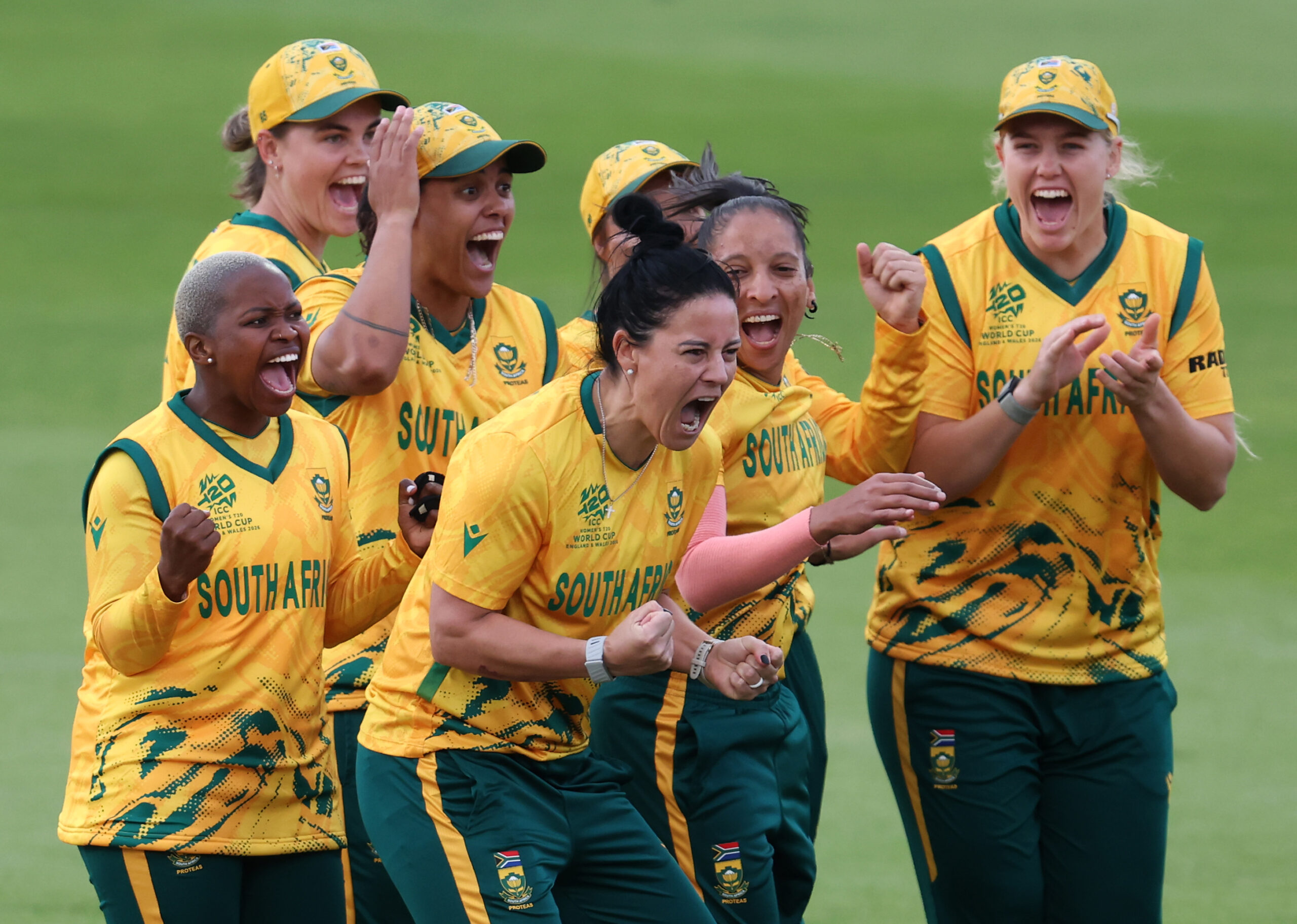
Photo Credit: ICC/ Getty Images.
From The Oval, London: There is no shame in losing to a better side. There is disappointment, certainly. There is frustration, absolutely. But there is also clarity. South Africa’s Women’s World Cup campaign ended at The Oval not because they froze under pressure, nor because they lacked courage, but because England were simply better in the moments that mattered most.
The cruel part is that it did not begin that way. At 23 for 3 inside the powerplay, South Africa had England exactly where they wanted them. Marizanne Kapp and Shabnim Ismail produced the sort of new-ball spell capable of unsettling any batting line-up in world cricket. The hosts were rattled, the crowd was subdued and the Proteas had one hand on a place in the final.
That should have been the decisive passage of the match. Instead, it became the moment England reminded everyone why experience remains the most valuable currency in knockout cricket.
Heather Knight and Nat Sciver-Brunt never panicked. They accepted that the game had changed, resisted the temptation to counterattack recklessly and trusted their methods. Their century partnership did not simply rescue England’s innings, it wrestled momentum away from South Africa through patience, composure and intelligent cricket.
Championships are rarely won through brilliance alone. More often they are decided by execution under pressure. England executed. South Africa gradually drifted.
It also highlighted a reality the Proteas cannot ignore.
South Africa possess arguably the finest opening bowling partnership in women’s cricket. Kapp and Ismail remain capable of dismantling the very best batting orders, as England discovered. The problem begins once those opening spells are complete.
England could rotate five genuine wicket-taking bowlers without a noticeable drop in quality or control. South Africa could not.
The gap between Kapp and Ismail and the fourth and fifth bowling options remains significant. It is not simply a question of talent but consistency. About executing under pressure.
England attacked throughout the innings because every change of bowler maintained pressure. South Africa relieved it too often. South Africa is crying out for another world class spinner to assist Mlaba.
The inclusion of Luus over van Niekerk gave them another bowling option, but Wolvaardt chose not to use it. In the passage of play where Nat Sciver-Brunt and Heather Knight put on a fourth-wicket partnership of 133, South Africa tried Tryon and then alternated between de Klerk, Khaka and Mlaba but England kept finding ways to score.
Mashimbyi already appears to be thinking along those lines, but instead of looking forward he brought Ismail back. “We had too many of the same type of bowlers and teams could work out what we’re trying to do,” he said.
The same imbalance exists with the bat. England’s middle order absorbs pressure because every player understands her role. South Africa’s batting order continues to feel unsettled.
South Africa’s batting never truly found rhythm throughout the tournament and it deserted them again when it mattered most. There were too few boundaries, too little pressure placed back on England’s bowlers and too many overs where singles became survival rather than progression.
Nadine de Klerk batted at number four against Australia before returning to number six for the remainder of the tournament. Neither role feels right. Her greatest value lies as a finisher, arriving with licence to attack rather than rebuild an innings. Batting her at seven, with Chloe Tryon following at eight, would provide greater depth while allowing both players to play naturally instead of carrying responsibility they were never intended to shoulder.
It seems South Africa do not have players who can find another gear. Wolvaardt is an anchor, Brits is a run-a-ball player, Kapp is a trump card who will do a big job occasionally and de Klerk is a finisher but they need someone who can build an innings. Dercksen could become that player but will need experience, and a cool head.
The Proteas just could not match England for skill, when it really mattered. They made some wrong decisions when the match was on the line. Those decisions become magnified in knockout cricket. Modern T20 cricket is unforgiving. If boundaries dry up, scoreboards quickly become impossible to manage.
England’s fielding ensured there were few gifts. Perhaps the biggest difference between the teams was not batting or bowling but intensity. England attacked every ball in the field as though it would decide the match. Their catching was exceptional, their ground fielding relentless and their energy infectious. Every stop saved a run, every throw carried purpose and every opportunity was attacked without hesitation.
South Africa were tidy. England were outstanding. That distinction matters.
The Proteas have built a reputation around disciplined cricket over the past four years, reaching the latter stages of ICC tournaments with admirable consistency. But elite tournaments are increasingly decided by the smallest margins, and England won those margins comfortably.
There were individual stories that summed up South Africa’s campaign.
Laura Wolvaardt endured a tournament well below the standards she has set over the past three years. One of the most reliable batters in world cricket never found her rhythm, placing additional pressure on an already fragile middle order. Every great player experiences difficult tournaments, but South Africa rely heavily on their captain’s consistency and her struggles inevitably affected the batting group.
Ironically, the player omitted for South Africa’s opening match became their most dependable performer. Tazmin Brits responded magnificently after being left out against Australia, finishing as South Africa’s most consistent batter. She brought stability at the top of the order, competed in every innings and reminded everyone why experience still matters in international cricket. It was one of the few selection decisions that improved as the tournament progressed.
The broader picture remains encouraging despite the disappointment. South Africa have now established themselves as regular contenders in global tournaments. They no longer arrive hoping to compete. They arrive expecting to challenge. That is significant progress.
But the next step is proving considerably harder.
England, Australia and India possess greater depth across every discipline. They have specialist bowlers throughout their attacks, middle orders capable of recovering from early collapses and fielding standards that save twenty runs before a ball is even bowled.
South Africa remains close enough to threaten those teams. Not yet close enough to consistently beat them. Although they have done remarkably well against India, winning the home series and the crucial World Cup game. This means the team is heading in the correct direction. We are still a fair bit off the two finalists.
The defeat at The Oval should not trigger wholesale change. It should, however, sharpen the focus on where improvement is needed. Greater bowling depth, clearer batting roles and higher fielding intensity are no longer desirable additions. They are essential if South Africa are to move from semi-finalists to champions.
While Mlaba described what she and her team-mates are going through as “hurt,” Mashimbyi almost had to take a different position to avoid the scars from settling. “What pain?” He laughed when asked about the mood in the dressing room. “You just lose and you learn. And we’ve learned a lot in this World Cup. We’re going to make sure that we go back to the drawing board and put things in place that’s going to make us even more dangerous and even better as a team.
“We know where our gaps are, and that’s the only thing we can do really. We can’t change the results. It’s about the work that we put in going forward and making sure that when we get an opportunity to play a World Cup again or an ICC tournament, we are sitting at the same table as other teams.”
The Proteas walked off disappointed because another World Cup opportunity had disappeared. England walked off knowing they had earned their place in the final through experience, discipline and relentless execution. In the end, that was the difference.