
By Lehlohonolo Lehana.
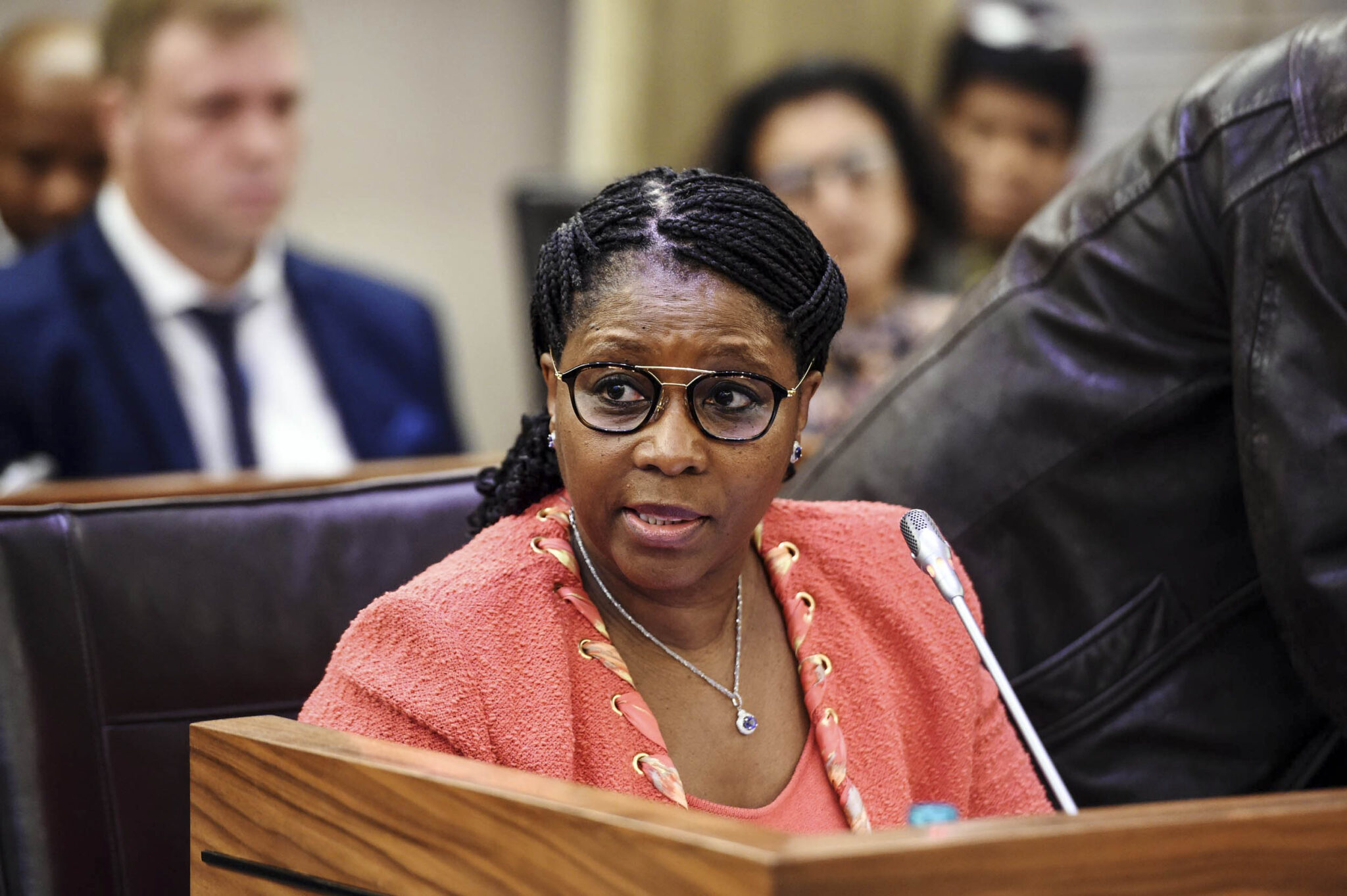
President Cyril Ramaphosa will appoint former minister Ayanda Dlodlo as South Africa’s new ambassador to France ahead of his official visit to Paris.
Ramaphosa will undertake a Working Visit to France from 10-12 July 2026.
The visit comes at the invitation of the Director-General of UNESCO, Khaled El-Enany, to co-chair the UNESCO High-Level Steering Committee on Sustainable Development Goal (SDG4) on education, which will be held at the UNESCO Headquarters in Paris on 10 July 2026.
This will be followed by the Transforming Education Summit (TES) Stocktake.
On 12 July, Ramaphosa is expected to attend the 110th Commemoration of the Battle of Delville Wood which will be held at the South African Memorial in Longueval, approximately two hours from Paris.
Ramaphosa has recently downplayed reports that his invitation to the G7 summit in France has been withdrawn, saying non-attendance by a country outside the bloc should surprise no-one.
It is understood that US had put huge pressure on France to rescind Ramaphosa’s invitation to the summit.
The immediate backdrop for Dlodlo’s deployment involves the diplomatic humiliation South Africa suffered, when France abruptly withdrew SA’s invitation to the G7 summit.
This episode exposed the unsustainable nature of South Africa’s attempted balancing act between Western-aligned economic interests and its BRICS partnerships with Beijing and Moscow.
France is one of South Africa’s largest foreign investors, with both countries aiming to significantly expand trade in the coming years.
Dlodlo succeeds Nathi Mthethwa, who died in Paris last year in an apparent suicide.
She faces big challenges, including the mysterious death of her predecessor and the need to protect important economic deals.
Her selection is strategic, aiming to navigate strained Franco-South African relations, manage complex global alliances, and leverage her unconventional background in security and international institutions like the World Bank to address multifaceted diplomatic and economic challenges.
Dlodlo’s unique background in intelligence and international finance is hoped to help South Africa balance its ties with Western countries and its BRICS partners.
Born in 1962, Dlodlo joined uMkhonto we Sizwe during the anti-apartheid struggle’s most intense phase. Her subsequent assignment to Soviet military intelligence training during the 1980s placed her within the KGB’s educational apparatus at precisely the moment when Moscow sought to cultivate reliable cadres for eventual governmental responsibilities.
These formative experiences imparted technical capabilities and, presumably, enduring contacts within Russian security services that may prove relevant given Moscow’s current expansion across African affairs.