
By Lehlohonolo Lehana.
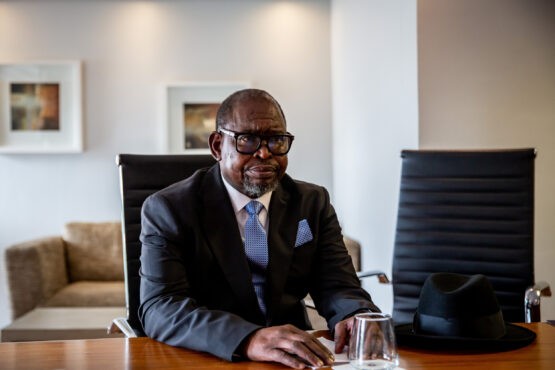
Finance Minister Enoch Godongwana provided an update on the decision to temporarily withhold the July 2026 equitable share transfers to 69 municipalities.
Earlier this week, Treasury announced that equitable share transfers to 69 municipalities would be temporarily withheld to instil fiscal discipline, ensure public money is properly managed and to deal with unauthorised, irregular, fruitless and wasteful expenditure by these entities.
Among the targets to be met by the affected municipalities are a 15% reduction in irregular expenditure balances by August and another 15% by September, alongside evidence of funded budgets, functioning disciplinary boards and consequence management.
Godongwana has reiterated that temporarily withholding of funds from municipalities is instrumental to ensure compliance with the law and improving service delivery.
He said this approach would ensure essential service delivery continues, while municipalities are compelled to correct their financial practices.
Provincial treasuries will monitor compliance and Treasury will continue to provide support through circulars, engagements and training.
Godongwana said that, despite years of support, guidance and training, many municipalities continue to adopt unfunded budgets; accumulate unauthorised, irregular, fruitless and wasteful expenditure; and fail to meet statutory obligations to State-owned Eskom, water boards, the South African Revenue Service (SARS), the Auditor-General and pension funds.
“The numbers are sobering,” he said.
The Minister said that, since 2021/22, municipalities have incurred R24.12-billion in fruitless and wasteful expenditure, noting that they have accumulated R145.21-billion in irregular expenditure, with R40.14-billion in irregular expenditure incurred in 2024/25 alone.
Godongwana said municipalities have disclosed R118.13-billion in unauthorised expenditure, more than half of which was on non-cash budget items.
Additionally, he stated that budget credibility has deteriorated. In 2024/25, 116 municipalities, nearly half, adopted unfunded budgets.
By year-end, he said municipalities owed R3.4-billion in interest to Eskom and R1.21-billion to water boards, while 48 municipalities had overdue third-party deductions.
“This threatens the financial sustainability of bulk suppliers, undermines statutory bodies and disrupts service delivery. Nonpayment of service providers results in penalties, interest charges and service interruptions.”
Weak governance and failure to process unauthorised, irregular, fruitless and wasteful expenditure through Municipal Public Accounts Committees (MPACs) erode accountability and public trust.
“We are fighting to improve governance within municipalities, and with it the quality and consistency of service delivery, as well as to deal with the pernicious culture of nonpayment. Restoring the credibility of public finance, at the local and national level, is a key part of our growth strategy and we cannot turn away from the measures that get us there,” he added.
Godongwana said the affected municipalities had been given sufficient notice in writing and urged to take measures to change their financial management positions ahead of withholding of funds. They were also given a platform to send, in writing, reasons why their funds should not be withheld.
Meanwhile the report by BER’s economics writer and researcher Claire Bisseker said that cities and towns across South Africa are failing after years of underspending on infrastructure and maintenance. “If left unchecked, the country faces a growing risk of systemic municipal failure with profound social and economic consequences.”
The report added that credit ratings agency Ratings Afrika’s latest annual municipal financial sustainability index (MFSI) report, based on the financial results of the 128 largest municipalities for the financial year ended June 2025, shows that the situation has continued to deteriorate “at an alarming rate.”
It said it estimates that the 128 municipalities’ combined operating deficit increased to R39bn from R35bn in 2024, and that their aggregate liquidity shortfall rose to R129bn, from R107bn in 2024 and R55bn in 2021 — a growth of almost R20bn a year over the past four years.