
By Lehlohonolo Lehana.
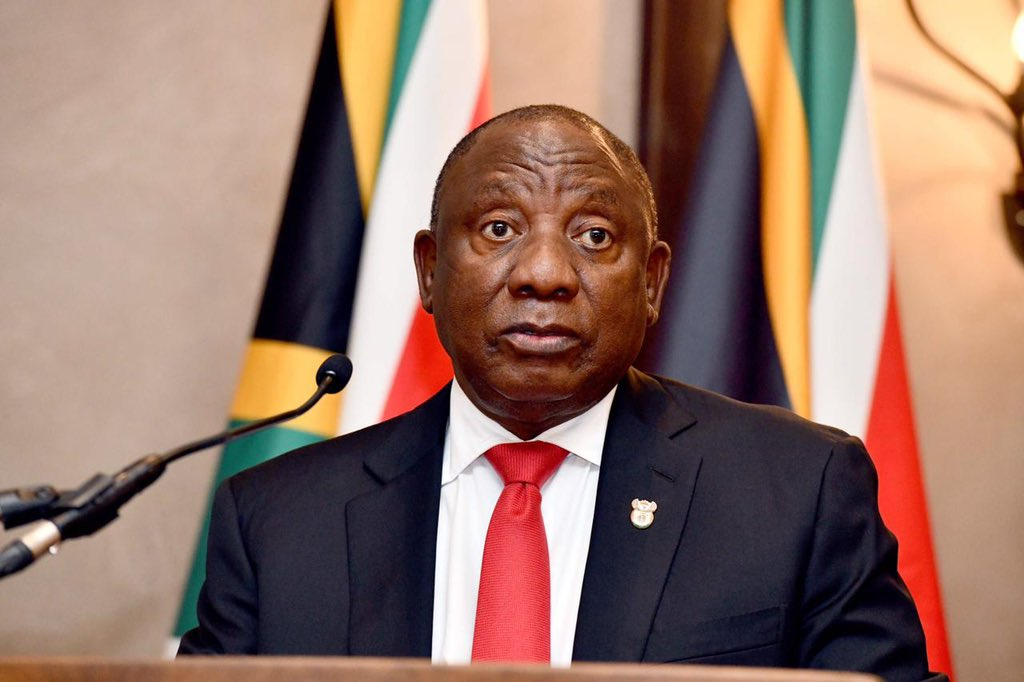
President Cyril Ramaphosa officially launched South Africa’s Electronic Travel Authorisation (ETA) at OR Tambo International Airport on Wednesday, 12 August 2026.
The ETA uses biometric verification, machine learning and upgraded border-control technology to make travel faster and more secure while strengthening border management.
Following its successful pilot during South Africa’s G20 Presidency, the ETA will be officially launched as the cornerstone of South Africa’s modern digital immigration system and the flagship reform of the Department of Home Affairs’ digital transformation programme.
The ETA combines advanced biometric verification, machine learning and the upgraded Electronic Movement Control System (eMCS 2.0) as part of a modern digital immigration ecosystem that strengthens border security while making travel to South Africa faster, simpler and more secure for legitimate travellers.
This reform will enhance South Africa’s competitiveness as a destination for tourism, business and investment, while supporting more efficient and secure border management.
The launch marks a significant milestone in the digital transformation of the Department of Home Affairs and the Border Management Authority (BMA), demonstrating Government’s commitment to harnessing technology to improve service delivery, safeguard national security and facilitate economic growth.
Ramaphosa described the reform as far more than the introduction of a new digital platform, saying it represents the aspirations of the South Africa of the future.
“This is far more than the introduction of a new digital platform. It is a statement about the kind of country we are building.”
“It is about making South Africa more open to opportunity, more welcoming to legitimate travellers, more secure for our citizens and more competitive in the global economy,” the President said.
The launch comes as government continues its programme of structural reforms aimed at removing barriers to economic growth, investment and job creation.
Ramaphosa said the ETA would support tourism, trade, investment and the exchange of skills and knowledge, while simultaneously improving the integrity of South Africa’s borders and the country’s ability to manage migration effectively.
“The Electronic Travel Authorisation system will make travel to South Africa easier, faster and more predictable. It will encourage tourism. It will support trade. It will attract investment.”
“It will facilitate skills and knowledge exchange, and at the same time, it will strengthen the integrity of our borders and improve our ability to manage migration effectively,” the President said.
Under the new system, eligible travellers will be able to apply online from anywhere in the world without having to visit a South African mission or visa processing centre.
Applications are expected to be processed more quickly, with more predictable decisions and an improved travel experience.
Ramaphosa said the initiative represents the beginning of a much broader transformation of South Africa’s immigration system.
The president said the success of ETA would depend on close cooperation between the Department of Home Affairs, the BMA, the South African Revenue Service, the Department of Tourism, South African Tourism, the aviation industry, diplomatic missions, technology partners and the private sector.
He described South Africa’s borders as strategic national assets, where security, trade, tourism, logistics and economic development intersect.
“Our borders are not merely points of entry. They are strategic national assets. They are where security, trade, tourism, logistics and economic development come together. They demand that government functions as one integrated system,” he said.
Ramaphosa commended the Department of Home Affairs, the BMA, participating government departments, technology partners and other stakeholders for their contribution to bringing the reform to life.
He said the achievement should give South Africans confidence that government’s reform programme is delivering measurable progress.
Ramaphosa said the ETA ultimately represents a vision for a South Africa that is simultaneously open and secure, a country capable of welcoming legitimate travellers, while protecting its borders and advancing its economic interests.
“Today’s launch is about much more than visas. It is about the future of our country.”
He said South Africa must be a country that welcomes the world with confidence, attracts investment, embraces innovation and ensures that public institutions are efficient, modern and responsive.
Home Affairs minister Leon Schreiber contrasted the efficiency of going digital with how many legitimate travellers, including tourists and investors, experienced problems with what was a manual system in the past.
“The process was manual, in many case it was paper-based and there were only a few locations available in some countries where prospective visitors had to physically go and apply.”
Schreiber emphasizes that this old-school process resulted in huge economic losses for South Africa, as well as security vulnerabilities.
“These manual processes could be manipulated – everything from a visa permit document to a passport or even just outright bribery is possible when you have a system that is discretionary and where an official is actually processing that application.”
During the pilot phase with four strategic source markets including China, India, Indonesia and Mexico, 6 100 out of 210 000 applictions were declined because of security concerns.
Schreiber said the ETA will deliver a visa within 24 hours of an application being made.
Security measures include facial recognition and verification of submitted documents, as well as additional risk management tools like checking whether the applicant is on any wanted lists.