
By Kevin Rademeyer, Sports Journalist.
Live from Loftus, Pretoria: Three matches, three wins, 142 points scored and only 40 conceded. On the surface, the All Blacks could hardly have asked for a better build up to the Rugby’s Greatest Rivalry series.
But Saturday night’s 50 -19 victory over the Bulls at Loftus Versfeld came with a warning attached. New Zealand are travelling beautifully. They are not yet battle tested. That distinction could become very important when they walk into Ellis Park next weekend.
The Bulls were brave, entertaining and, in patches, genuinely dangerous. They were also a young side still finding its feet in pre -season, while the All Blacks are already operating at the intensity of an international campaign. That difference eventually became impossible to ignore.
For the first 20 minutes, however, Loftus felt like it might produce something special.
The Bulls came out with intent, challenged New Zealand physically and created opportunities. There were moments when the home side looked capable of asking serious questions. But New Zealand absorbed the pressure, found their rhythm and then began to pull the game apart.
Once they did, it happened quickly.
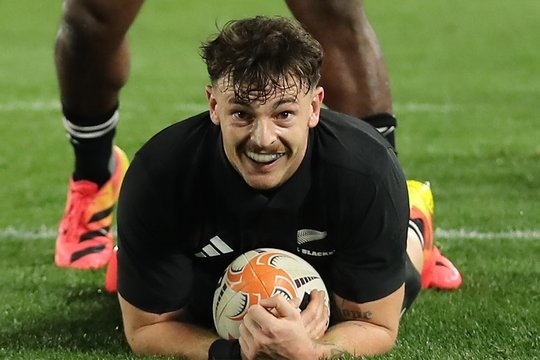
Rieko Ioane was outstanding, carrying with aggression and repeatedly putting the Bulls defence under pressure. Leroy Carter was everywhere, scoring twice and making five clean breaks. Anton Segner produced the sort of relentless performance that coaches love, while Codie Taylor returned to the starting line up with two tries and a powerful presence.
And then there was the All Blacks’ ability to turn a loose ball into points. That remains one of their greatest strengths.
They do not need many invitations. Give them space and they attack it immediately. A missed tackle becomes a line break. A poor kick becomes field position. A turnover becomes a try. Against the Bulls, their speed of thought was often as impressive as their speed of execution.
The scrum was another significant positive. The Bulls wanted to make the set piece a confrontation. Instead, the All Blacks eventually stood their ground and at times dominated it.
That will have caught the attention of the Springbok coaches. So too will their breakdown work and defensive scrambling. New Zealand are not simply throwing the ball around and hoping something happens. There is structure behind the ambition, and they appear increasingly comfortable playing at pace.
Yet this is where the real question begins. Have they been tested enough?
Bulls coach Johan Ackermann offered perhaps the most revealing assessment after the match. “The All Blacks maybe had the scoreboard luxury tonight to try a few things from deep in their own half that I don’t think they’ll get away with against the Springboks, “he said.
That is a polite way of saying the All Blacks were allowed freedoms they are unlikely to enjoy next Saturday.
Ackermann also felt the Springboks would benefit from being more patient in possession, building pressure rather than trying to force opportunities. It is an important observation because South Africa are unlikely to make the same mistakes the Bulls made.
The All Blacks will know that too. Coach Dave Rennie certainly does. “We know that the intensity level, the quality that we’re going to come up against next week is three, four, fivefold,” Rennie said. “We’ve played reasonably well on tour and we know we need to up the ante.”
That is perhaps the most honest assessment of the tour so far.
New Zealand have been impressive, but they have also enjoyed favourable circumstances. The Stormers pushed them hard but were not at full strength. The Sharks were in pre season and without their established Springboks. The Bulls were also short of their leading internationals and are still building towards the season ahead.
None of that diminishes New Zealand’s performances. It simply means Ellis Park will provide the first genuine answer.
There is plenty to admire in this All Blacks team. Their attacking confidence is growing. Their scrum has been impressive. Their ability to punish defensive mistakes is frightening. And their depth has already created selection headaches for Rennie.
The injury picture could make those decisions even more interesting. Will Jordan and Cam Roigard are expected to be available, while Damian McKenzie remains a possibility after his ankle problem. Richie Mo’unga has also joined the squad, although Rennie has indicated he will not be considered for the first Test.
The Springboks, meanwhile, have been managing their own squad carefully after the Argentina trip. Rassie Erasmus knows exactly what awaits. “This series is almost like playing the knockout stages of a World Cup because we are facing one of the world’s best week in and week out,” he said.
That is the reality now. The warm- up matches are finished. The experimentation is almost over. The comfortable victories and scoreboard pressure count for something, but not nearly as much as they will have to next Saturday.
The All Blacks have shown they can attack. They have shown they can defend. They have shown they can cope with altitude, difficult conditions and pressure.
What they have not yet shown is whether they can survive 80 minutes against a fully loaded Springbok side that will happily turn the match into a physical examination.
That is the missing piece. And perhaps that is exactly what makes the first Test so compelling.
New Zealand arrive unbeaten, confident and dangerous. South Africa arrive rested, experienced and fully aware of what is coming.
The All Blacks have spent three matches building momentum. At Ellis Park, they find out whether they have built enough, and whether they can withstand the World Champions constant pressure and brutality.