
By Kevin Rademeyer, Sports Journalist.
Photo Credit: LIV Golf.
There was a point when professional golf appeared to have settled into a comfortable rhythm. The major championships still carried their weight, the stars remained familiar, and the established order showed little appetite for disruption. Then LIV Golf arrived.
Whatever judgement is ultimately passed on the league, its impact is difficult to dispute. LIV challenged the PGA Tour’s dominance, introduced a radically different competition format and forced professional golf to confront questions it had largely avoided.
How should the sport be presented? How much access should fans have to its players? Could teams create another layer of interest? And why should the world’s best golfers spend so much of their careers playing in the same markets?
In that sense, LIV provided golf with its biggest jolt since Tiger Woods changed the sport.
The early days were chaotic. Phil Mickelson’s comments, the involvement of Saudi Arabia, Greg Norman’s leadership and Dustin Johnson’s decision to join dominated the conversation. But once the first tournament in London began, the concept became easier to understand.
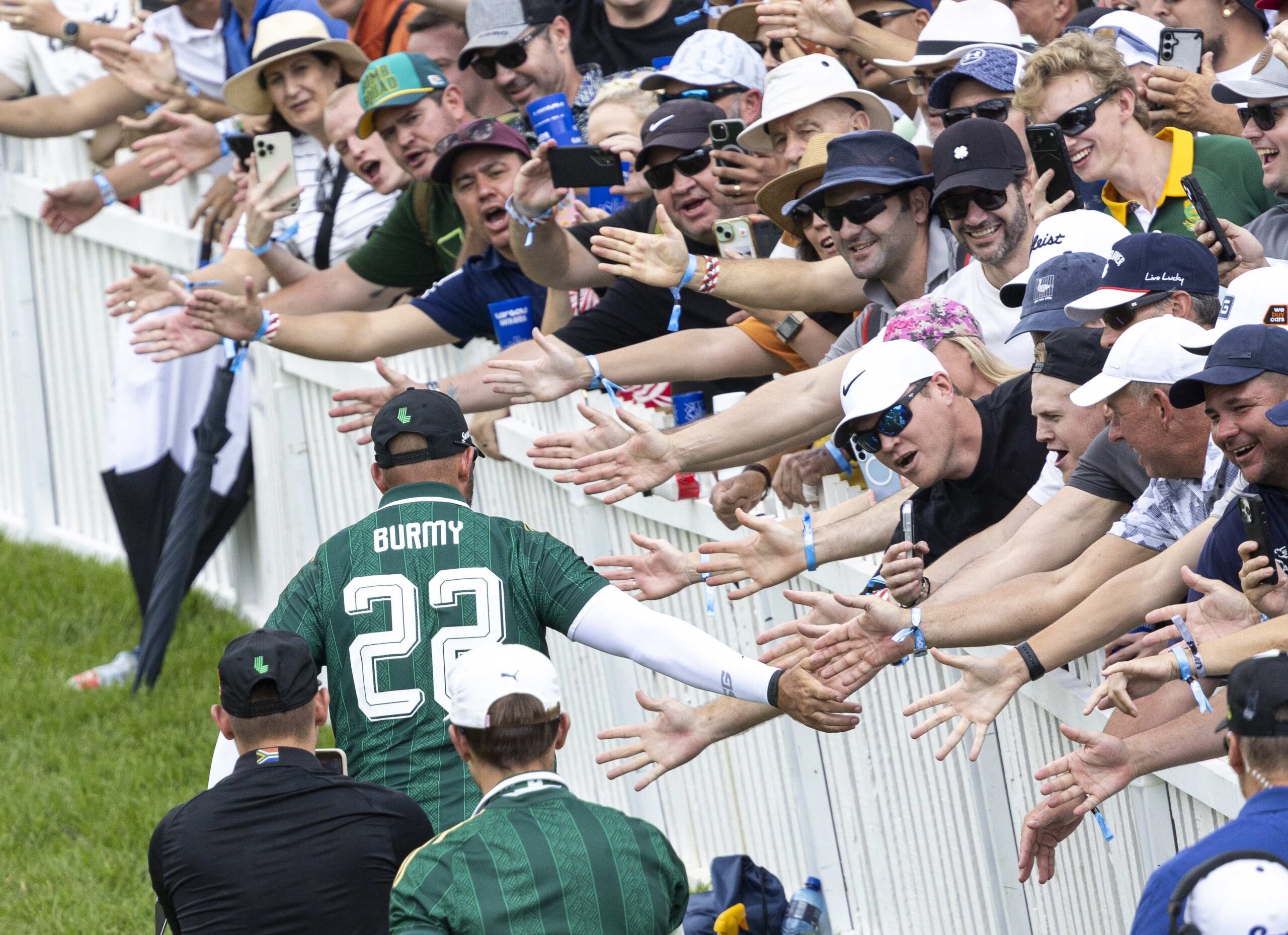
The shotgun start immediately changed the rhythm. The team format created another competition within the individual tournament. Music, fan villages, player access and a more informal atmosphere made LIV feel less like a traditional golf tournament and more like a sporting event.
Then came the recruitment of the stars. Brooks Koepka, Bryson DeChambeau, Sergio Garcia, Patrick Reed, Cameron Smith and eventually Jon Rahm gave LIV something it desperately needed: sporting credibility.
It was no longer simply an experiment. It was a rival.
It produced great tournaments. Adelaide deserves enormous credit for showing LIV what its product could become. The Australian crowds embraced the event, Ripper GC gave the tournament a genuine local identity and the atmosphere became one of the league’s defining characteristics.
But South Africa took that formula and made it feel bigger. LIV Golf South Africa, became a national sporting occasion.
The crowds embraced the Southern Guards. The national pride was obvious. The party atmosphere around the course was infectious, while the quality of the golf delivered the competitive edge.
The playoff between DeChambeau and Rahm, in the pouring rain, supplied the headline drama, but the lasting image came afterwards.
Dean Burmester, Louis Oosthuizen, Charl Schwartzel and Branden Grace stood together as the crowd sang the South African national anthem. That was LIV at its most compelling.
The event was loud, emotional, accessible and unmistakably local. It also became the most attended golf tournament in South African history.
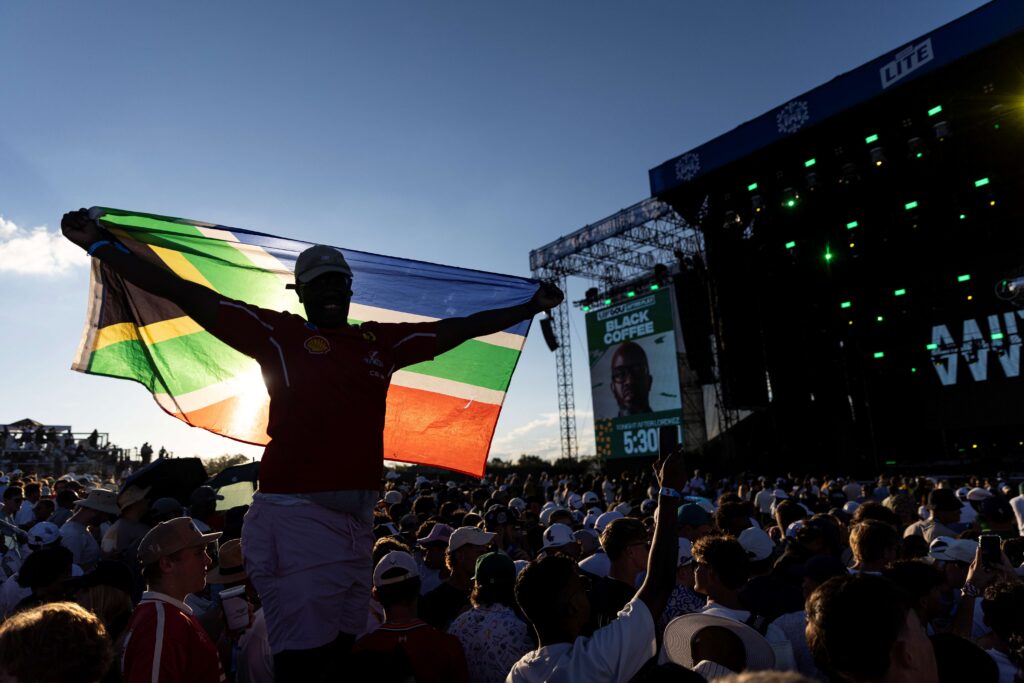
That achievement mattered because it demonstrated something the league had promised from the beginning: world class professional golf could travel beyond the sport’s traditional centres and connect with audiences that had often been underserved.
South Africa proved the point. The players who changed the story
LIV’s impact cannot be judged only through tournaments and television numbers. Some of its strongest arguments came through the players themselves.
DeChambeau is perhaps the clearest example. He joined as a major champion and one of the most polarising players in the game. During the LIV era, however, he developed into one of golf’s biggest personalities.
His 58 at Greenbrier in 2023 was spectacular. His second US Open victory in 2024 elevated him further, while his willingness to embrace YouTube and engage directly with fans revealed a side of DeChambeau that traditional golf had not always managed to capture.
Rahm’s arrival was another watershed moment.
A two time major champion and one of the world’s leading players, his decision to join LIV in 2024 gave the league a significant injection of credibility. His performances backed it up, with Rahm becoming a remarkably consistent force and leading Legion XIII to consecutive team championships.
Joaquin Niemann also flourished. His nine LIV victories, more than any other player, demonstrated how effectively he adapted to the format and environment.
Then came Anthony Kim’s victory.
His return to professional golf through LIV was about more than results. Kim had disappeared from the game and returned carrying enormous curiosity and expectation. His eventual triumph in Adelaide, after recovering from a difficult period and producing a remarkable putting display, became one of the most powerful stories of the LIV era.

His celebration with his wife and daughter was a reminder that sport occasionally produces moments that transcend the scorecard.
The problems were real For all its innovation, LIV also left unresolved questions.
The most obvious has been its relationship with the wider game and the major championships. DeChambeau and Koepka winning majors in 2023 and 2024 were important victories for LIV, but the relative lack of major success since has weakened one of the league’s strongest arguments: that its players remain capable of competing at the highest level.
The team concept has produced similar mixed results. Some players embraced it enthusiastically. Others never appeared particularly invested in the idea, leaving one of LIV’s central innovations feeling uneven from tournament to tournament.
The television product also evolved, not always for the better. Changes to the presentation, the loss of pre -round and post- round programming and the disappearance of features such as Any Shot, Anytime removed some of the personality that had helped distinguish LIV from conventional golf coverage.
There were also questions over communication and direction.
For a league built on disruption, uncertainty was always going to be part of the process. But uncertainty surrounding scheduling, television, commercial arrangements and the competition’s long term direction created a different problem: a lack of clarity.
Norman’s departure inevitably changed the character of the organisation. Scott O’Neil inherited an extraordinarily difficult task and deserves massive credit for taking it on, but Norman’s role in LIV’s creation was fundamental. His willingness to challenge the established order was part of the league’s DNA.
What remains after LIV 1.0? Perhaps the most significant legacy will not be a trophy or a leaderboard. It will be the questions LIV forced the sport to ask.
Why shouldn’t professional golf be played more often around the world?
Why shouldn’t fans have greater access to the players?
Why should a tournament be built around waiting for one group to finish before another takes the stage?
Why can’t teams matter?
Why can’t professional golfers show more personality?
Some of LIV’s answers will almost certainly survive, regardless of what happens next.
The shotgun start has transformed the spectator experience. Team competitions have created another reason to remain invested. Global venues have expanded the sport’s reach. Player access, family friendly environments and more energetic presentation have changed expectations.
And perhaps most importantly, LIV created a community around the product. Fans, broadcasters, journalists and players developed an identity that extended beyond the original argument about rival tours.
That is the complicated legacy of LIV Golf 1.0. It was controversial. It was imperfect. It made mistakes and, at times, appeared uncertain about what it wanted to become.
But it made professional golf more interesting.
And somewhere between the music, the teams, the shotgun starts, the packed galleries and the world’s best players competing in unfamiliar places, the original LIV proposition became tangible. In South Africa, it became undeniable.
The tournament showed what happens when a new golf product stops trying to imitate the traditional game and instead becomes part of the sporting culture around it.
LIV Golf 1.0 may eventually be remembered as the beginning of something, rather than the finished product. It remains to be seen what LIV Golf 2.0 will look like. There is little doubt that it will be curtailed into fewer tournaments, and many of the big names will be missing.
The bigger question will be, whether the product can survive without the massive cash injection, and with all the uncertainty surrounding the longevity of the tournaments. Time will tell, but golf needed LIV, even if it was to create memories, and to shake traditional golf traditions.