
By Lehlohonolo Lehana.
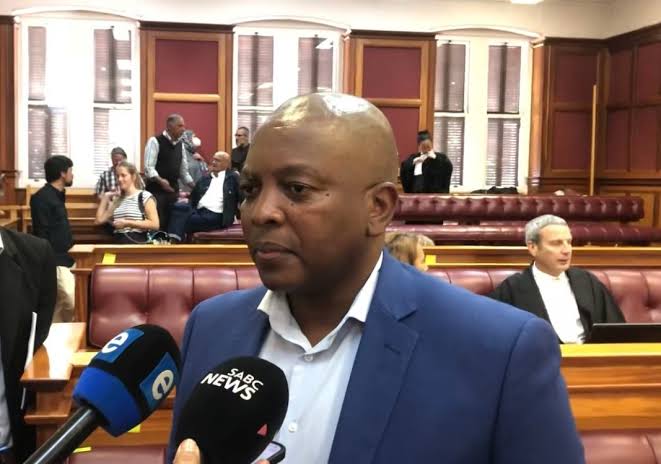
The Gqeberha High Court dismissed the Steve Biko family’s application to postpone the inquest into his death, ruling that proceedings will continue tomorrow.
The family’s lawyer, Ngqiqo Sakhela, asked for more time to prepare.
According to Sakhela, the family wants certain witnesses who were not questioned by the family to be recalled.
Another bone of contention is that the initial 1977 inquest records, as well as TRC amnesty applications by the suspects, were written entirely in Afrikaans and have not been translated into English.
In his ruling, Judge Isaac Madondo said, that the family would not be prejudiced if the inquest proceeded as scheduled.
He said the parties had known the dates for about 10 months and had sufficient time to prepare.
Madondo also raised concerns about the fact that only two of the eight people who were in the interrogation room with Biko are still alive.
Of the eight people who were in the interrogation room with Biko, only two key eyewitnesses are still alive, former security police officers Jacobus Benecke and Daniel Siebert, both now in their 80s.
The other officers implicated in the events, including Harold Snyman, Rubin Marx and Gideon Nieuwoudt, have since died.
Madondo described both as elderly key eyewitnesses and warned that it would not be in the interest of justice if they passed away before giving evidence.
The judge also questioned the circumstances surrounding the postponement application, saying no concerns about ill-preparedness had been raised at a case-management meeting on August 21.
The Biko family had been without funded legal representation after Legal Aid South Africa rejected its application on the basis of its means test.
Justice and Constitutional Development Minister Mmamoloko Kubayi only approved state funding for the family’s legal team on Monday, after some of the lawyers who had been lined up for the inquest had taken on other work.
He said it was concerning that members of the Biko family’s legal team had subsequently become unavailable.
Madondo said this raised serious questions about the genuineness of the application and whether the circumstances justified delaying the proceedings.
Fullview learnt the Biko family is considering applying for the recusal of retired judge Madondo from the inquest.
Biko’s son, Nkosinathi expressed dismay at the manner in which the inquest has been handled, citing procedural frustrations and administrative hurdles in the Gqeberha High Court.
He voiced concern after the court dismissed an application by the family’s legal team for a postponement to review thousands of historical pages from the original 1977 inquest.
Stephen Bantu Biko, the Black Consciousness Movement (BCM) founder died from a brain injury aged 30 almost a month after being arrested at a roadblock.
Police at the time said he had banged his head against a wall, but after apartheid ended in 1994, former officers admitted to assaulting him – although no-one has been prosecuted.
Biko had been a medical student at the University of Natal when he founded the Black Consciousness Movement, aimed at empowering and mobilising the urban black population.
He was determined to combat the psychological inferiority that many black South Africans felt after years of white-minority rule and at a time when anti-apartheid activists like Nelson Mandela had been silenced and incarcerated by the regime.
The Truth and Reconciliation Commission (TRC), set up in 1996, uncovered apartheid-era atrocities like murder and torture, but few of these cases progressed to trial.
Biko’s case was heard at the TRC, which is where the policemen involved admitted to having made false statements 20 years earlier, but they were not prosecuted.