
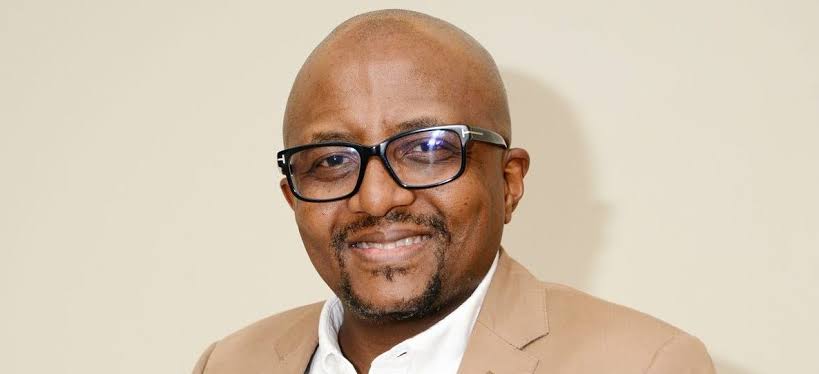
By Bani Kgosana.
Wednesday, 16 September 2026: Enoch Godongwana, South Africa’s finance minister, spoke this week about the country’s infrastructure backlog, admitting that our country lacks a proper infrastructure plan, not money. He pointed out that there’s more than R20 billion in water grants scattered across departments and still, in his words, “we’ve got a water crisis throughout the country, and we can’t even build boreholes.” That is not a funding problem. That is a delivery problem. And it lines up with the latest Auditor-General findings.
In the 2024/25 financial year, infrastructure neglect cost municipalities R14.73 billion in water and R21.63 billion in electricity losses. That means R36 billion has been lost as maintenance kept getting pushed out until pipes burst and transformers failed.
Assets that are not properly maintained need more capital injected, or they will keep failing. This has serious consequences for service delivery, safety and environmental risk. A municipality can have money and still fail to deliver if it cannot maintain what already exists, plan credible projects, procure appropriately, manage contractors, complete work on time or maintain reliable asset and project records.
Municipalities need to know what infrastructure they own, its condition, which assets are most critical to service delivery, what maintenance is due, and where failure poses the greatest operational and financial risk. Without this, infrastructure spending remains reactive. Money is spent, but service reliability continues to deteriorate.
The rest of the Auditor-General’s report highlights poor infrastructure management: of the wastewater treatment works inspected, 63% discharged effluent that didn’t meet compliance standards. The report found that 97% of landfill sites were mismanaged. Of 129 audited infrastructure projects, 78% had findings, with delays averaging 25 months. None of the eight metros, which between them handle more than half the national budget, achieved a clean audit.
Spending is not delivery
Godongwana’s frustration is that the budget for infrastructure improvements exists. R1.07 trillion is earmarked over the next three years, with municipalities accounting for roughly R205 billion of it through the Medium-Term Expenditure Framework. He warns that if nothing changes, some of that money “is going to come back to the fiscus” unspent, or worse, spent without anything to show for it.
That matches what the Auditor-General found. IT systems meant to manage billing, assets and payments are frequently broken or ignored. Municipalities don’t reliably know what infrastructure they own, what condition it’s in, or what maintenance is overdue. Without that basic information, getting South Africa working again is unlikely.
The Auditor-General has also flagged 4 November, because changes in municipal leadership risk delaying progress even further. New councils bring new priorities, and projects that were in development get stalled or abandoned. Infrastructure doesn’t wait for a new term of office to start failing. The fix is to keep institutional memory in asset registers and approved long-term plans – not the officials who are in office this year.
Private sector help, not dependency
Godongwana was clear that private capital wants in, from the DBSA to the GEPF and PIC, and that the obstacle is creating an environment where that money can actually be deployed. The same applies to specialist private-sector support. Effective external support transfers skills, builds asset registers municipal staff can maintain, and strengthens contractor oversight so the next audit is considerably better.
Pragma’s work across municipal and public-sector environments shows what can be achieved when sound asset management planning is followed through with effective execution. Across municipal electricity, water, fleet and public infrastructure environments, structured asset management has delivered measurable gains.
In one municipal electricity environment, Pragma implemented a structured improvement programme contributing to a 67% reduction in work-order backlog and a 584% increase in closed work orders. In a public healthcare environment, a move towards proactive maintenance improved preventive maintenance compliance by 67% and reduced breakdowns by 25%. At a metropolitan wastewater treatment plant, focused improvement increased grit removal by 41%, improved mean time between failures by 84%, and delivered annual savings of R2.5 million.
South Africa’s private sector has highly developed asset management capabilities. Pragma, a leader in enterprise asset management, has proven local solutions now deployed in 46 countries. The challenge is applying these capabilities where they’re most needed.
For residents, none of this is abstract. It comes down to whether water comes out of the tap, the lights stay on, and the roads are usable. That’s the standard the next municipal term should be judged against, and, according to both the Auditor-General and the finance minister, it’s a challenge South Africa must address with haste.
Bani Kgosana a Public Sector Lead at Pragma.