
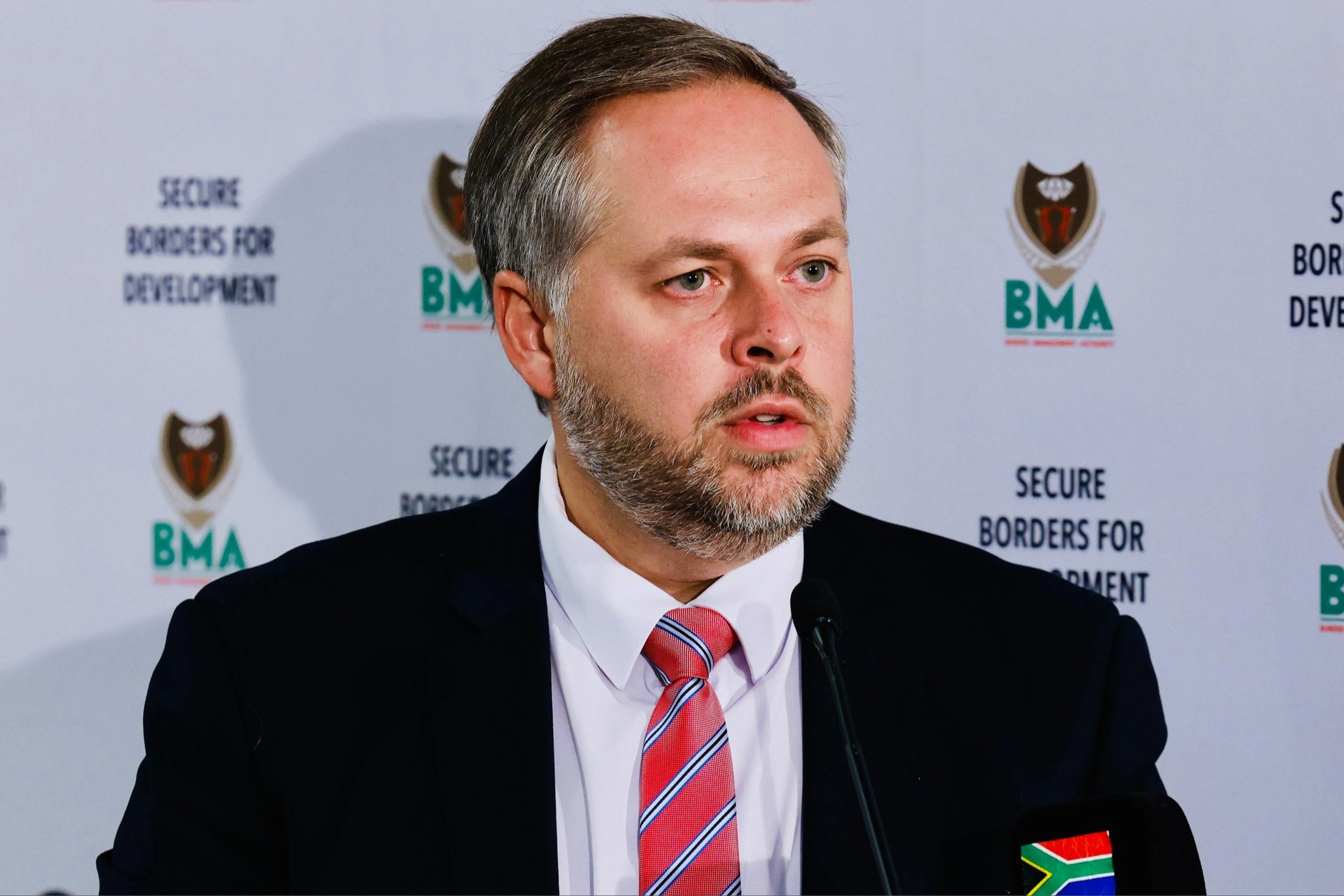
By Lehlohonolo Lehana.
The Department of Home Affairs has withdrawn a directive allowing asylum seekers to lodge applications after refugee reception offices were overwhelmed and safety concerns emerged.
The directive was issued to all Refugee Reception Offices (RROs) on 28 September 2026.
The directive followed a Constitutional Court judgment delivered on 7 July in the Scalabrini Centre of Cape Town matter. The decision sparked violent protests in Durban and Soweto, during which 24 vehicles were torched and foreign-owned businesses targeted.
It also comes a day after an inter-ministerial committee reaffirmed the government’s obligation to comply with the July Constitutional Court judgment, which requires asylum seekers to have their applications considered even if they entered South Africa unlawfully or failed to meet certain administrative requirements.
The judgment does not grant undocumented migrants automatic refugee status, citizenship, permanent residence or voting rights. Applicants must establish that they qualify for protection, while those whose claims are rejected may face deportation following due process.
The department said the directive was issued without the knowledge of or consultation with the Minister of Home Affairs Leon Schreiber or any other political office bearer.
“Claims that it was a politically motivated decision are therefore categorically untrue, as the directive emanated from a Constitutional Court case that the department had opposed.”
“However, the attempt to implement the judgment immediately had serious consequences that could not have been foreseen in the court order.”
“These include, among other things, the fact that RRO operations were overwhelmed within days of the directive being issued, Home Affairs officials were placed at risk, and serious threats to public safety and order emerged,” the Department of Home Affairs said in a statement on Friday.
Home Affairs faced serious backlogs in processing refugee applications following the Covid outbreak in 2020, resulting in many people being unable to lodge claims even after their offices reopened in May 2022.
Speaking after the withdrawal of that directive, Schreiber said the court could not have foreseen the consequences its ruling would have for refugee reception centres and surrounding communities.
Schreiber said their systems were overwhelmed.
“I think we can all agree that we were trying to model what would happen in reality, but none of us actually understood the volume until we could actually point to the facts. So, I think this is important even when you look at it from a legal perspective. There is a distinction between hypothetically saying something could go wrong and actually seeing it go wrong,” he said.
South Africa has seen months of anti-migrant marches this year that have drawn international criticism. Migrants are often blamed for taking jobs, fuelling crime and straining public services, claims that social scientists say are not supported by evidence.