
By Kevin Rademeyer, Sports Journalist.
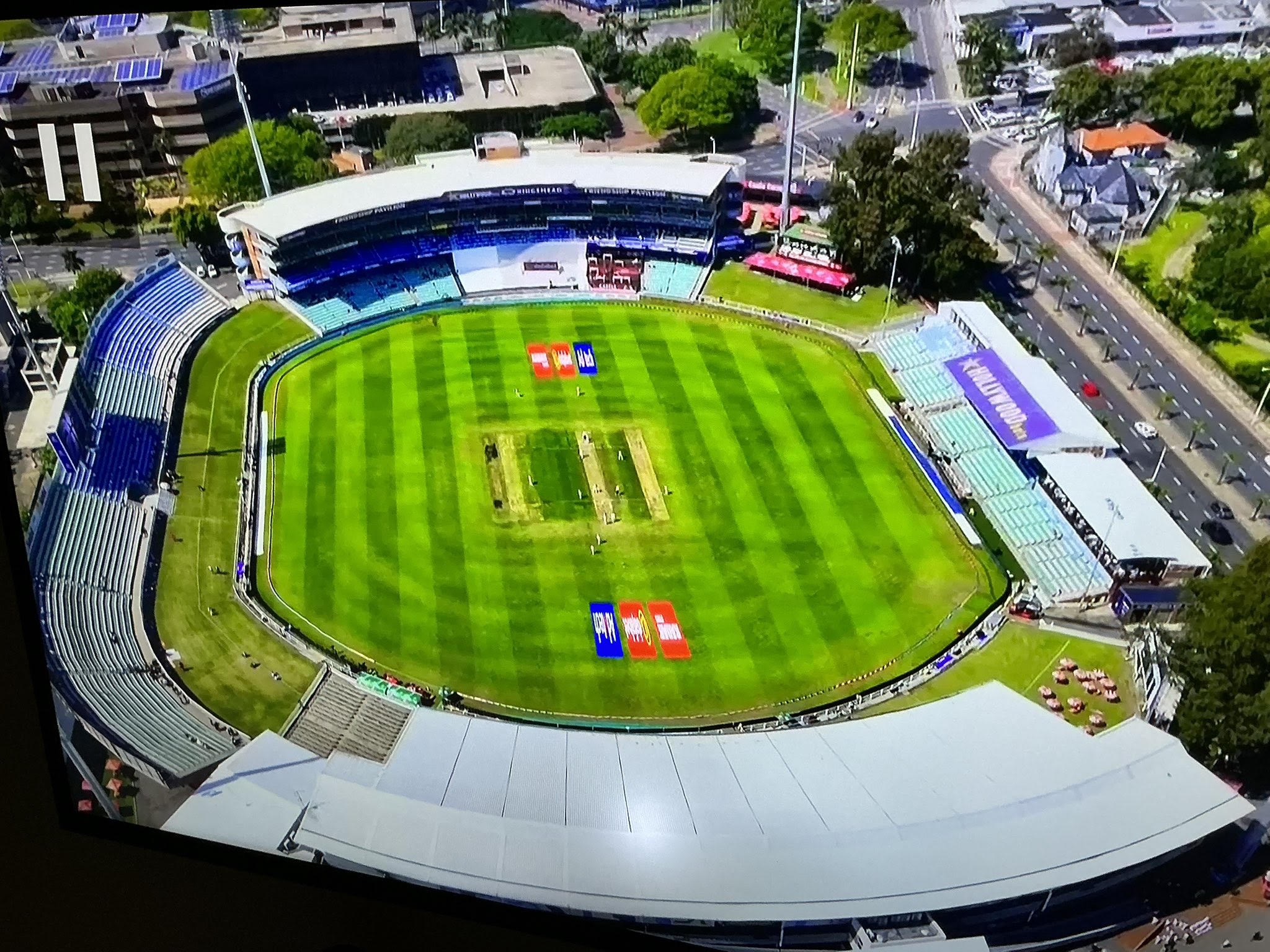
South Africa have waited years to become World Champions. They have waited even longer to beat Australia in a Test series at home since their landmark 3 to 1 triumph in 2018. Yet when the two countries finally met at Kingsmead in Durban on Friday, with World Test Championship Final places at stake and one of cricket’s most compelling rivalries renewed, the stands were conspicuously empty.
There were moments on the opening day when the school groups and visiting Australian supporters seemed more visible than the local public. For a fixture of this significance, it was a troubling sight. South Africa are the reigning World Test Championship holders, Australia are among the strongest sides in the world, and their rivalry has produced some of the finest Test cricket of the modern era. This should have felt like an occasion.
Instead, Cricket South Africa face an uncomfortable question: have they done enough to sell it?
The comparison with rugby is difficult to ignore. The Springboks and All Blacks spent several weeks touring South Africa and the United States in the recently completed Greatest Rivalry series. The Springboks won three of the four Tests, but the contest was about more than the scoreline. The marketing was prominent, the narrative was clear, and the public understood that they were witnessing a rare sporting event.
Crowds of 60,592 attended the opening Test at Ellis Park, 56,589 watched in Cape Town and 85,976 filled FNB Stadium for the third encounter. The Baltimore finale drew 68,173, a North American record for a single rugby match. Across the tour, including matches against South African provincial sides, attendance reached 380,105.
The commercial returns were substantial. SA Rugby reported generating more than R250 million for the governing body, while estimates put the broader economic impact of the South African leg at about R3.7 billion. The series had its critics, from expensive tickets to concerns about player welfare and the decision to sideline the Rugby Championship. But its organisers understood the value of making the rivalry an event.
Cricket’s contest with Australia deserved the same conviction.
This is no ordinary bilateral series. The two teams have spent decades producing matches that have shaped Test cricket. In 1994, Fanie de Villiers helped South Africa defend a target of just 117 in Sydney, taking six wickets as the visitors won by five runs.
In 2008, Graeme Smith’s side achieved what few touring teams had managed, winning a Test series in Australia. AB de Villiers and Smith were central to that historic achievement, while JP Duminy and Dale Steyn produced a decisive partnership in Melbourne.
The rivalry has also been bruising. South Africa’s 2018 home series victory was memorable for Kagiso Rabada’s extraordinary bowling and Vernon Philander’s demolition of Australia at the Wanderers. It was also the series that ended in the ball tampering scandal at Newlands, with Steve Smith and David Warner suspended and Australian cricket forced into a painful reckoning.
There has rarely been a shortage of drama when these teams meet. The challenge has been to make the public appreciate what is at stake before the first ball is bowled.
Captain Temba Bavuma has not lost a test match as Captain. The Proteas last played a test match in November, beating India in the sub-continent. Where as Australia are the first team in history whose bowling attack all have more than 300 wickets. Rabada is a rock star.
The current series has all the ingredients of a huge battle and carries real sporting consequences. South Africa are defending their status as world champions and seeking valuable points in the new World Test Championship cycle. Their first home Test since winning the title should have been celebrated as a landmark, not treated as another fixture in a crowded sporting calendar.
There are legitimate reasons for the disappointing turnout at Kingsmead. The match began on a Friday morning during the school term, when most people were at work. Economic pressures make a full day at the cricket an expensive proposition for many families, even before transport and refreshments are considered. Durban’s warm weather offers other attractions, while recent unrest in the city may also have discouraged some supporters. Test cricket has struggled to build consistent local audiences, and Kingsmead has hosted relatively few Tests in recent years.
None of those factors should be dismissed. But they make the case for stronger promotion, accessible ticketing and a more deliberate effort to bring schools, clubs and younger supporters into the ground even more compelling.
The scheduling of the remaining Tests adds to the concern. The second match in Gqeberha begins on Sunday, 18 October, while the Cape Town Test starts on Tuesday, 27 October. A Tuesday start offers limited opportunities for supporters who work or attend school, and a match that finishes by the weekend could leave the biggest days of the contest behind it before many local fans have a realistic chance to attend.
The question of venue scheduling also deserves attention. Bangladesh are due to tour South Africa in November, with Tests at the Wanderers and Centurion. Those fixtures might have been better suited to coastal venues, while Australia, South Africa’s biggest traditional rivals, could have been brought to the Highveld. That would have given supporters in the country’s largest population centre a chance to see the world champions take on one of the game’s leading teams.
Television rights are an unavoidable part of modern sport. Broadcasters provide revenue and reach audiences that no stadium could accommodate. Fixtures are arranged around international schedules, commercial commitments and the requirements of rights holders. Cricket South Africa cannot simply ignore those realities.
But television exposure is not the same as a live sporting atmosphere. A Test match played before empty stands can still produce brilliant cricket, yet something is lost when the noise, tension and collective anticipation of a crowd are missing. Television may pay the bills, but the spectacle depends on people caring enough to turn up.
There was an especially striking contrast this week. As the Proteas and Australia competed in front of sparse crowds in Durban, the 2027 Cricket World Cup ticket ballot attracted more than one million applications within three days of opening. South Africans have not stopped caring about cricket. They are willing to invest their time and enthusiasm when an event is presented as something special.
That is an encouraging sign, not a reason for despair. The challenge is to translate that appetite into support for the national side across all formats, particularly Test cricket, where the country’s world champions need a home audience worthy of their achievement.
South Africa’s sporting public has repeatedly shown what it can do when a team captures the national imagination. The Springboks have benefited from outstanding marketing and the emotional pull of the Greatest Rivalry. The SA20 has demonstrated how an established sport can attract attention through clear branding, accessible storytelling and a compelling matchday experience. Cricket’s administrators should be asking what can be learned from both.
There is no doubt that the England Test series in December will attract considerable interest. England bring a travelling following, a familiar rivalry and a level of media attention that tends to lift the occasion. But the world champions should not have to wait for England to arrive before their own supporters are encouraged to celebrate them.
South African fans have often complained about a lack of international cricket at home. Now the national team is playing its biggest rivals in a series that matters to the World Test Championship, the obligation runs both ways. Supporters have a part to play, too.
A Test match cannot thrive on television audiences alone, and a national team deserves more than applause after it has already won.
Cricket South Africa have an opportunity to respond before the series moves on. Better communication, creative ticket offers, school and club initiatives, and a clearer explanation of what the World Test Championship means could help restore the sense of occasion. The same effort should extend beyond marquee fixtures. Test cricket needs regular audiences, not occasional sell outs.
The Proteas have earned their place among the world’s best. They should be given a platform that reflects it.
The empty seats at Kingsmead are not proof that South African cricket is dying. They are a warning that a great contest can be undersold, even when the teams, the history and the stakes are all there. Rugby showed what happens when a rivalry is made impossible to ignore.
Cricket South Africa should take note before another precious home Test passes with too few people in the stands, and too little support amongst the public.