
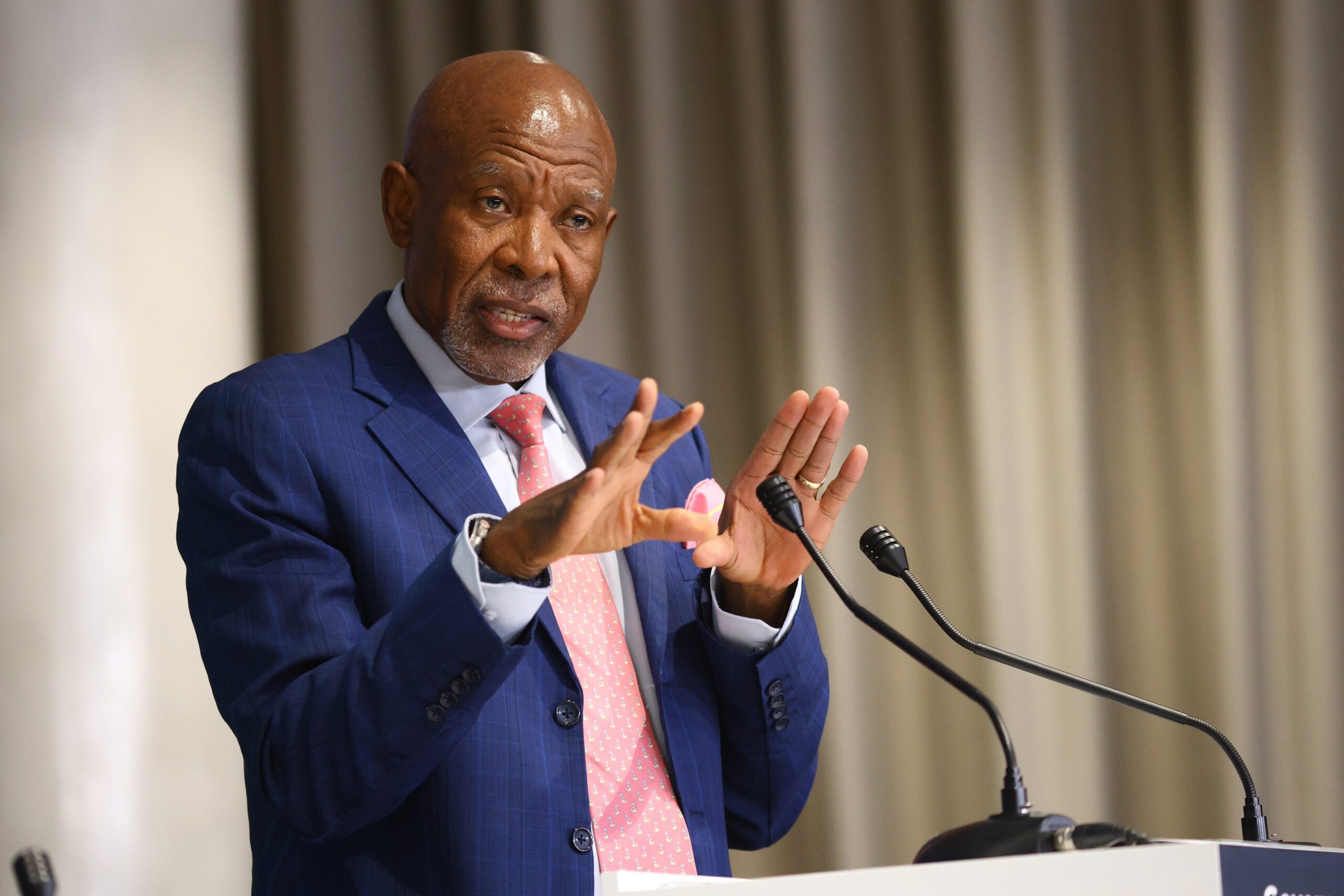
By Avril Hong and Ntando Thukwana.
South African Reserve Bank Governor Lesetja Kganyago said the rand has held up well despite the shock caused by the Iran war, reflecting more confidence in the country’s economic outlook.
“Rand resilience has cushioned, but not shielded us from the shock,” he told Bloomberg TV on the sidelines of the International Monetary Fund and World Bank meetings in Bangkok on Friday. “The important thing is that the currency had been less volatile than it had been in the past, and it is a combination of push factors and a combination of pull factors.”
Kganyago attributed the rand’s performance to factors including lowering the inflation target last year to 3% and government efforts to pursue fiscal consolidation, which contributed to a decline in the risk premium that investors demand to purchase the country’s bonds.
Higher prices for South Africa’s exports of key commodities including gold and platinum have also helped to offset the impact of higher fuel costs, keeping the terms of trade on a favourable footing, he said.
Continued rand resilience will hinge on South African macroeconomic policy remaining on track.
“What could lead to the weakening of the rand would be if those things give up: If the terms of trade deteriorate, if monetary policy does not stay the course, and if fiscal policy does not stay the course,” Kganyago said.
South Africa has made significant efforts to stabilise public finances in the past few years after a decade of overspending, improving its fiscal position.
The government is expected to report a growing primary budget surplus — driven by rising revenue exceeding non-interest expenditure — when Finance Minister Enoch Godongwana tables his mid-term budget update next week.
Policymakers voted unanimously last month to raise their benchmark interest rate by 25 basis points to 7.25%, after growing wary of inflationary risks stemming from wars in Iran and Ukraine. Officials said they were adopting a more restrictive policy to prevent elevated energy prices from triggering second-round effects that entrench higher inflation.
Kganyago repeated that line while stressing that rate decisions would be taken meeting-by-meeting, adding that “the environment is uncertain. We will continue to assess the situation.”