
By Lehlohonolo Lehana.
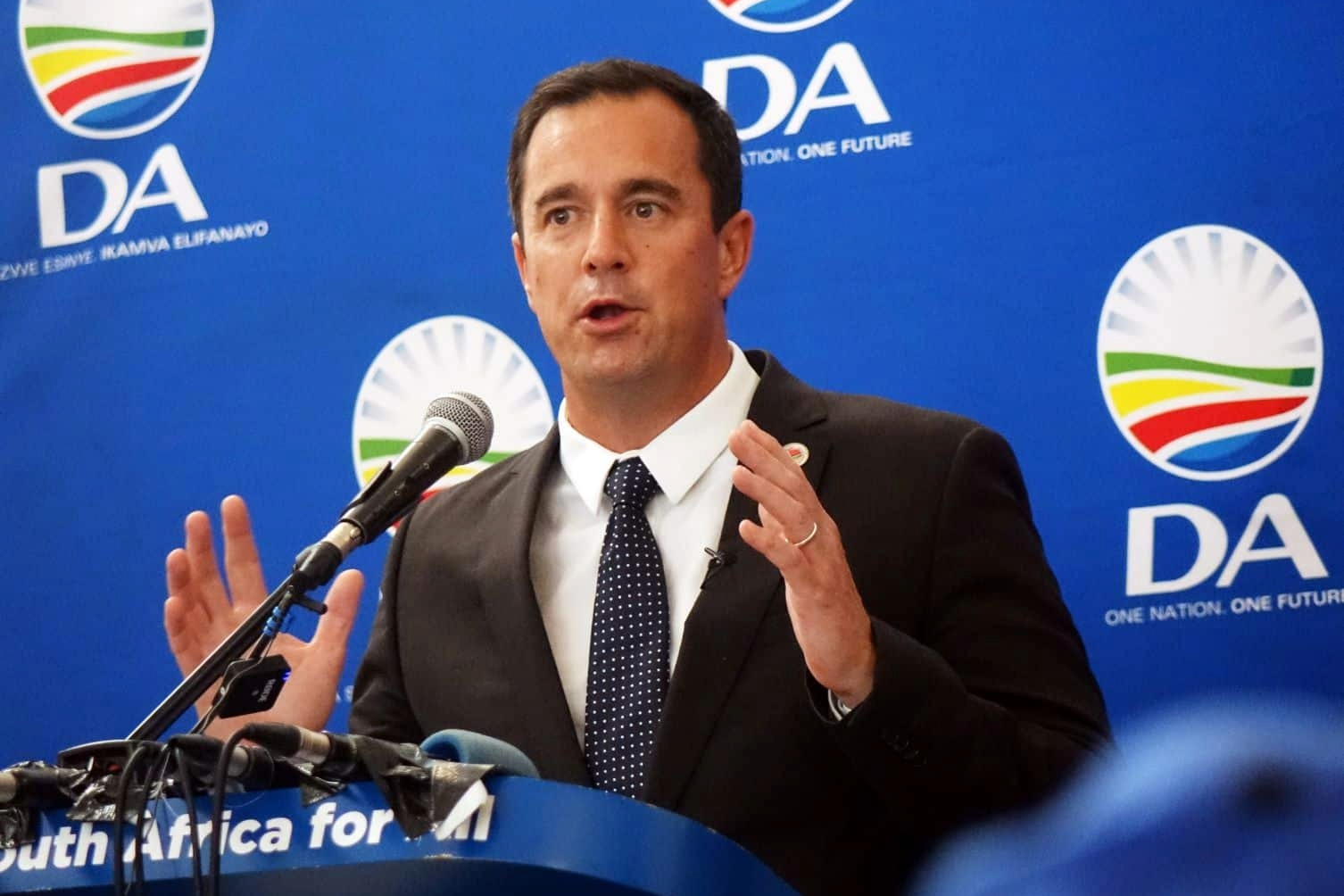
The Democratic Alliance (DA) Leader John Steenhuisen says his party has a comprehensive plan to address the water crisis, which includes involving private companies in water infrastructure.
Municipalities countrywide are battling with delivery of potable water to residents — the result of years of neglect of infrastructure and underspending — with the metros of Johannesburg in Gauteng and eThekwini in KwaZulu-Natal being particularly hard hit and suffering weekly outages that draw the ire of ratepayers and erode business confidence.
According to the department of water and sanitation’s own Drop reports, 46% of South Africa’s water supply systems do not comply with safety standards, 67.6% of waste-water treatment systems are failing and 47.4% of the country’s water is lost or unaccounted for.
Steenhuisen claimed that poor infrastructure maintenance, corruption, and municipal collapse have compromised the reliability of water supply in hundreds of towns across the country.
“We plan to involve private companies in water infrastructure projects. We will work towards developing water-sensitive cities that optimise storm water and urban waterways for improved flood control and water reuse, as well as wastewater.
“Furthermore, we will develop water-wise citizens, adopt a scientific method in assessing the risks related to chemical pollution, consider a dedicated grant for water infrastructure maintenance and fast-track dam and water treatment works infrastructure development and maintenance.”
He said 36% of homes experience water outages lasting longer than two days, while the number in the Western Cape is only 3%.
“Local government councillors face daily pressure from communities to resolve water-related issues, and in most cases, the solution is out of their control because senior leadership that is supposed to ensure proper water infrastructure maintenance have checked out and are absent. ” Steenhuisen explained.
Steenhuisen said the national government can only solve the water crisis with the help of local government.
Municipal water debts currently total some R22 billion nationally.
“No matter how much planning is done on a national level, if the local government cannot put their act together, if local municipalities cannot keep their infrastructure maintained, and reticulation services maintained, then nothing that national government does or says can be implemented at a local level,” Steenhuisen said.
He added that in the 2026 municipal elections, South Africans should “put the DA in the driving seat” so that things can get done.