
By Allister Bull.
South Africa delivered clear winners in its budget – months from a crucial election – but squeezed more revenue out of taxpayers by taking aim at smokers and drinkers and not adjusting income tax brackets for inflation.
Here’s who’ll benefit from Wednesday’s budget:
Winners
Bond investors
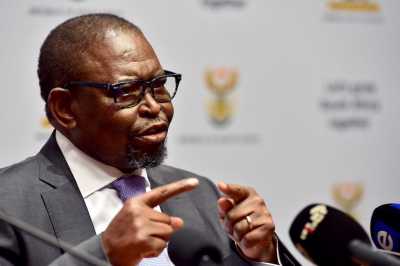
Finance Minister Enoch Godongwana set the country on course to stabilize its debt at lower than previously estimated levels, reducing debt-service costs and the amount that the government needs to borrow from investors to fund its spending plans.
Godongwana pulled that off by tapping massive paper profits on the country’s gold and foreign exchange reserve account to the tune of R150 billion.
Key Public Sector Workers
President Cyril Ramaphosa’s government will boost spending by R251.3 billion to make sure the salaries of teachers, doctors, nurses and police are fully funded. It also set aside R7.4 billion in 2024-25 for the presidential employment initiative as the country continues to fight unemployment running above 32%.
Electric-Vehicle Manufacturers
From March 1, 2026, producers of electric vehicles in South Africa will be able to claim 150% of qualifying investment spending to boost the country’s transition to new energy transportation.
Welfare recipients
The government has provisionally allocated funding for the social relief grant it started paying to the unemployed during the Covid-19 pandemic until March 2027.
In the expanded Budget 2024 review, National Treasury explained that social grant expenditure – excluding the SRD grant – will increase from R217.1 billion in 2023/24 to R259.3 billion in 2026/27.
Updated increases in social grants are as follows:
- The old age grant will go up from R2,085 to R2,185;
- The old age grants for those over the age of 75 will increase to R2,205;
- Grants for war veterans increase from R2,105 to R2,205;
- Disability grants go up to R2,185;
- The Foster care grant increases to R1,175;
- Care dependency grants rise from R2,085 to R2,185; and
- Child support grants go up to R525.
The COVID‐19 Social Relief of Distress Grant is allocated R33.6 billion in 2024/25 with provisional allocations for the 2025/26 and 2026/27.
National Treasury expects that grant beneficiaries, excluding those receiving the COVID‐19 SRD Grant, are projected to increase from 18.8 million in 2023/24 to 19.7 million in 2026/27.
Losers
Taxpayers
Godongwana will boost tax revenue by 15 billion rand, though much of this will be done quietly. Rather than raising income tax rates, he won’t adjust personal tax brackets for inflation, which the government expect to run at 4.9% this year. So-called bracket creep means that as salaries increase to keep up with the rising cost of living, workers get pushed into higher tax brackets and end up handing more over to the government. Rebates and medical tax credits also won’t be adjusted for inflation.
Smokers and drinkers
The finance minister plans to lift excise duties on alcoholic drinks by between 6.7% to 7.2% for 2024-25. He’ll also raise duties on cigarettes by 4.7% and by 8.2% for pipe tobacco and cigars.
Multinational corporate tax dodgers
The government will implement a global minimum corporate tax, with multinational corporations subject to an effective rate of 15% regardless of where the profits are located.
Transnet
The struggling state-owned operator of the nation’s ports and freight rail gets no new money beyond debt guarantees of R47 billion that were already granted.
Like Eskom, the guarantee comes with conditions.
These conditions require Transnet to focus on its core activities and for the entity to introduce private-sector partnerships, said Godongwana.
He added that this will improve Transnet’s sustainability and support the implementation of the roadmap.
Eskom
The embattled electricity utility, whose shortcomings cause daily power cuts handicapping the entire economy, will have its government aid cut by 4 billion rand over two years for failing to sell the Eskom Finance Co. by March 2024 as agreed.
However, Godongwana added that the government would be introducing a new R2 billion conditional grant over the medium term to fund the rollout of smart prepaid meters.
“This will begin with municipalities that have been approved for debt relief,” he said.