
By Jonathan Faurie.
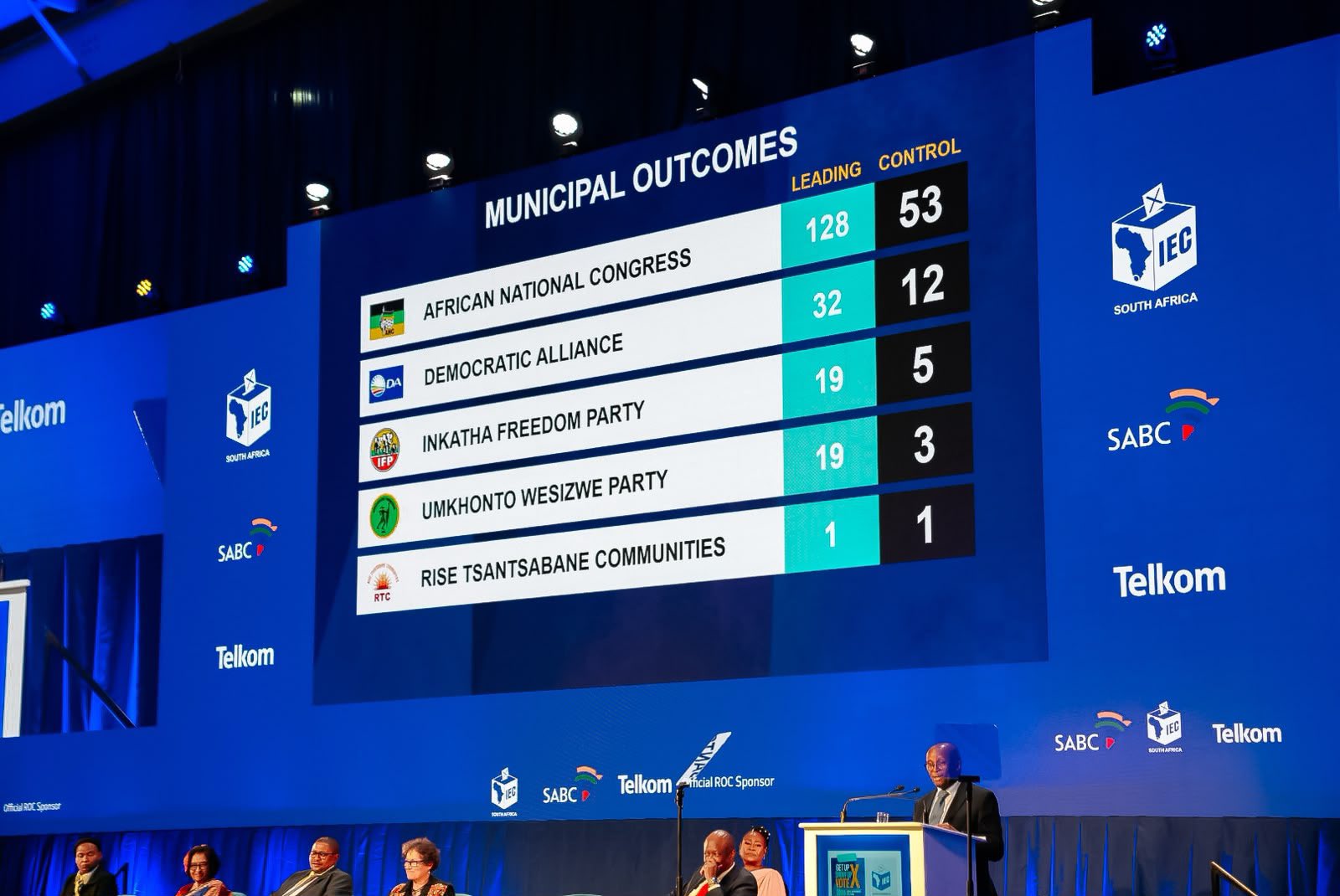
South Africa’s 2026 municipal elections have fundamentally reshaped the country’s political landscape. With the ANC falling to 30.76%, the DA strengthening its hold on major metros, and the MK Party emerging as a formidable newcomer, the balance of power has shifted dramatically.
More than half of the country’s municipalities now face hung councils, making coalition governance an unavoidable reality. As political parties enter complex negotiations, citizens face pressing questions about service delivery, political stability, accountability, and what lies ahead for local government.
“The performance of the recent municipal elections is indicative of the political changing of the guard that is beginning to take root in South Africa. While this is an indication of a progressing democracy, South Africans need to manage their expectations about the level of change that will take place over the next two years, and the pace at which it will take place. The road ahead may contain many challenges,” warns Dr. Uduak Johnson: an Academic Programme Leader at the MANCOSA School of Public Administration.
An Historic Turnout in More Ways Than One
Statistics show that voter turnout rose to 52% from 45.9% in the last municipal elections, suggesting that despite disillusionment, South Africans still believed their votes could change something. Dr Johnson points out that the rise in voter turnout, combined with unprecedented vote fragmentation, sends some signals from the electorate. South Africans have not abandoned democracy; instead, they have fundamentally redefined how they use their vote.
“The message is clear to political leaders and leaves them with a few things to consider. Democratic Faith May Now Be Strictly Conditional; the higher turnout could demonstrate that citizens still maintain deep faith in the democratic process to demand change. However, voters no longer grant unearned loyalty to any single party. It may also be an indication that the “Liberation Euphoria” has passed; some voters are no longer deciding ballots based on historical struggle credentials or political legacy alone. They may also be evaluating candidates on immediate, micro-level material delivery, uninterrupted water supply, stable electricity, pothole repairs, refuse collection, and local economic opportunities,” says Dr Johnson.
He adds that a shift from Apathy to Active “Political Shopping” is taking place with disillusioned voters not wanting to simply stay home as they had in past cycles. Instead, millions may have actively transferred their support to alternative opposition parties, newly formed breakaway movements, and localized community organizations. Further, underperformance will be punished; the drop in national ANC support to 30.76% could be an indication that voters are willing to severely punish governing parties for service delivery failures, corruption, and perceived neglect. “This may also be a reflection that more people who previously did not vote now have more incentives to vote,” says Dr Johnson.
The Immediate Risks Facing South Africans
Following the elections, seven of South Africa’s eight metropolitan municipalities, including Johannesburg, Tshwane, and eThekwini, require coalition governments. Cape Town remains the only metro with an outright DA majority. Dr Johnson warns that this political shift presents significant governance risks.
– Immediate Administrative Deadlocks: Municipalities must convene their first council meetings within the statutory 14-day period following election declaration. Coalition disputes could delay leadership appointments, committee formation, and important decisions. However, councils can function without formal coalition agreements, and existing essential services should continue. Failure to conclude negotiations does not automatically trigger fresh elections.
– Budgetary Paralysis and Frozen Procurement: Without stable council majorities, municipalities may struggle to approve budgets, adjust tariffs, or authorise infrastructure expenditure. Political disagreements could delay procurement, stall maintenance projects, and disrupt contractor payments, placing additional pressure on already strained municipal finances.
– Executive Instability and “Turnstile” Governance: Fragile coalitions involving smaller parties and minority mayors could face repeated no-confidence motions, leadership changes, and political bargaining. Constant executive reshuffles undermine administrative continuity, weaken strategic planning, and create uncertainty for municipal managers responsible for implementing government programmes.
– Escalating Infrastructure Failures: Political gridlock could worsen existing service delivery challenges, including water interruptions, electricity outages, sewage spills, refuse collection, pothole repairs, and streetlight maintenance. Delayed municipal decisions may slow emergency responses and infrastructure repairs, leaving communities exposed to prolonged disruptions.
Dr Johnson emphasises that effective coalition management will be essential to protecting municipal stability and maintaining basic services.
The Response Should be Poignant
While coalition governance presents significant risks, Dr Johnson emphasises that South Africans can take practical steps to hold political leaders accountable and protect municipal services.
“Residents should anticipate delays in non-emergency municipal maintenance, including billing disputes, water meter readings, and road repairs. Sensible contingency planning is important, but service delivery collapse should not be assumed,” says Dr Johnson.
During the first month, residents should establish whether councils have convened lawfully, decision-making structures are functioning, urgent repairs continue, and service continuity plans are in place.
Strengthening ward-level civic oversight is equally important. Residents should engage ward committees and ratepayer associations, attend council meetings, monitor municipal spending, and report infrastructure failures through official channels.
“Keep complaint reference numbers, photographic evidence, and municipal records. Persistent failures should be escalated to municipal managers, provincial authorities, or appropriate oversight bodies,” advises Dr Johnson.
Transparency also deserves attention. Communities should demand accountable municipal spending, merit-based appointments, and adherence to Department of Cooperative Governance and Traditional Affairs (COGTA) coalition guidelines.
Monitoring council proceedings and local developments can help residents identify potential budget deadlocks before services deteriorate.
The message is clear: municipal accountability cannot remain solely with politicians. Community and civic leaders must actively protect public interests and demand effective governance.
What Needs to Be Brought to The Negotiating Table
President Cyril Ramaphosa (in a public address) and Nkosi Zwelivelile Mandela (in the recently held Dr Chota Motala Memorial Lecture) urged political leaders to respect the electorate’s will, potentially requiring compromises during coalition negotiations.
Dr Johnson identifies five principles for successful negotiations, alongside warning signs of instability.
Five Core Lessons for Negotiators
- Prioritise Governance: Agree on three to five measurable service delivery priorities before allocating political positions.
- Formalise Agreements: Publish written coalition agreements outlining decision-making, voting commitments, dispute resolution, and exit procedures.
- Secure Budgetary Discipline: Agree on funding priorities upfront, preventing municipal budgets from becoming political bargaining tools.
- Protect Municipal Administration: Shield municipal managers and financial officers from political interference.
- Establish Coalition Management: Create permanent inter-party structures to resolve disagreements before crises emerge.
Warning Signs of Coalition Failure:
- Positions Before Policy: Political appointments take precedence over governance priorities.
- Secret Agreements: Unwritten arrangements undermine accountability and enforceability.
- Budget Disputes: Political disagreements delay procurement and infrastructure investment.
- Fragile Majorities: Minority mayors dependent on narrow council margins face instability.
- Political Interference: Interference in appointments and procurement compromises municipal integrity.
- Persistent Infighting: Public disagreements and repeated no-confidence motions undermine governance.
“Ultimately, coalition success depends on political leaders prioritising communities over party interests. Citizens should judge agreements by their ability to deliver stable leadership, accountability, and improved municipal services,” concludes Dr Johnson.
Is Our Democracy Facing Another Turning Point?
South Africa’s democracy may be approaching an evolutionary turning point. Biblical insights reminds us that as iron sharpens iron one person sharpens another. This is a principle that could define the country’s emerging coalition era.
“Political differences need not become obstacles to progress. Instead, competing perspectives can strengthen accountability, encourage compromise, and produce better governance. However, this requires leaders to embrace constructive disagreement rather than political self-interest,” says Dr Johnson. Whether this becomes a period of democratic renewal or prolonged instability will ultimately depend on their willingness to put citizens first.