
By André Lourens.
South Africa entered the 2026 Medium Term Budget Policy Statement (MTBPS) facing a more challenging economic environment than anticipated at the time of the February Budget.. Amid ongoing global economic uncertainty and shifting international market conditions higher energy prices, renewed inflationary pressures and, rising global borrowing costs are all growing challenges the business environment faces.
Global growth is now expected at 3.1% in 2026, while South Africa’s own growth forecast has been cut from 1.6% at the February Budget to just 1.2%. Treasury’s revised outlook nevertheless remains relatively optimistic given the IMF’s October World Economic Outlook expects the South African economy to grow by only 1.0% this year. Unemployment has meanwhile risen from 31.4%, at the end of 2025, to 33.6% in the second quarter of 2026, while private investment declined by 1.1% year-on-year during the first half.
Against this deterioration, however, the fiscus has received an important reprieve from commodity prices.
Gross tax revenue for 2026/27 is now expected to be R17.1 billion higher than projected in February, notwithstanding weaker economic growth. However, corporate income tax is the standout, with collections revised R34.2 billion higher. The overall positive revenue revision would have been more substantial if it had not been partly offset by weaker fuel levy and other tax receipts.. Between April and June 2026, government provided relief on the fuel levy to shield consumers from large fuel price increases.
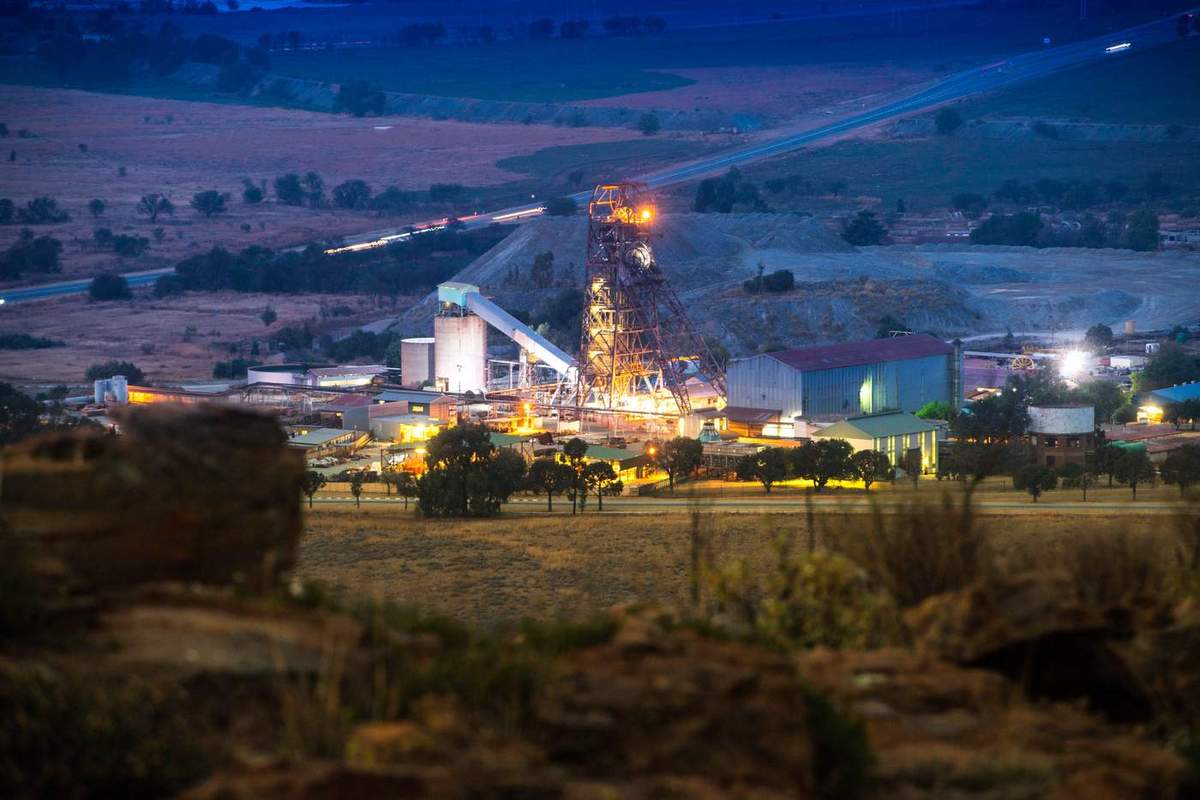
Mining was the single largest contributor to the increase in provisional corporate income tax collections during the first six months of the fiscal year, contributing R10.6 billion, ahead of finance at R8.0 billion and manufacturing at R6.4 billion. Treasury attributes mining’s performance specifically to elevated gold and platinum-group metal prices. Mineral and petroleum royalty revenue has also been revised upwards by another R6.8 billion. Combined with mining’s R10.6 billion contribution to higher provisional corporate income tax collections, the sector has provided more than R17 billion in additional revenue support to the fiscus.
Mining has nce again demonstrated its importance as a shock absorber for the South African economy and public finances, as was the case during Covid-19. Importantly, however, this is predominantly a price-driven windfall and not yet evidence of a structurally stronger mining industry. Treasury itself describes the additional mining tax revenue as temporary.
Seasonally adjusted mining output grew by 3.0% in the first half of 2026, but momentum has since reversed sharply. In August, production fell by 5.4% month-on-month, while output in the three months to August was 5.2% lower than in the preceding three months. Mineral sales followed a similar trend, declining by 7.9% month-on-month in August and by 13.3% over the three months to August.
The commodity-price support is nevertheless unlikely to disappear immediately. Treasury’s commodity-price assumptions have gold averaging US$4,584/oz in 2027, slightly above its 2026 assumption of US$4,529/oz, while platinum is assumed to ease from US$1,921/oz to US$1,870/oz. Palladium similarly eases from US$1,442/oz to US$1,377/oz. The implication is important: as commodity prices may ease from their exceptional highs, particularly for PGMs, but should continue to support mining profits, exports and tax revenue into 2027.
The greater opportunity lies in mining growth, not higher prices alone
The revenue performance also highlights a more fundamental economic opportunity. If favourable commodity prices can provide this degree of fiscal support, sustained growth in mining volumes and investment could broaden and make that contribution more durable.
This is significant because the fiscal windfall is being generated by an industry still facing deep-rooted structural challenges, with persistent electricity, logistics and water constraints continuing to undermine investment, restrict production and limit the sector’s growth potential.. Treasury acknowledges that these constraints remain binding on the broader economy and that reforms in electricity, freight rail and water are taking longer than planned. Mining cannot control the commodity cycle.
South Africa can, however, influence how much it produces, how efficiently it moves minerals to market and how attractive the country is for the next generation of mining investment and, more broadly, investment across the productive economy.
Productive investment is equally important for growth
The same logic extends to construction and infrastructure. Fiscal consolidation is progressing, with the consolidated budget deficit expected to narrow from 3.9% of GDP in 2026/27 to 2.5% by 2029/30, alongside a gradual decline in the debt-to-GDP ratio.
These are important gains for fiscal sustainability, but fiscal consolidation is not in itself a growth strategy. Sustained growth also requires investment in the productive assets that enable economic activity: roads, railways, dams, water-treatment plants, pipelines, electricity networks, housing and factories.
There are encouraging signals in the MTBPS. Payments for capital assets are the fastest-growing major expenditure category, increasing by an average 5.3% a year over the medium term, compared with total consolidated expenditure growth of 3.6%. Public investment increased by 5.2% in the first half of 2026, even while private investment contracted.
The Budget Facility for Infrastructure has approved 41 projects since 2021, backed by R96.1 billion in direct fiscal allocations, while the water project pipeline currently in the financing stage exceeds R60 billion. The latter is particularly important given South Africa’s water-supply crisis and the increasingly binding constraint that water shortages place on economic growth.
Yet construction itself contracted by 1.1% in the first half of 2026. This disconnect is important. Allocating infrastructure expenditure does not, on its own, expand productive capacity. The economic benefit is realised when planned and budgeted projects are implemented and converted into functioning physical assets.
Treasury’s own assessment puts South Africa’s infrastructure-efficiency gap, the difference between actual and planned infrastructure performance, at 40%, worse than the 36% emerging-market average. It notes that stronger public-investment management could close as much as two-thirds of that gap.
Infrastructure investment also connects directly back to mining. Building roads, dams, pipelines, houses and industrial facilities creates demand for cement and its mineral inputs, aggregates, sand, clay, steel, metals and other mined materials.
Construction therefore stimulates local mining (and manufacturing) demand; better infrastructure lowers mining and broader business costs; and a more competitive mining industry supports exports, investment, employment and tax revenue. Mining, construction and infrastructure should consequently be understood as interconnected components of the productive economy rather than as isolated sectors.
Crime and corruption remain a cross-cutting economic constraint
A final constraint that cuts across South Africa’s growth story, is crime and corruption. Treasury explicitly identifies reducing crime and corruption as part of strengthening state capability. Police services are allocated R141.5 billion in 2026/27, rising to R154.7 billion by 2029/30, while funding is also being redirected towards forensic capacity and investigations.
For mining and construction, however, the important test is whether greater law-enforcement capacity translates into a sustained reduction in illegal mining, organised theft and criminal disruption of construction and mining activity. These activities continue to increase operating costs, interrupt projects and weaken confidence in new investment. The economic cost consequently extends beyond the direct value of the criminal activity. Where crime delays a mine, prevents construction or raises the required return on a project, South Africa also forgoes investment, jobs, production and the future tax base that would otherwise have followed.
Conclusion
The 2026 MTBPS therefore highlights an important distinction between short-term fiscal support and the foundations of sustained economic growth. Commodity prices have provided valuable support to the fiscus, but this support is inherently cyclical and cannot substitute for stronger productive capacity. The opportunity lies in our government’s ability to translate the current reprieve into more durable economic gains by expanding investment across the economy, particularly in real-economy sectors such as mining and construction; converting infrastructure commitments into functioning assets; and addressing the criminal activity that raises the cost and risk of investment in these sectors.
If South Africa can address these binding constraints, the longer-term dividend extends well beyond individual sectors. Together with the improved fiscal position and continued fiscal consolidation outlined in the MTBPS, stronger economy-wide investment could lift productive capacity, support higher potential growth and, ultimately, broaden the tax base needed to place both the economy and public finances on a more sustainable path.
André Lourens is Mining Economist | Econometrics & Analytics at KPMG South Africa.