
By Lehlohonolo Lehana.
President Cyril Matamela Ramaphosa says government has been able to draw on private sector expertise and skills to improve the preparation, financing and implementation of infrastructure investment.
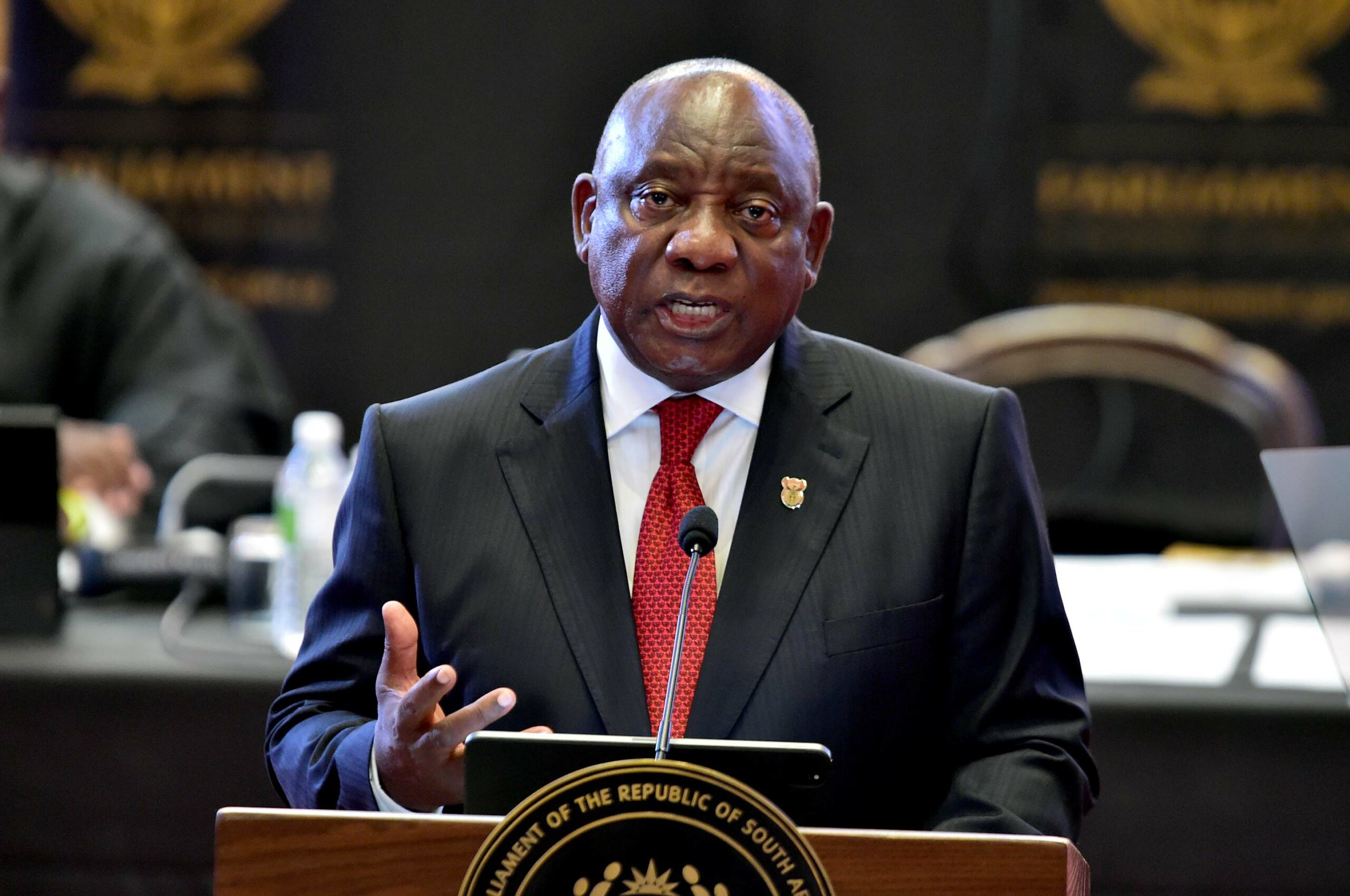
Tabling the Presidency’s Budget Vote, Ramaphosa said government’s overriding priority is to achieve more rapid and inclusive economic growth so that it can create jobs, reduce poverty, and build a more just and equal society.
The Budget Vote address was followed by a debate to which the President will reply on Wednesday, 24 July.
Through the Infrastructure Fund, we are going to explore new approaches to blended financing of infrastructure, using the fiscus to leverage additional funding from the private sector, development finance institutions and other sources.
“We have been working closely with Independent Power Producers in steering their projects through to the construction phase, contributing significantly to the reduction in the severity of load shedding.
“We are going to continue working with companies, financial institutions and business organisations, both South African and international, during the course of our ambitious investment drive over the last five years,” the President said.
In 2018, government set a target of mobilising R1.2 trillion in new investments over five years.
“By the conclusion of the fifth South Africa Investment Conference last year, government had exceeded that target, raising over R1.5 trillion in new investment commitments.
“We have had an opportunity to visit many of the factories and projects that have been built or expanded as a result of these investments and we have seen the many jobs they have created,” the President said.
As part of efforts to enhance the business environment and create much-needed jobs, a team to address red tape reduction in government was established in The Presidency.
“The work of the red tape reduction team that was established in the Presidency under the leadership of Sipho Nkosi has been possible due to close cooperation with various departments, public entities and spheres of government, as well as support from the private sector.
“The team is looking at a capacity building approach to tackle red tape in provincial governments and a pilot to support three city municipalities with reform action plans to address inefficient business processes.
“Through this experience, it is clear that the removal of red tape is a cross-cutting exercise that requires a coordinated and integrated approach. Significant progress was made during the sixth administration in implementing reforms to enable economic growth, with a focus on modernising network industries,” Ramaphosa said.
These reforms have been undertaken across government with the support of Operation Vulindlela, which is a joint initiative of the Presidency and National Treasury that seeks to accelerate the implementation of structural reforms and support economic recovery.
This progress provides a solid platform on which we will build a sustained increase in the rate of economic growth and a reduction in poverty, unemployment and inequality.
“By alleviating load shedding, improving the performance of the logistics system, reducing the cost of data, improving water supply, and enabling the country to attract the skills it needs, the reforms already underway will provide a significant boost to the economy in the medium term,” the President said.
In addition, these reforms support the repositioning of strategic state-owned enterprises by strengthening their balance sheets and improving their operational performance, while also enabling higher levels of private investment in infrastructure.
A recent independent study released by the Bureau of Economic Research estimates that the reforms undertaken under the auspices of Operation Vulindlela could increase real Gross Domestic Product growth to 3.5 percent by 2029.
Apart from the changes that these reforms are making to the country’s productive capacity and competitiveness, they are also contributing to greater business confidence. As confidence grows, so does investment, creating jobs and supporting demand. This is a virtuous cycle that leads to higher growth on a sustained basis,” the President said.
Government will now embark on the second phase of Operation Vulindlela.
In the debate, African National Congress (ANC) chief whip Mdumiseni Ntuli dismissed suggestions that the government of national unity (GNU) will collapse in a year’s time and called on MPs to support the Presidency’s budget.
“The budget is a bold and visional plan that addresses the Presidency’s immediate needs as an effective centre for coordinating state affairs. I urge all members of Parliament to support this budget and collaborate in maintaining oversight on the expenditure of public funds,” Ntuli said.
However, uMkhonto weSizwe (MK) party chief whip John Hlophe highlighted that there were many programmes and state-owned enterprises (SOEs) under the Presidency.
Hlophe questioned why there was no parliamentary committee overseeing the Presidency, labeling this as a “serious lacuna”.
This may lead to the president acting unilaterally with these SOEs, while bypassing parliamentary oversight, he said.
“With the dissolution of the Department of Public Enterprises, state-owned companies will now fall under the Presidency, which means they will no longer be accountable to Parliament.
“The president only answers to Parliament during quarterly answer and question sessions, which are often marred by bias and lack of transparency,” the MK party chief whip said.
The former judge pointed out that the State Capture Commission’s report had recommended a dedicated committee to hold the Presidency accountable.
“The question is: can we trust Ramaphosa to manage these companies without parliamentary oversight? Accountability is very important President.
“The president is not required to account to Parliament in the same way that ministers do account. He also cannot be summoned by the portfolio committee is the same way as ministers can.”
Economic Freedom Fighters (EFF) leader Julius Malema meanwhile has hit back at Ramaphosa, saying he hasn’t been disrespectful towards him.
Malema said he was unapologetic about giving the president a hard time, arguing that his comments were not insulting.
His remarks during the debate on the Presidency’s budget in the National Assembly on Tuesday afternoon come on the back of Ramaphosa on Monday admonishing Malema.
But Malema said it was part of his job to keep the president honest.
The EFF leader denied claims by the president that he’d made insulting references to Ramaphosa’s father having been a policeman during apartheid.
Malema said that Parliament was not for sensitive people and the EFF did not cry foul when it was criticised.
“You can never only play the ball without understanding the strengths and weaknesses of the player.”
Malema has also taken issue with the president suggesting he’s ill-informed about the formation of the National Mineworkers’ Union because he was not yet born.
He has in both debates in recent days led the personal attack on Ramaphosa, rather than Hlophe, the parliamentary leader of the official opposition uMkhonto weSizwe party. The EFF and the MK party last week formalised their opposition alliance and have been branded a populist menace by Ramaphosa and members of the ruling coalition.
Later in the debate, Minister in the Presidency Khumbudzo Ntshavheni responded to Malema and mentioned his alleged involvement in the Venda Building Society (VBS) Mutual Bank scandal.
Ntshavheni criticised the EFF leader for attacking the president instead of focusing on “important issues”.
“The women, the elderly and the poorest of the poor who were members of stokvels [and] burial societies were saying to me, ‘who has a right to question the character of the president’… if anyone else but not honourable Julius Malema because it is not even [about] the money they lost, it’s the impact. They were not able to bury their dead with dignity.”
An affidavit by former VBS Mutual Bank chairperson Tshifhiwa Matodzi implicated Malema and EFF deputy president Floyd Shivambu in the saga. The 70-page affidavit, which was later leaked, detailed how at least R2.2 billion was embezzled from the now-defunct bank.