
By Lehlohonolo Lehana.
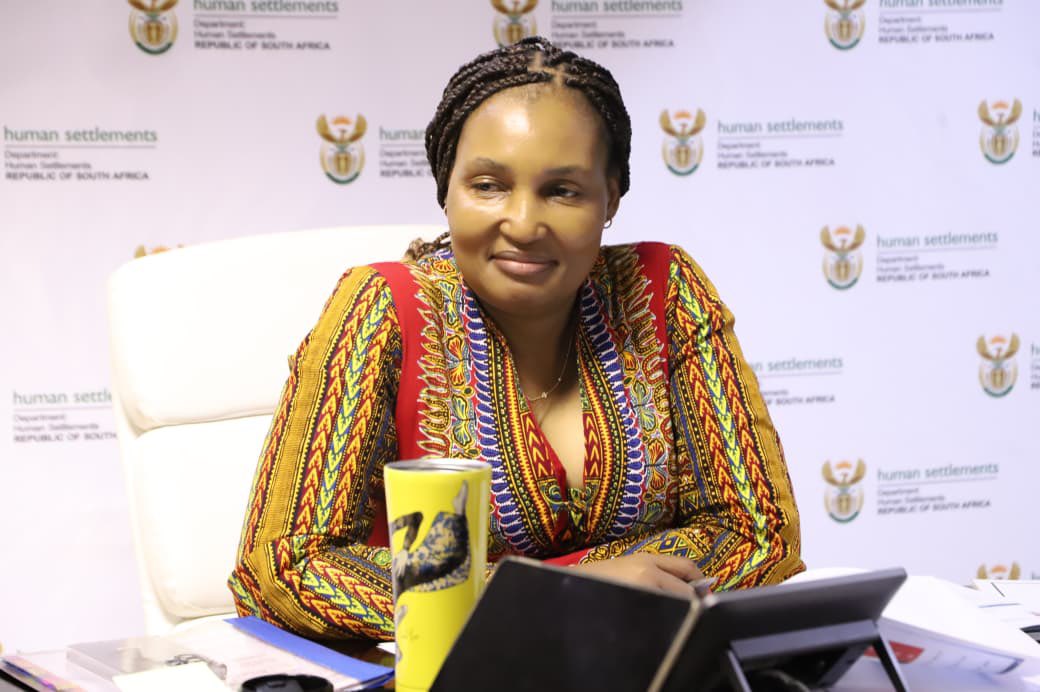
The Minister of Human Settlements Thembi Simelane joined leaders of different sectors, including government, academic institutions, and private sector at the 25th South African Association of Public Administration and Management (SAAPAM) Conference in Durban, on Sunday, 27 September 2026.
The annual conference was held under the theme: “Growth and Sustainability through improved governance: Reimagining institutions, leadership and development in a changing world.”
In her address, Simelane stressed that human settlements must be developed around the needs of people and communities rather than institutional silos.
She said the approach is essential to closing the gap between the promise of the Constitution and the daily experiences of South Africans.
Simelane said the future of South Africa will depend on whether public institutions can turn policy, public resources and public authority into visible improvements in people’s lives.
“For those of us who work in Human Settlements, the future is never abstract. It is visible in where people live, how far they travel to work, whether their communities are safe, whether basic services function and whether children can reach schools and access other amenities,” Simelane said, noting that governance should ultimately be measured through outcomes, rather than the number of meetings held, plans approved or budgets spent.
“A citizen experiences governance through a working tap, a safe road, a secure home, a reliable public transport route and a public servant who responds with competence and respect,” the Minister said.
The Minister also stressed that a whole-of-government approach must become a practical method of delivery, with departments and spheres of government aligning their plans, budgets, and infrastructure programmes around common spatial priorities.
Bulk infrastructure, housing development, land-use approvals, environmental processes, transport planning, and social services must be coordinated around the same areas and timelines, she said.
“The lived reality of a household does not fit within one departmental mandate. A family in an informal settlement does not experience housing, water, sanitation, transport, safety, schooling, and employment as separate government functions. These are interconnected conditions of daily life.”
Simelane said human settlements provide one of the clearest tests of whether development is inclusive, stressing that providing a house alone is not sufficient to create a sustainable community.
“A house without water, sanitation, energy, roads, transport, schools, healthcare, public spaces, and economic opportunity cannot, on its own, constitute a sustainable human settlement,” Simelane said.
She noted that South Africa also need to confront the legacy of apartheid spatial planning, which continues to leave many low-income households far from employment opportunities, quality services, and efficient transport.
Simelane highlighted well-located land, denser and mixed-use development, township revitalisation, inner-city regeneration and stronger links between housing and transport as key elements of spatial transformation.