
By Lehlohonolo Lehana.
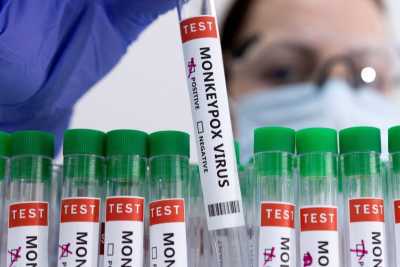
The Department of Health has advised anyone exhibiting potential mpox symptoms to see their closest healthcare professional for screening and testing.
This comes after the nation saw its second instance of mpox sickness that was confirmed by a lab in KwaZulu-Natal, Durban.
Department spokesperson Foster Mohale said on Monday the latest laboratory-confirmed test came from a 39-year-old man who was admitted at Addington Hospital in Durban.
He says the patient has not travel history to countries and regions currently experiencing the outbreak.
The first case was confirmed in Gauteng earlier this month where a 35-year-old man tested positive.
Mohale says the first patient also did not have a travel history and they will now try to establish if the second patient was in any way in contact with the first one.
Mpox is an infectious viral disease that can cause painful or itchy rashes like pimples or blisters on the skin.
According to the World Health Organization (WHO), a multi-country outbreak of Mpox, a total of 466 laboratory-confirmed cases of mpox and three deaths from 22 countries were reported globally in March 2024, illustrating that low-level transmission continues across the world.
The most affected regions are the WHO African Region, the European Region, the Region of the Americas, the Western Pacific Region, and the South-East Asia Region.
In the African Region, the Democratic Republic of the Congo reports the highest number of confirmed positive cases, which represent just over a tenth of the suspected (clinically compatible) cases and deaths reported.
Mohale says stigma and discrimination may prolong a disease outbreak by stopping people from coming forward for information or seeking testing or care, which undermines public health efforts.
He urged patients with symptoms to come forward and be tested.
South Africa is in a month into its flu season and the department and NICD confirmed the illness was circulating within the expected range and severity.
Influenza A(H1N1) pdm09, InfluenzaB/Victoria and influenza A(H3N2) are the most prevalent strains, with A(H1N1)pdm09 being more severe in adults and having been in circulation since 2010.
Those at greatest risk of a severe reaction are infants, pregnant women, those with HIV, the obese, those older than 65 and those with chronic health issues.