
By Lehlohonolo Lehana.
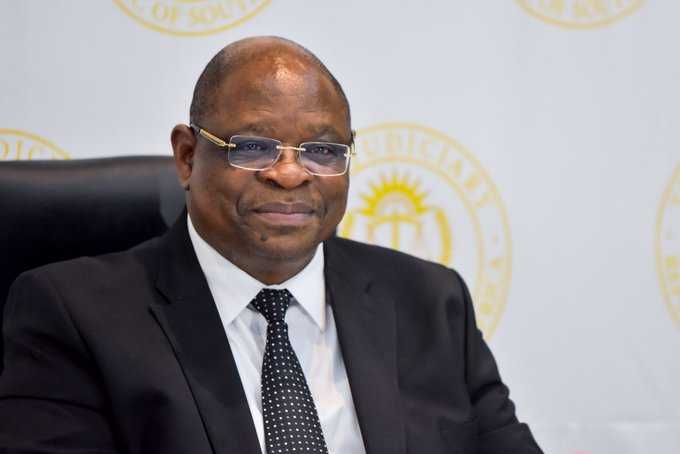
Chief Justice Raymond Zondo will hand over political party lists of candidates to represent them in the National Assembly and provincial legislatures at 14:00 on Thursday this week.
“It is an established practice in South Africa that after the announcement by the IEC of the results of the National and Provincial elections, the IEC hands over the lists of members… to the Chief Justice who then hands them over to the Secretary of Parliament,” the Office of the Chief Justice said in a statement on Tuesday.
This is among the steps taken by the Chief Justice before the official first sitting of Parliament in just under two weeks’ time when members are sworn in, and a Speaker of the National Assembly is elected.
On Wednesday, South Africans cast their votes to determine which political parties and, for the first time, independent candidates will represent them in parliament and legislatures
During the first sitting or soon thereafter, the President of the Republic of South Africa for the 7th administration will be elected.
The Presidential Inauguration will then be held and in the days following that, he will select and announce his Cabinet.
Rules for the first sittings gazetted
The Office of the Chief Justice has officially gazetted the rules for the first sittings of the National Assembly.
The rules, as approved by Zondo, outline the procedures for the election of key parliamentary and provincial officials, including the president, the speaker and deputy speaker of the National Assembly, and the chairperson and deputy chairpersons of the National Council of Provinces.
The chief justice conducts the election of the president from among the National Assembly members, and once elected, a person no longer qualifies as a member of the National Assembly.
“Within five days, he or she must assume office by swearing or affirming faithfulness to the republic and obedience to the constitution at an inauguration ceremony.”
Term of the president and executive
The term of the president and members of the executive only ends when the new president is sworn into office by the chief justice.
“This is usually during the inauguration ceremony after the National Assembly has elected the president. This is intended to ensure there is no gap in the country’s administration between the election and the assumption of office by the incoming president.”
Opening of Parliament address
Once the president has assumed office, he or she must appoint the Cabinet and then, in conjunction with the speaker of the National Assembly and the chairperson of the National Council of Provinces, will determine a date for the Opening of Parliament Address (OPA).
“The OPA is more than a ceremonial occasion – it is a platform where the government’s vision and priorities are presented, setting the tone for the legislative and administrative actions that will follow. It also symbolises the functioning of the new Parliament, reflecting the continuity and stability of governance.”
The first sitting and onboarding venue will be the Cape Town International Convention Centre.